Few places in Mexico let you sleep inside a UNESCO World Heritage city and, the next morning, glide through the mangroves of a Biosphere Reserve. Campeche does. North and south of the city stretch two natural sanctuaries, Los Petenes and Xpicob, that reveal the state's other face: of water, mangrove and birds.
For the traveller who wants nature without giving up culture, they are the perfect complement to the walled city.
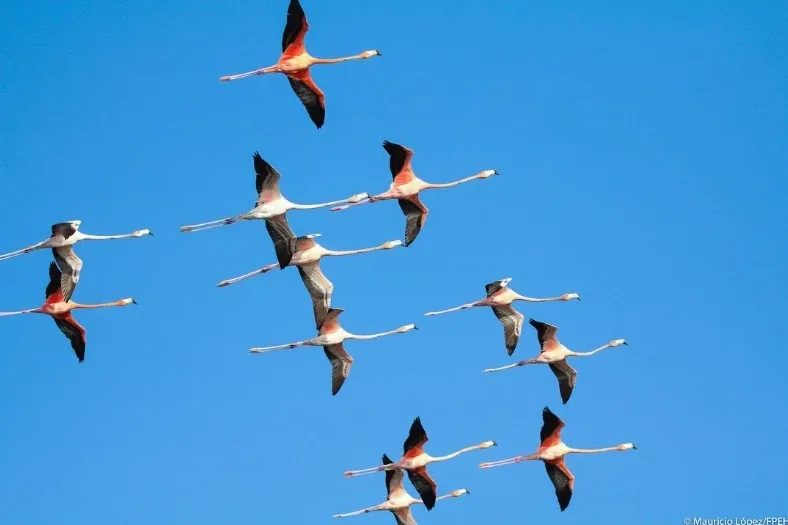
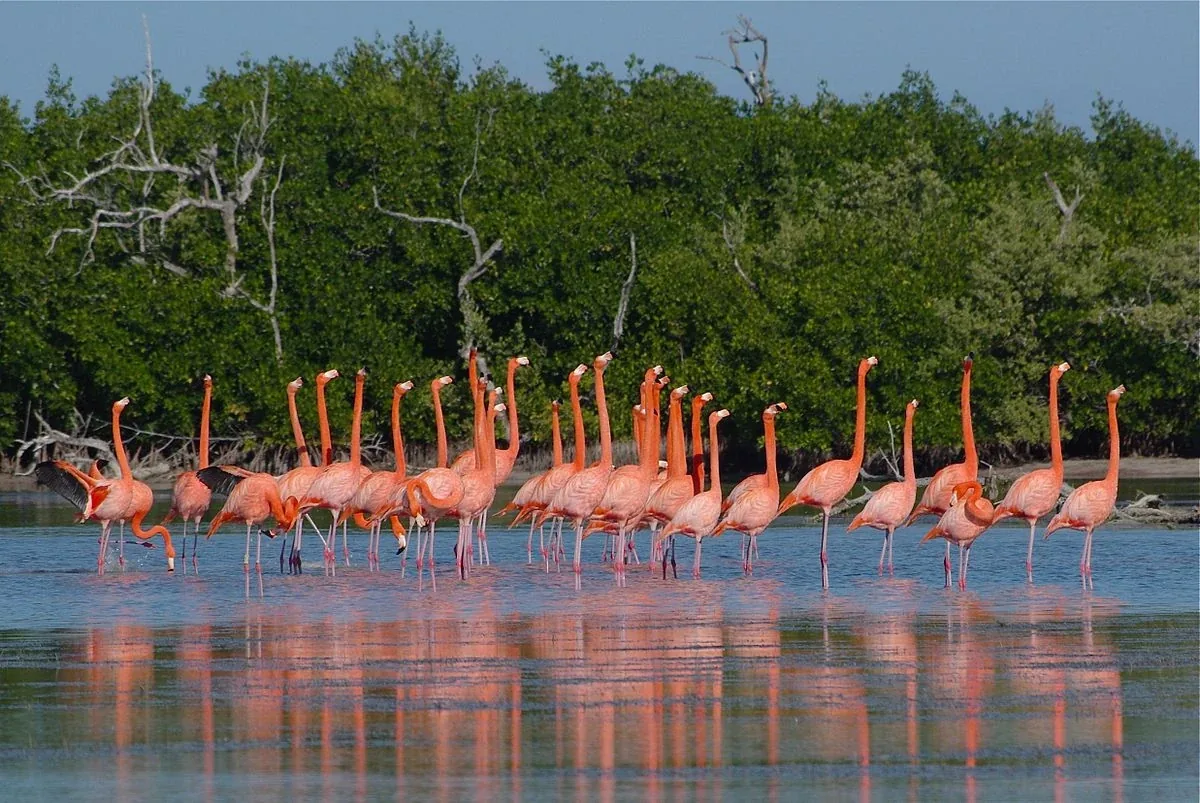
Flamingos lifting off over the wetland.
Los Petenes: a record-breaking wetland
The Los Petenes Biosphere Reserve, at 282,857 hectares, is one of the most extensive protected areas in the country. Its name refers to the petenes: islands of taller vegetation, palms, fig trees, mangrove, that rise from the wetland wherever freshwater springs surface, like oases within the mangrove. It is a Biosphere Reserve (1999) and Ramsar site (2004), and an extraordinary refuge of biodiversity; the peten ecosystem exists only in the Yucatán Peninsula, Cuba and Florida.
Here flamingos are seen and herons, storks and ospreys nest, among hundreds of species; crocodiles and a flora adapted to brackish water inhabit its channels. Boat tours at dawn, with an authorised guide, are the best way to venture in without disturbing the balance of the place.
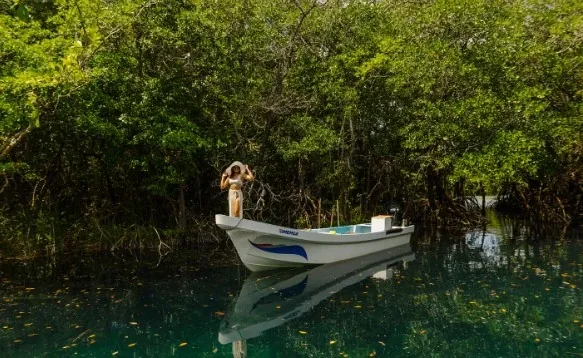
Mangrove channels you can only explore by boat.
Xpicob: nature at the city's doorstep
Closer in, by the coast at Lerma, the Xpicob ecological reserve offers a half-day experience: mangrove, crocodiles and deer in a conservation setting, easy to combine with a morning in the city. A good introduction for those with less time.
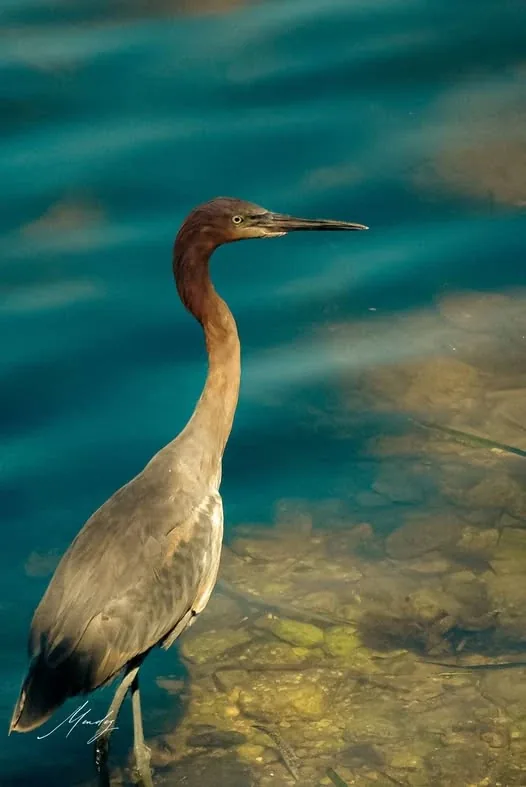
Herons and waterbirds populate the estuaries of Xpicob.
| Los Petenes | Xpicob | |
|---|---|---|
| What it is | Biosphere Reserve and Ramsar site (282,857 ha) | Ecological reserve by the coast at Lerma |
| Where | North of the city | South, at the city's doorstep |
| Duration | Half day by boat, at dawn | Short half-day outing |
| What to see | Mangrove, petenes, waterbirds, crocodiles | Mangrove, crocodiles, deer, seasonal bioluminescence |
How and when to visit
Dawn is the golden hour: more birds, less heat. Book a guide and boat in advance and check when to visit Campeche to coincide with the bird seasons. If heritage appeals as much as nature, combine this outing with the route of Edzná and Hacienda Uayamón, and lean on our tailor-made experiences to arrange it all. The contrast says it all: a walled city and a biosphere, on the same trip. Fit it into your Campeche itinerary.
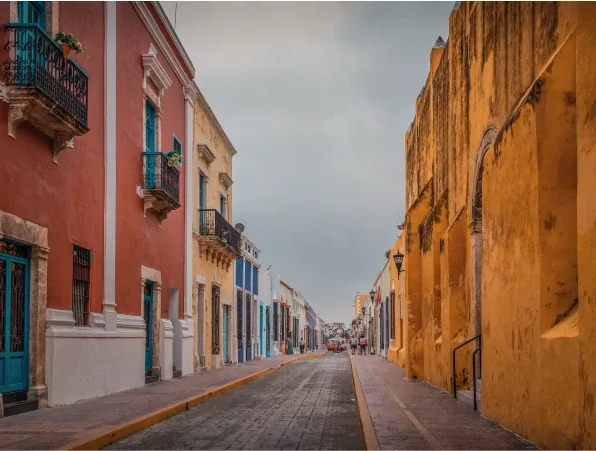
Stay in the heart of the walled city and head out to discover Campeche's nature.
Discover the homes →Los Petenes is explored by boat, on outings coordinated from the city that give their best at dawn, when the mangrove wakes and the water lies still; northward, the biosphere shares much of its wildlife with Ría Celestún. Xpicob, to the south, is the short outing: beach, mangrove and a conservation camp, with the seasonal surprise of bioluminescence that in certain months lights up the waves at night. For both: dry season, light clothing, and letting the guide set the pace. We coordinate the outing from your house, with the local operator we would recommend to a friend.
Frequently asked questions
What is the Los Petenes Biosphere Reserve?
One of the largest protected natural areas in Mexico (282,857 hectares), north of the city of Campeche: a mangrove wetland dotted with "petenes," islands of taller vegetation fed by freshwater springs. It is a Biosphere Reserve and Ramsar site, a refuge for birds, crocodiles and singular flora.
What animals can you see at Los Petenes?
Flamingos, herons, storks, ospreys and many migratory birds, as well as crocodiles and, with luck, raccoons and other mammals. Some 449 species have been recorded, including around 300 birds. It is one of the great birdwatching destinations of the Gulf.
What is the Xpicob reserve?
An ecological reserve closer to Campeche, by the coast at Lerma, with mangrove, crocodiles and deer in a conservation setting. It is a half-day option, ideal when time is limited.
Do you need a guide for Los Petenes or Xpicob?
Yes, and it is worth it: outings are by boat with local operators who know the tides and mangrove channels. They are arranged from the city; Casonas MX guests can ask us to organize them.
What is the best season and time?
The dry season, November through April, and at dawn, when the water is still and the birds are active. Xpicob's bioluminescence is seasonal and nocturnal: ask about dates when planning.
Reviewed and fact-checked in July 2026 by the Casonas MX editorial team in Campeche. Los Petenes is a Biosphere Reserve (1999) and Ramsar site (2004) of 282,857 hectares; the peten ecosystem exists only in the Yucatán Peninsula, Cuba and Florida. We coordinate outings from your house inside the walled city.
Planning your trip? Write to us on WhatsApp and we will send you Campeche in 72 Hours, our pocket guide, free of charge.
Receive the guide on WhatsApp →