The walled city is where most journeys to Campeche begin, and where, for most travelers, they also end. That is a quiet mistake. Spread across the rest of this enormous, under-visited state, more than forty percent of it protected wilderness, is a Campeche that almost no one sees: river towns roofed in French tile, a lagoon where wild dolphins surface year-round, and a jungle that hides the capital of a kingdom Hernán Cortés once marched through.
Mexico's federal tourism ministry has given just three of Campeche's towns the title of Pueblo Mágico, "Magical Town," a designation reserved for places of unusual history, character and natural beauty. Each rewards the drive. Together they make the case that the walled city, for all its beauty, is only the first chapter.
What is a Pueblo Mágico, and which ones does Campeche have?
A Pueblo Mágico is an official distinction granted by Mexico's Secretaría de Turismo to small towns that preserve a strong sense of place: living traditions, historic architecture, distinctive food, and a setting worth protecting. Campeche has three, Palizada, named in 2011; Isla Aguada, added in 2020; and Candelaria, the newest, recognized in 2023. (The historic San Román neighbourhood inside the city has also recently become Campeche's first Barrio Mágico.)
| Town | Named | Distance | Why go |
|---|---|---|---|
| Isla Aguada | 2020 | ~90 min | Dolphins on the Laguna de Términos; lighthouse and beaches |
| Palizada | 2011 | Full day | River town, French tiles, mangroves |
| Candelaria | 2023 | Full day or overnight | Springs, kayaking and El Tigre (Itzamkanac); Maya Train station |
What follows is how to read each, and how to fold them into a trip based in the walled city.
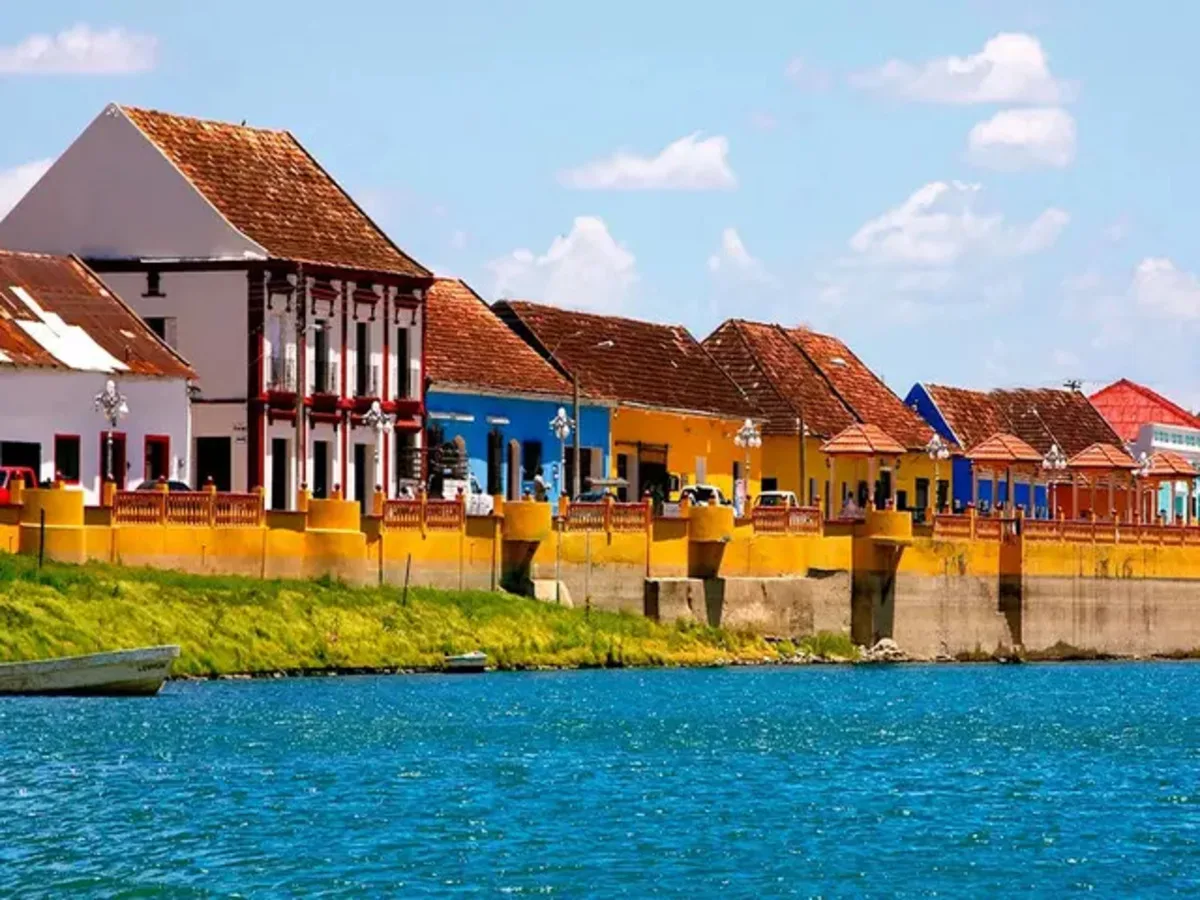
Palizada: the river town of French roofs
In the southwest of the state, where Campeche bleeds toward Tabasco, the Río Palizada loops past a town that looks as though it drifted in from somewhere else entirely. Palizada's streets are lined with houses painted in confident colours and capped with French clay tiles, teja francesa, shipped up the river generations ago. That detail is the whole history in miniature. In the 18th and 19th centuries this was a wealthy logwood port: palo de tinte, the dye-wood that coloured European textiles, floated downriver to the Gulf and out to the world, and the profits came back as imported roof tiles and a grace that has never quite faded. Today Palizada is one of Mexico's true off-the-beaten-path towns. Walk the centre, the church of San Joaquín, the riverside plazas, then take a small boat onto the river itself, gliding past mangroves alive with herons, crocodiles and, with luck, the shy manatee. If you can time it, the town's Carnaval is among the most heartfelt in the region.
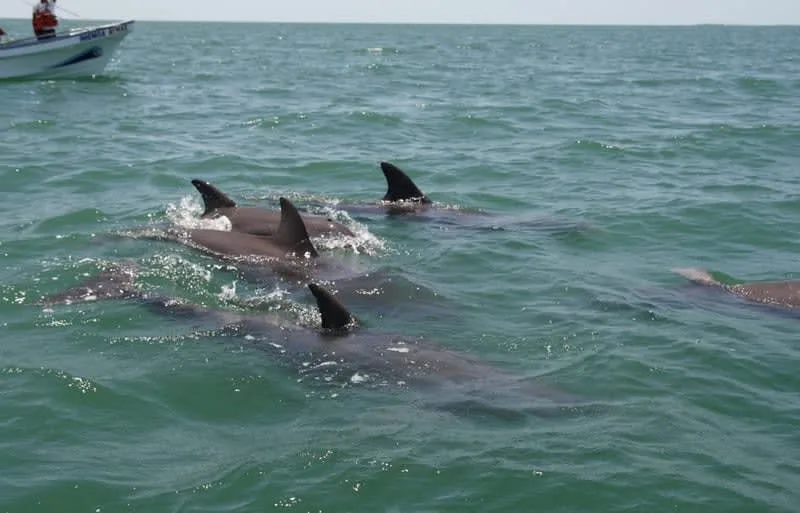
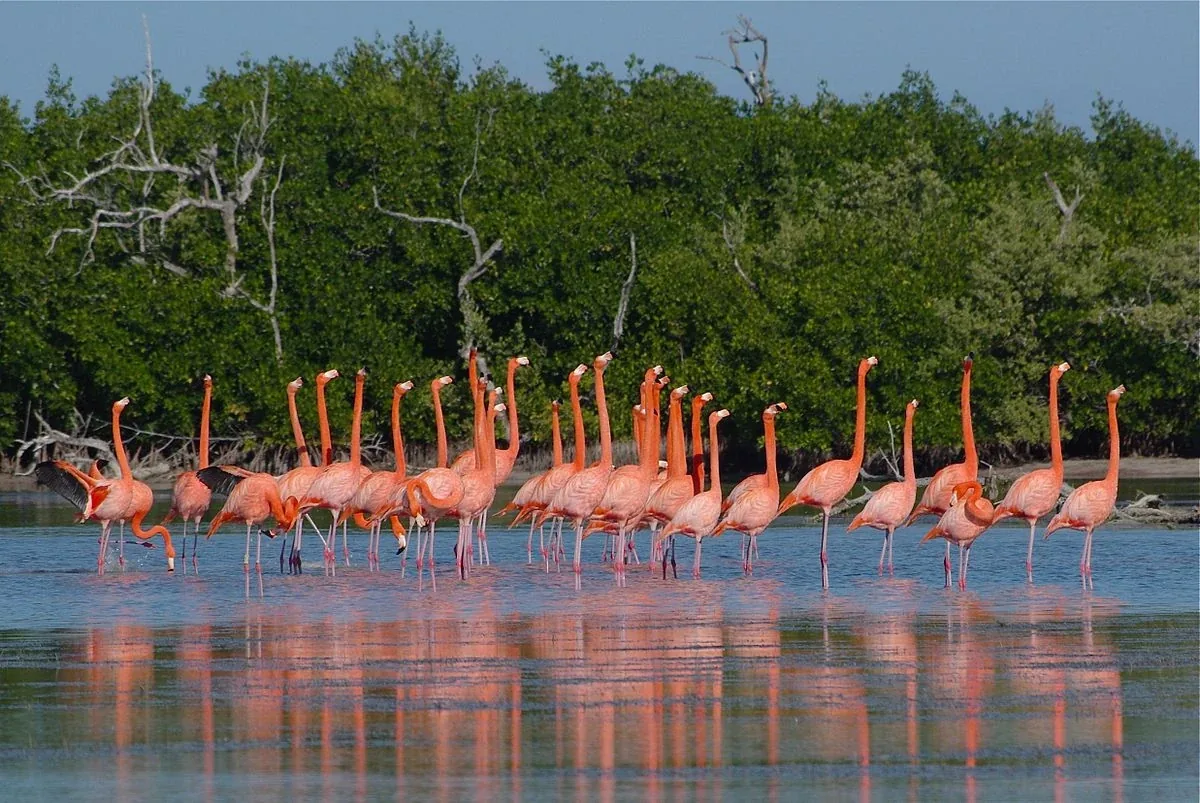
Isla Aguada, the Laguna de Términos, a sanctuary where wild bottlenose dolphins surface year-round.
Isla Aguada: the dolphin sanctuary on the Laguna de Términos
About ninety minutes from the city, on a spit of land between the Gulf and the vast Laguna de Términos, lies Isla Aguada, a fishing village turned Pueblo Mágico, and the gateway to one of the great wildlife encounters of the Mexican Gulf. The lagoon is a protected nature sanctuary, and its waters hold resident pods of bottlenose dolphins that can be seen throughout the year. A small boat takes you out across jade-coloured shallows to watch them surface and play, with stops at the Isla de Pájaros, a bird island thick with herons and frigatebirds, and at the village's photogenic lighthouse, a relic of the Porfirian era that now shelters a tiny museum of underwater archaeology. Around it: quiet, near-empty beaches, and the unhurried rhythm of a town that the rest of the coast forgot. (For more of Campeche's protected nature, the northern wetlands are covered in Los Petenes & Xpicob.)
Candelaria: jungle, springs and a lost Maya capital
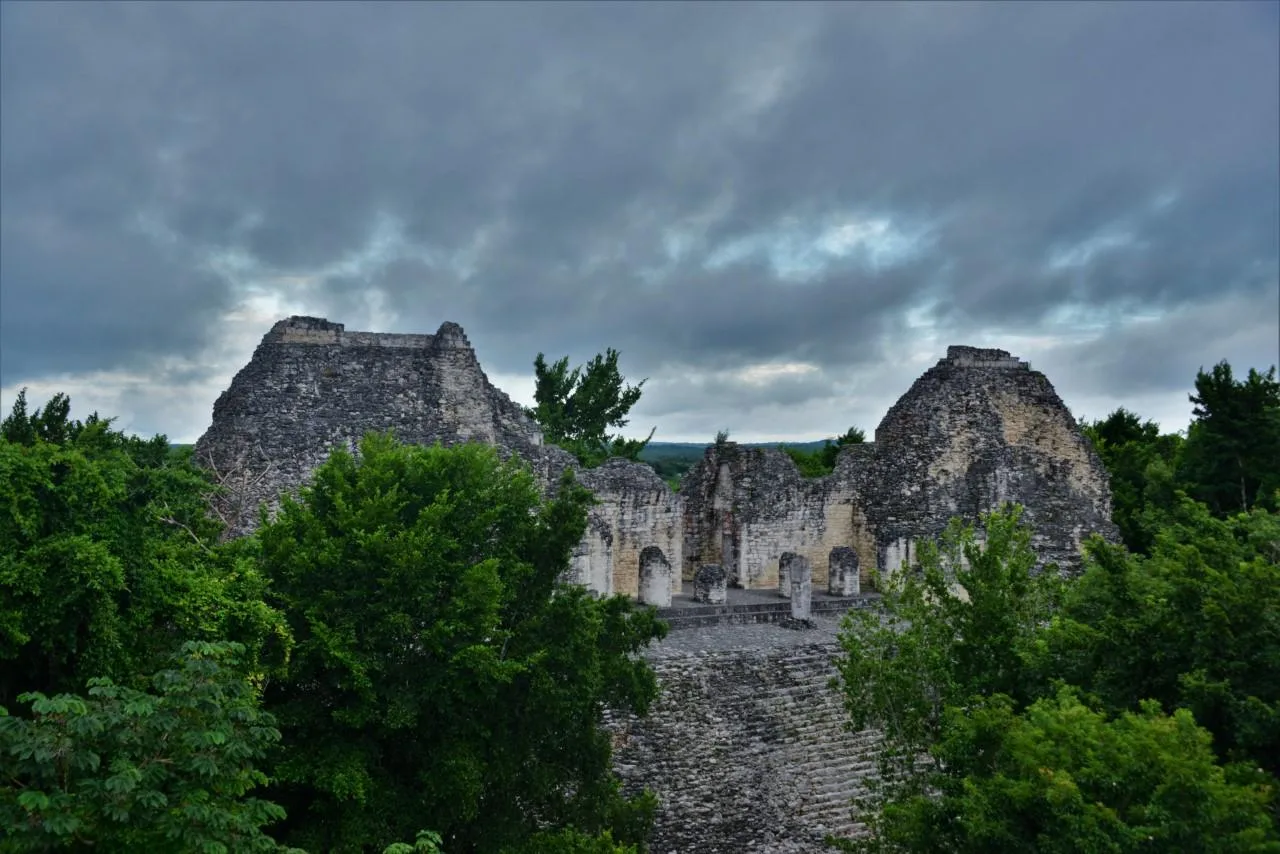
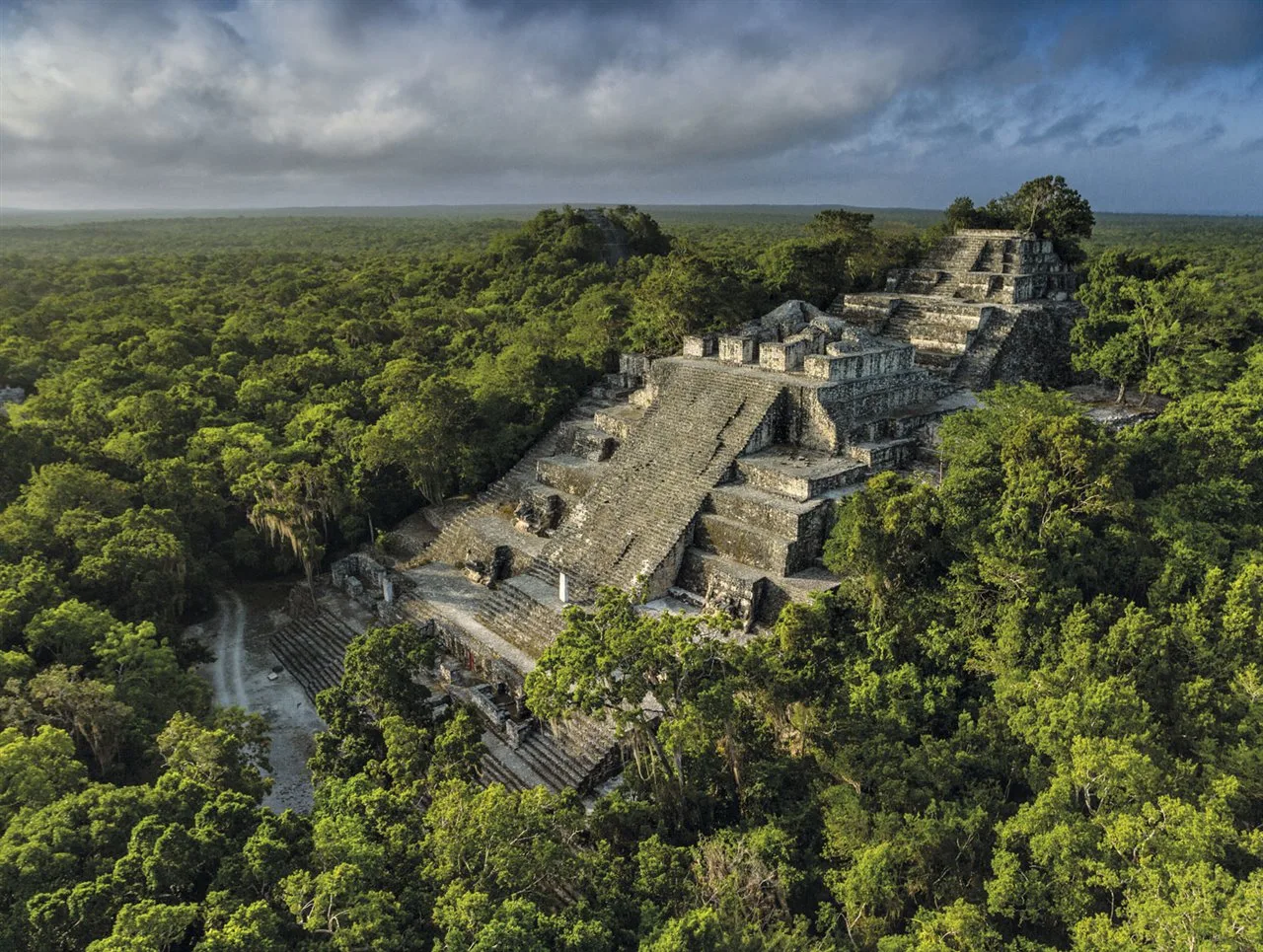
The newest of the three sits two hours south, deep in the green: Candelaria, recognized in 2023 and named, like Palizada, for the river that runs through it. This is eco-country. You can kayak the river, or swim in the impossibly clear ojos de agua, the freshwater springs of Pedro Baranda, where the water runs the colour of bottle glass over pale stone. But Candelaria's deepest draw is historical. Hidden in the surrounding forest is El Tigre, the archaeological site widely identified as Itzamkanac, capital of the Chontal-Maya kingdom of Acalán, a riverine power that controlled the trade routes of the south, and through which Hernán Cortés is recorded to have passed on his brutal march to Honduras in 1525. To stand among its mounds is to touch a chapter of the conquest that almost no visitor ever reaches. (For the wider Maya world around Campeche, see the four architectural styles and our Calakmul deep-dive.)
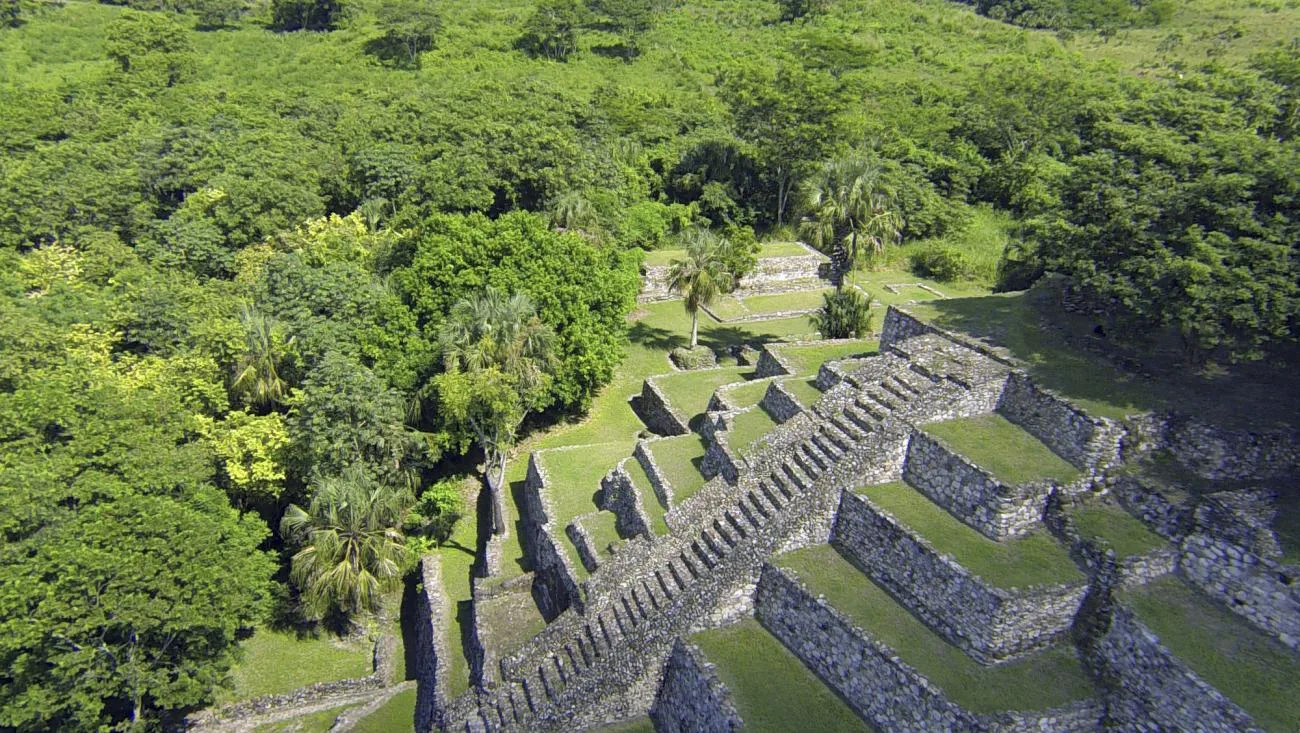
El Tigre, widely identified as Itzamkanac, capital of the riverine Acalán kingdom.
The town is now easier to reach than ever, with its own stop on the Maya Train, part of the access story we trace in Why Campeche is the perfect 2026 vacation.
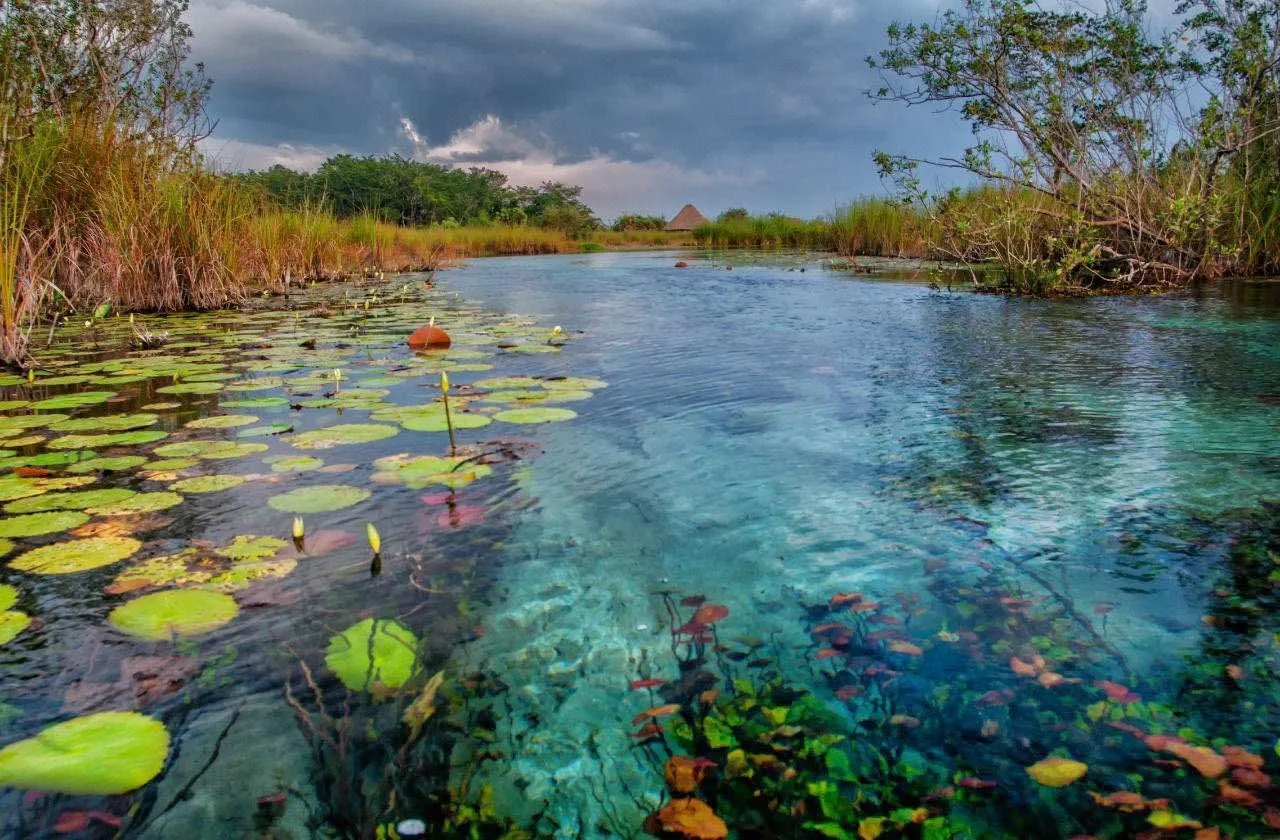
Candelaria, the clear springs of Pedro Baranda, in the jungle of the deep south.
How to do it from a base in the walled city
The Pueblos Mágicos are spread across a large state, so the smart way to see them is in unhurried day trips, or short overnights, from a comfortable base. To build the full route, lean on our Campeche itinerary. Stay in the historic center and venture out, returning each evening to a cool courtyard rather than chasing hotels across the state; start with the Casonas MX collection. Pick your distance: Isla Aguada is the easiest, around ninety minutes; Palizada and Candelaria are longer hauls best given a full day, or an overnight. Travel in the dry season for the best river and wildlife conditions, see our guide to the best time to visit. Let the Maya Train shorten the south, which has changed the calculus for Candelaria in particular; more in how to get to Campeche. And have it arranged, boats, springs and ruins are best with a guide who knows the tides and the back roads; our outdoor experiences and tailored itineraries handle the planning.
Make the walled city your base and let its magical towns be the day's adventure.
Explore the collection →The walled city will always be the heart of a Campeche trip. But its three magical towns are the proof that the state keeps its best secrets just past the edge of the map.
Frequently asked questions
How many Pueblos Mágicos does Campeche have, and what are they?
Three: Palizada (designated 2011), Isla Aguada (2020) and Candelaria (2023). Each is a small town recognized by Mexico's tourism ministry for its history, character and natural setting.
Where can you see dolphins near Campeche?
At Isla Aguada, on the Laguna de Términos, about 90 minutes from the city. The lagoon is a protected sanctuary with resident bottlenose dolphins visible year-round, reached by small boat.
What makes Palizada special?
Palizada is a riverside town of colourful houses with French clay-tile roofs, a legacy of its 18th- and 19th-century logwood trade, set on the Río Palizada amid mangroves rich in birds and wildlife.
Is Candelaria worth visiting?
Yes, for travelers drawn to nature and deep history: clear freshwater springs and river kayaking, plus the El Tigre archaeological site, identified as Itzamkanac, capital of the ancient Acalán kingdom. It now has a Maya Train station.
Can I visit the Pueblos Mágicos as day trips from Campeche?
Isla Aguada works comfortably as a day trip; Palizada and Candelaria are farther and reward a full day or an overnight. Basing yourself in the walled city and travelling out is the most comfortable approach.
Reviewed and fact-checked in July 2026 by the Casonas MX editorial team in Campeche, with designation dates and historical detail cross-checked against Mexico's Secretaría de Turismo (Sectur) and official sources. We arrange these getaways from our houses inside the walled city.
Planning your trip? Write to us on WhatsApp and we will send you Campeche in 72 Hours, our pocket guide, free of charge.
Receive the guide on WhatsApp →