Most travelers arrive in the Yucatán Peninsula chasing a single famous pyramid. They photograph it, climb back onto the bus, and leave believing they have seen "the Maya." But the Maya were never one thing. Over fifteen centuries they built dozens of city-states, each with its own dynasty, its own gods in stone, and, crucially for anyone who travels to read a place rather than tick it off, its own architectural language.
Campeche's quiet advantage is geographic. The state stretches across the seam where the great regional schools of Maya building meet. Within a few hours of the walled city lie not one but four distinct architectural styles, Petén, Río Bec, Chenes and Puuc, and one extraordinary city, Edzná, where you can read all four in a single afternoon. This is what architectural tourism means here: not a checklist of ruins, but the slow pleasure of learning to recognize a civilization by the shape of its doorways.
Why Campeche is the finest base for Maya architecture
The peninsula's headline sites, Chichén Itzá, Tulum, sit far to the east and arrive pre-packaged with crowds. Campeche faces the other way. To its south spreads the largest expanse of tropical forest in Mexico, and within it some of the most powerful cities the Maya ever raised. To its east and north rise the limestone hill country and the elegant late cities of the Puuc. The colonial capital, inscribed by UNESCO in 1999, sits in the middle of this, close to everything and crowded by nothing.
That is the practical case. The deeper one is this: you can sleep inside a UNESCO World Heritage walled city, wake to cathedral bells, and be standing in front of a thousand-year-old palace by mid-morning, then return that evening to a restored colonial home and a cool courtyard. The architecture does not stop when you leave the ruins. It simply changes century.
The four styles, and how to tell them apart
Maya architecture is regional the way wine is regional. The same broad grammar, the corbel vault, the temple-pyramid, the plaza, was inflected differently in each territory according to local stone, local rulers, and local cosmology. Four of those dialects converge around Campeche.
| Style | Telltale trait | Where to see it | Region |
|---|---|---|---|
| Petén | Tall, massive stepped temple-pyramids crowned by roof-combs | Calakmul (Structure II, ~45 m) | Southern Campeche |
| Río Bec | Solid decorative towers with false stairways and temples | Becán, Chicanná, Xpujil (the only three-tower one) | South, along the highway |
| Chenes | Whole façades shaped as the open jaws of a god | Hochob, Dzibilnocac, Santa Rosa Xtampak | Center of the state |
| Puuc | Smooth walls and friezes of stacked Chaac masks | Uxmal, Kabah (Codz Poop) | North, already in Yucatán |
Petén, height, mass and the sacred mountain
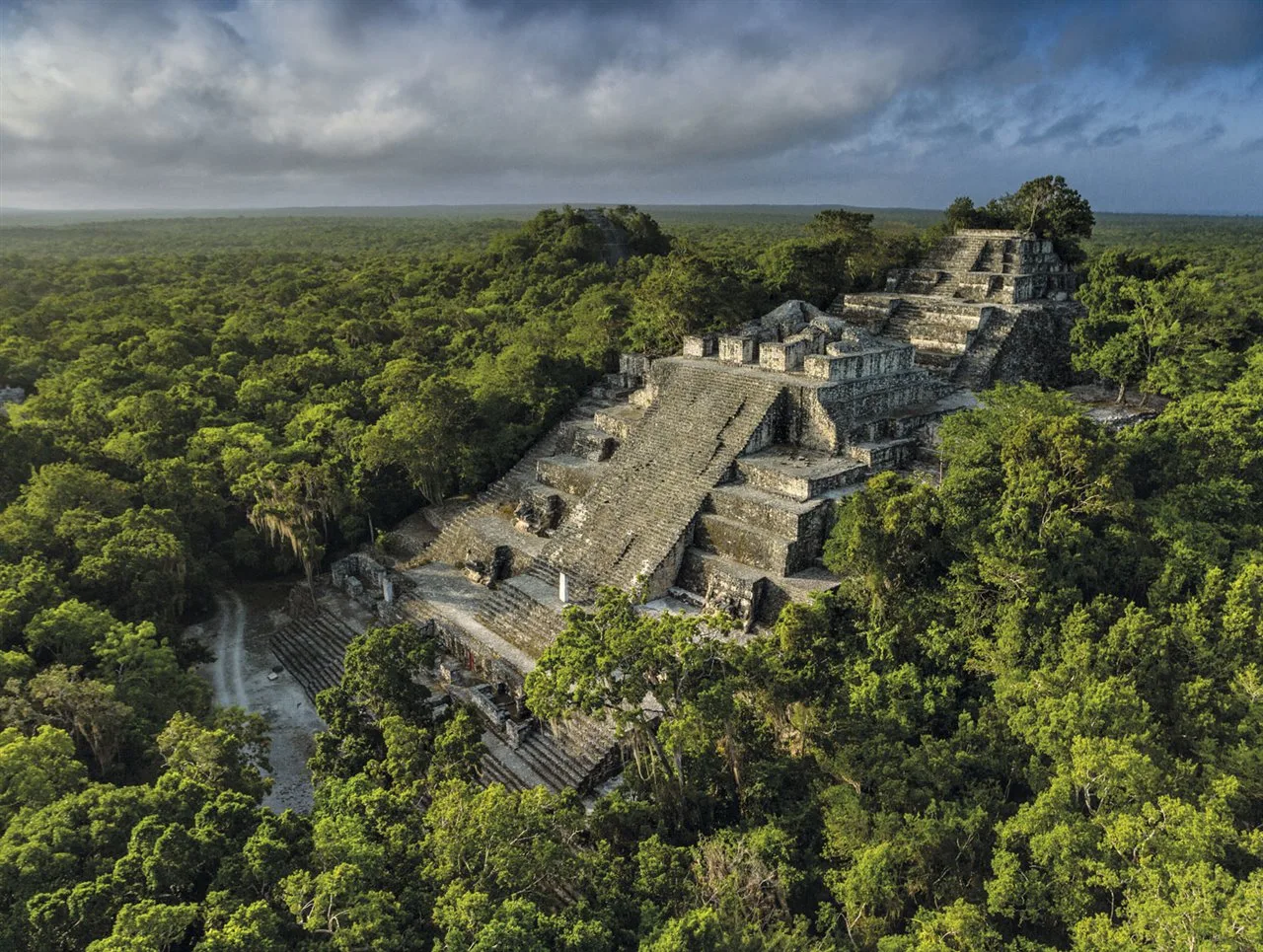
The oldest and most monumental idiom comes from the central Petén lowlands that spill north from Guatemala into southern Campeche. Petén architecture is about verticality and weight: steep, towering temple-pyramids built up in receding tiers, often crowned by a roof comb, a tall, ornamental crest that made the building read as taller still, a man-made sacred mountain rising above the canopy. Its supreme expression in Campeche is Calakmul, the seat of the Snake Kingdom, whose Structure II, roughly 45 metres tall and 120 metres wide at its base, remains one of the most massive pyramids the Maya ever built. To stand at its base is to understand scale as a political argument. (For the full story, see our Calakmul deep-dive.)
Río Bec, the theatrical tower
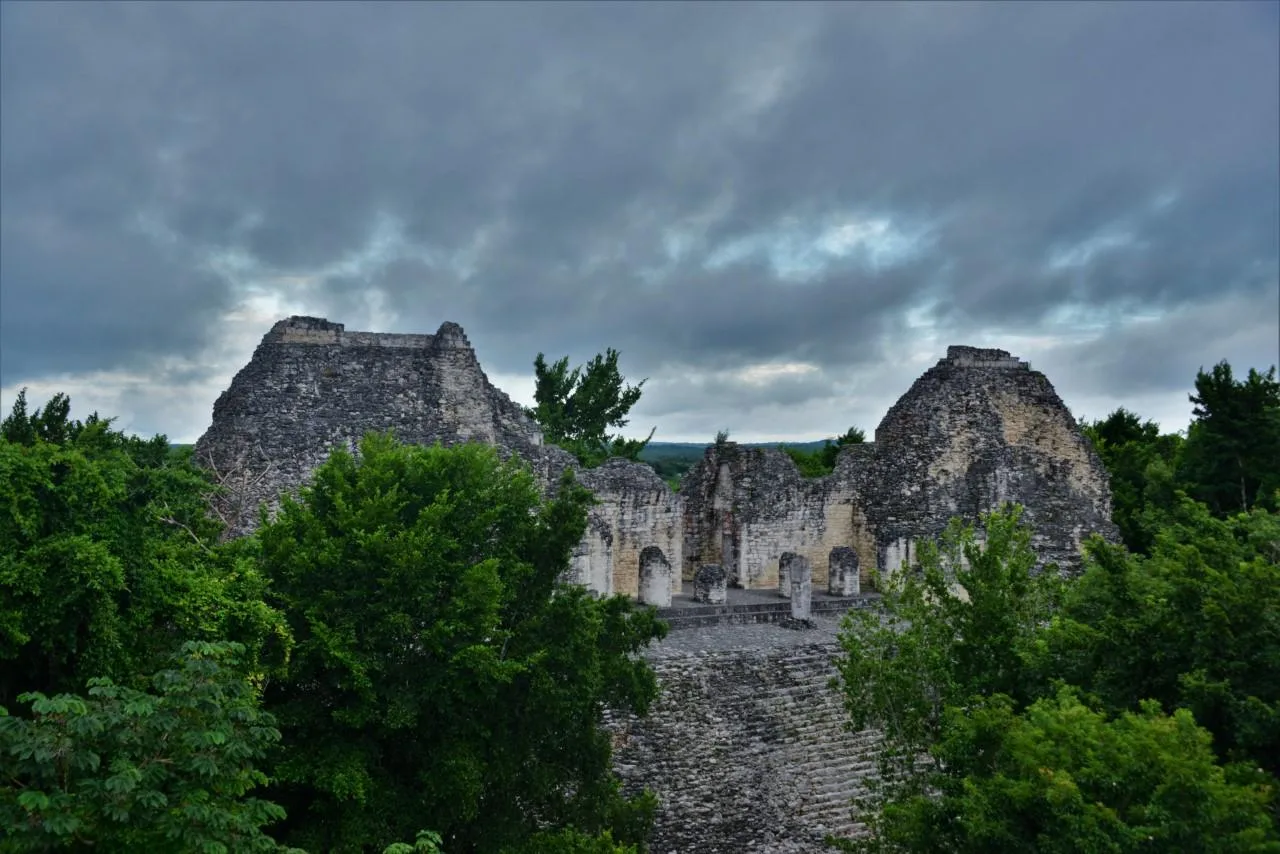
Travel a little north and the mood turns almost playful. The Río Bec style is famous for an architectural illusion: pairs of slender towers, attached to long palace buildings, that look like steep Petén pyramids, but are solid. Their stairways are too narrow and too steep to climb, their summit "temples" are dummies with false doorways. They were never meant to be ascended. They were meant to be seen: stage scenery for power, theatre in limestone. The Río Bec cities, Becán with its rare defensive moat, Chicanná with its astonishing monster-mouth doorway, and Xpujil with its three-tower silhouette, lie along the southern highway, often shared with no one but the howler monkeys.
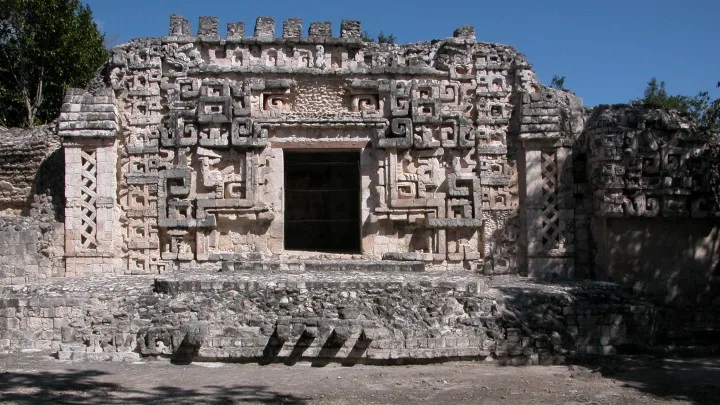
At Hochob, the temple façade becomes the open mouth of the earth deity, the signature of the Chenes style.
Chenes, the building as a living mouth
Move into the central plains and you reach the country of the ch'e'en, the wells and cenotes that gave the Chenes style its name. Here the Maya did something startling: they turned entire façades into the open jaws of a cosmic monster. You enter the temple by walking through the mouth of a god, the doorway framed by enormous fanged jaws, the whole front of the building a mask of the earth deity, encrusted in stone mosaic. The masterpieces are Hochob and Dzibilnocac, with Santa Rosa Xtampak as the region's great capital, intimate sites where the theatricality is overwhelming precisely because you are usually alone with it.
Puuc, the mosaic and the rain god
Finally, to the north, in the low hills the Maya called puuc, the style reaches its most refined. Puuc architecture is all about surface: smooth, almost austere lower walls of finely cut veneer stone, and then, above the doorways, an explosion of decorated frieze: latticework, engaged columns, and the long, hooked, upturned noses of Chaac, the rain god, stacked at the corners like a chorus. Its capital is Uxmal, where the oval-based Pyramid of the Magician, the Nunnery Quadrangle and the Governor's Palace make the case for Maya architecture as one of the great building traditions of the ancient world. Nearby Kabah carries the idea to its limit with the Codz Poop, a single façade tiled with hundreds of Chaac masks. A word of geographic honesty: the great Puuc sites fall within the state of Yucatán, on the way to Mérida, but the range of hills that gives the style its name straddles the Campeche border, and no serious architectural circuit leaves them out.
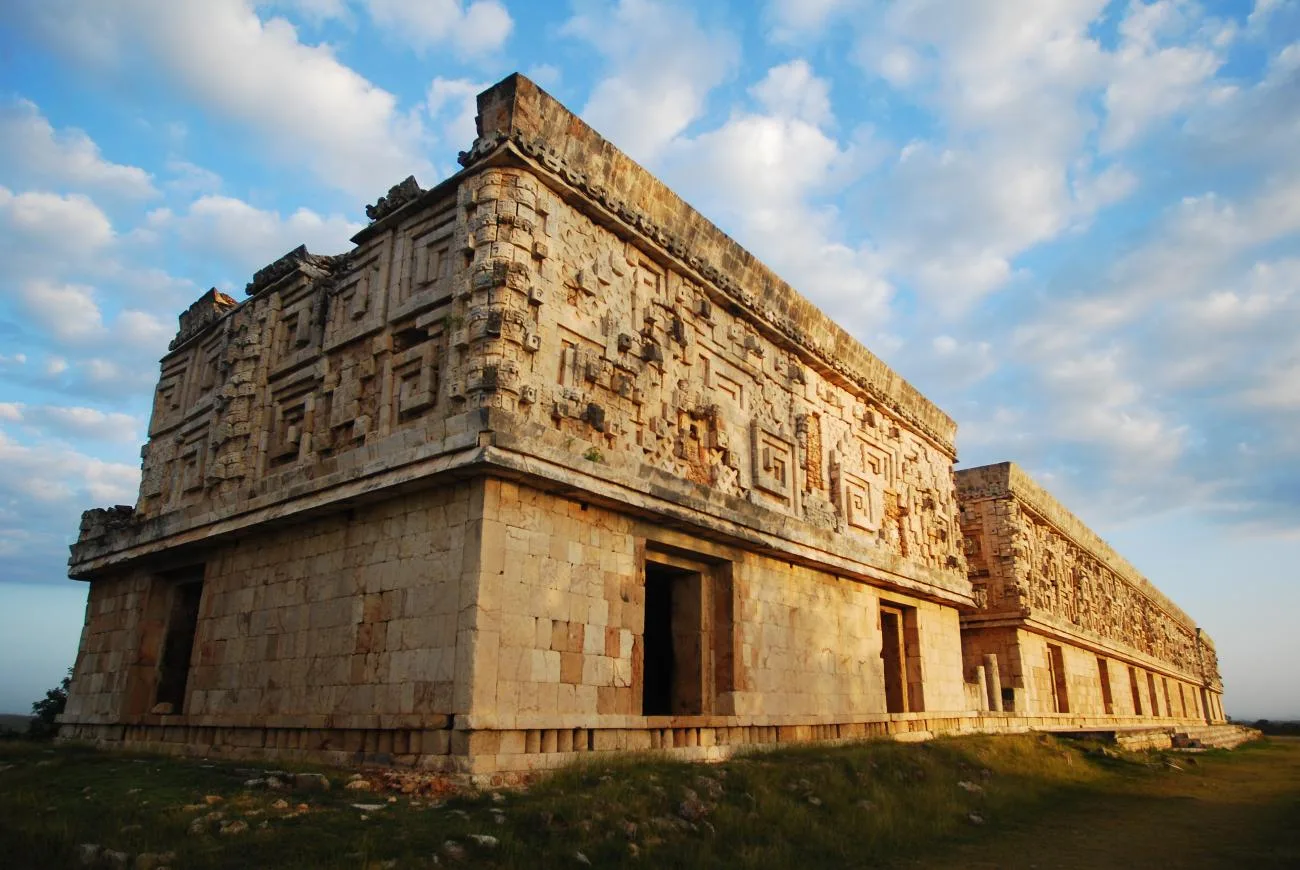
Stacked Chaac masks and stone latticework, the refined Puuc style of Uxmal and Kabah. · Credit: Héctor Montaño
Edzná: the city that speaks every dialect
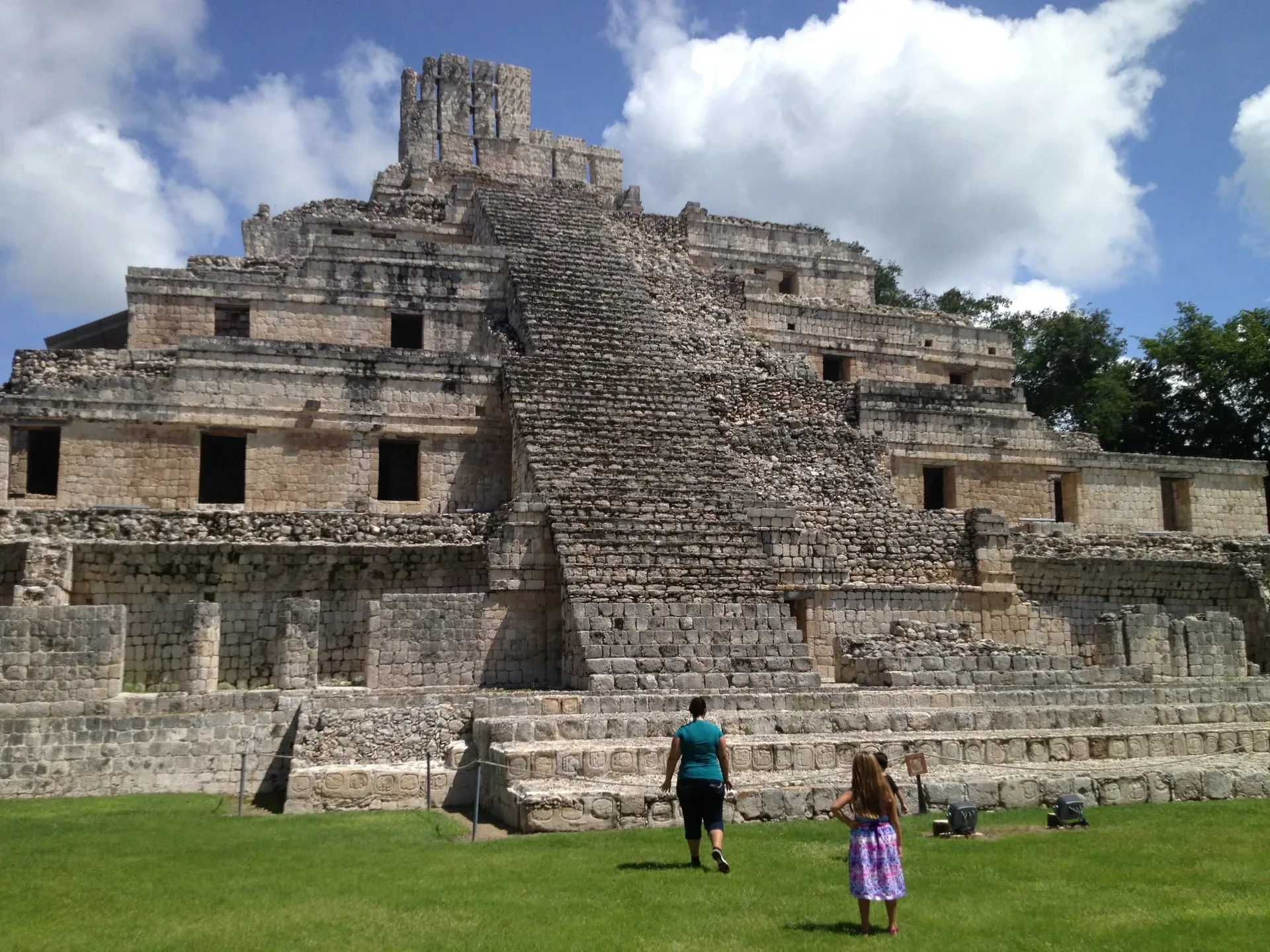
If the four styles feel like a lot to hold in your head, there is one place that holds them for you. Edzná, less than an hour from the walled city, was occupied for the better part of two thousand years, long enough to absorb every passing fashion. Its celebrated Five-Storey Building fuses temple-pyramid and palace in a single structure; elsewhere on the site you can spot Petén massing, Puuc detailing and Chenes accents, all bound together by one of the most sophisticated hydraulic engineering systems in the ancient Americas. Edzná is, in effect, an open-air primer in Maya architecture, the ideal first chapter before you venture south or north. (Read our full guide: Edzná & Hacienda Uayamón.)
Where the Maya world meets the colonial one
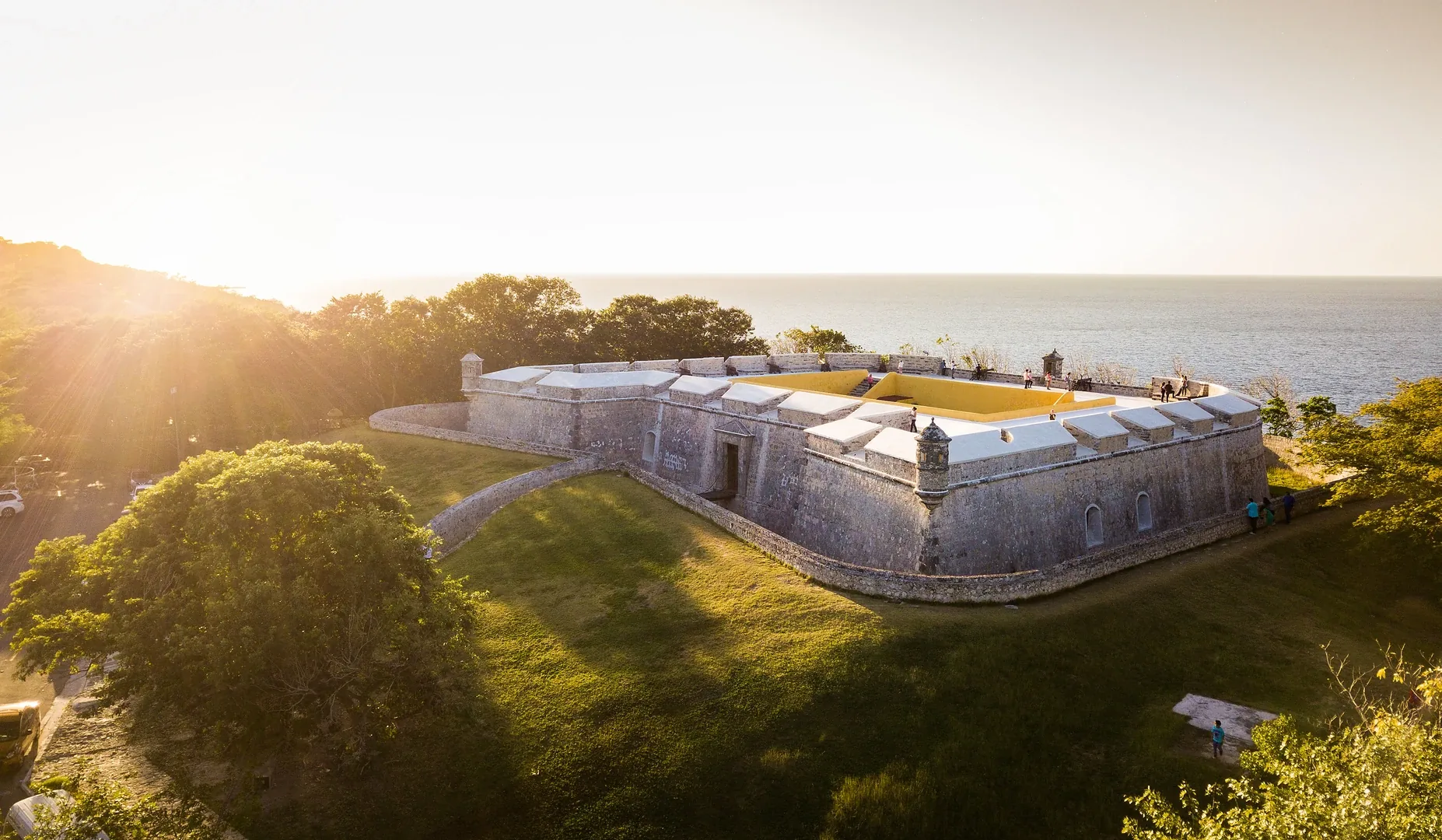
Here is the detail that makes Campeche unusual among heritage destinations. The story does not end with the Conquest. The same peninsular limestone that the Maya cut into masks was later quarried for Campeche's colonial casonas; the descendants of Maya masons laid the lime plasters and mineral pigments that still glow on the city's façades. To walk from a Chenes monster-mouth to a baroque doorway in the historic center, or to the arches of a henequen hacienda, is to follow a single, unbroken conversation in stone. You can see the threads gathered in one place at the Museum of Maya Architecture, in the Baluarte de la Soledad, home, fittingly, to the jade funerary mask brought back from Calakmul itself, from Structure VII, on display there since December 2024.
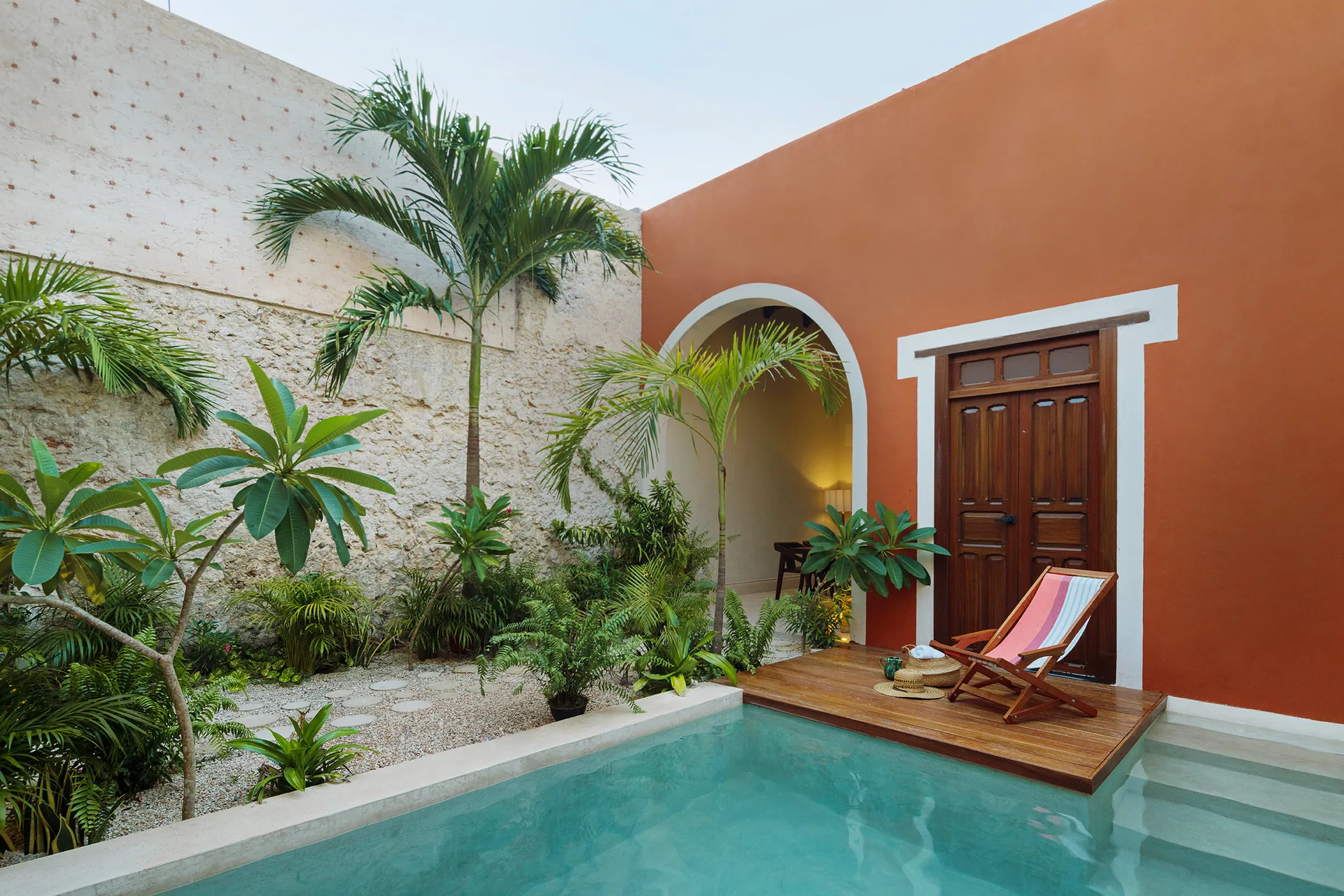
Casa Ex Templo, staying inside a restored casona is itself a form of architectural tourism.
And there is a more intimate way to extend the theme: to stay inside the architecture. Several Casonas MX houses are themselves award-winning restorations, Casa Ex Templo, built beside a colonial bell tower, was honored at the XV Yucatecan Architecture Biennial. For travelers who read buildings, the lodging is part of the itinerary.
How to plan an architectural circuit
A few principles make the difference between a rushed loop and a genuinely rewarding one; if you would rather have the plan ready-made, our four-to-five-day master itinerary folds these sites into their natural order. Base yourself in the walled city and drive out to the sites and home again each evening; the historic center is the most comfortable place in the region to return to, start with our collection of heritage homes. Go early: the southern jungle sites mean long days and pre-dawn starts. It is worth it: reaching Calakmul with the mist still on the jungle and howler monkeys for company is a different hour from midday, when the heat flattens the stone and the first buses arrive. The cool of early morning is when the ruins are most alive. Travel in the dry season if you can, our guide to the best time to visit breaks the seasons down, and if you arrive without a car, the Tren Maya now reaches the city. And let someone else drive: a guided archaeological day trip turns distances into context, and our outdoor experiences and tailored itineraries are built for exactly this kind of traveler.
Make a restored heritage home your base camp for the Maya world.
Explore the collection →The Maya did not build for tourists. They built for gods, dynasties and the dead. Two thousand years later, the privilege of Campeche is that you can still read what they wrote, and do it without a queue.
Frequently asked questions
What is architectural tourism, and why is Campeche ideal for it?
Architectural tourism is travel organized around the experience and understanding of buildings, their styles, history and craft, rather than around sightseeing checklists. Campeche is ideal because it combines an intact UNESCO colonial city with four distinct schools of Maya architecture all within day-trip range, set in an uncrowded landscape.
What are the four Maya architectural styles near Campeche?
Petén (tall, massive temple-pyramids, e.g. Calakmul), Río Bec (decorative solid towers and monster-mouth doorways, e.g. Becán and Chicanná), Chenes (entire façades shaped as the open mouth of a deity, e.g. Hochob and Dzibilnocac) and Puuc (smooth walls with ornate friezes and stacked Chaac masks, e.g. Uxmal and Kabah).
Which Maya ruins can I visit from Campeche?
The closest is Edzná, under an hour away. Further afield lie Calakmul and its Río Bec neighbours to the south, the Chenes sites in the center of the state, and Uxmal and Kabah to the north toward Mérida.
Where is the best Maya architecture to see without crowds?
Calakmul and the Río Bec and Chenes sites in Campeche receive a fraction of the visitors of Chichén Itzá or Tulum, which is part of what makes them so rewarding for serious travelers.
Where should architecture lovers stay in Campeche?
Inside the walled city, in a restored heritage home rather than a generic hotel, so that the lodging itself becomes part of the architectural experience.
Reviewed and fact-checked in July 2026 by the Casonas MX editorial team in Campeche, with archaeological detail cross-checked against Mexico's INAH and the UNESCO World Heritage listing. We write about this region from inside the walled city, where we restore and live in heritage homes.
Planning your trip? Write to us on WhatsApp and we will send you Campeche in 72 Hours, our pocket guide, free of charge.
Receive the guide on WhatsApp →