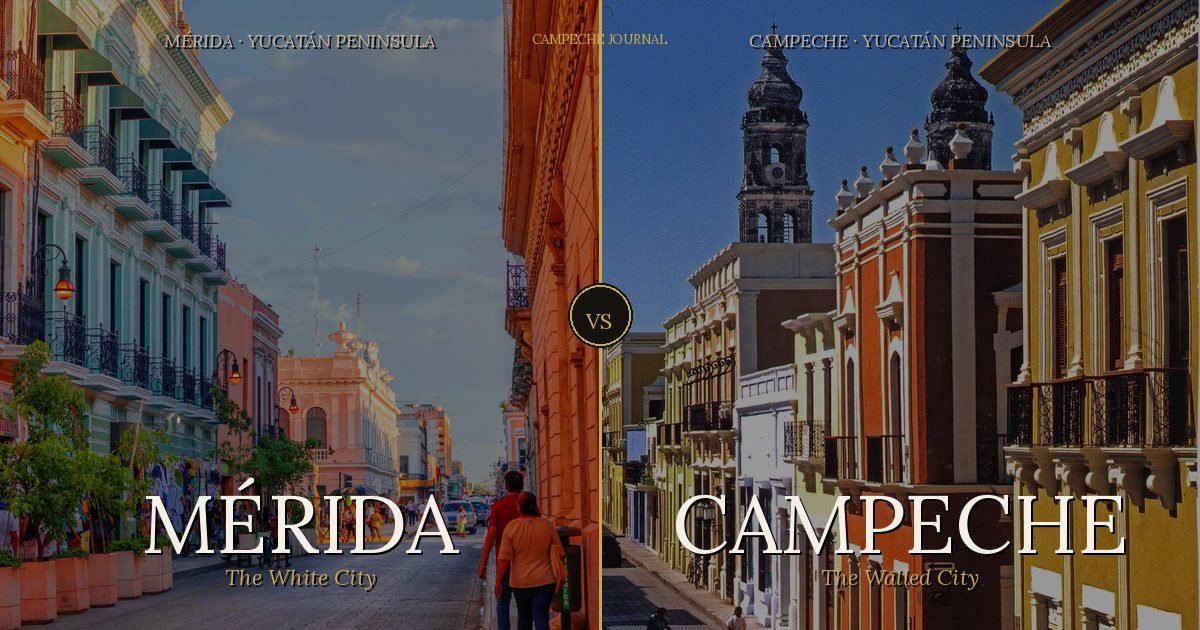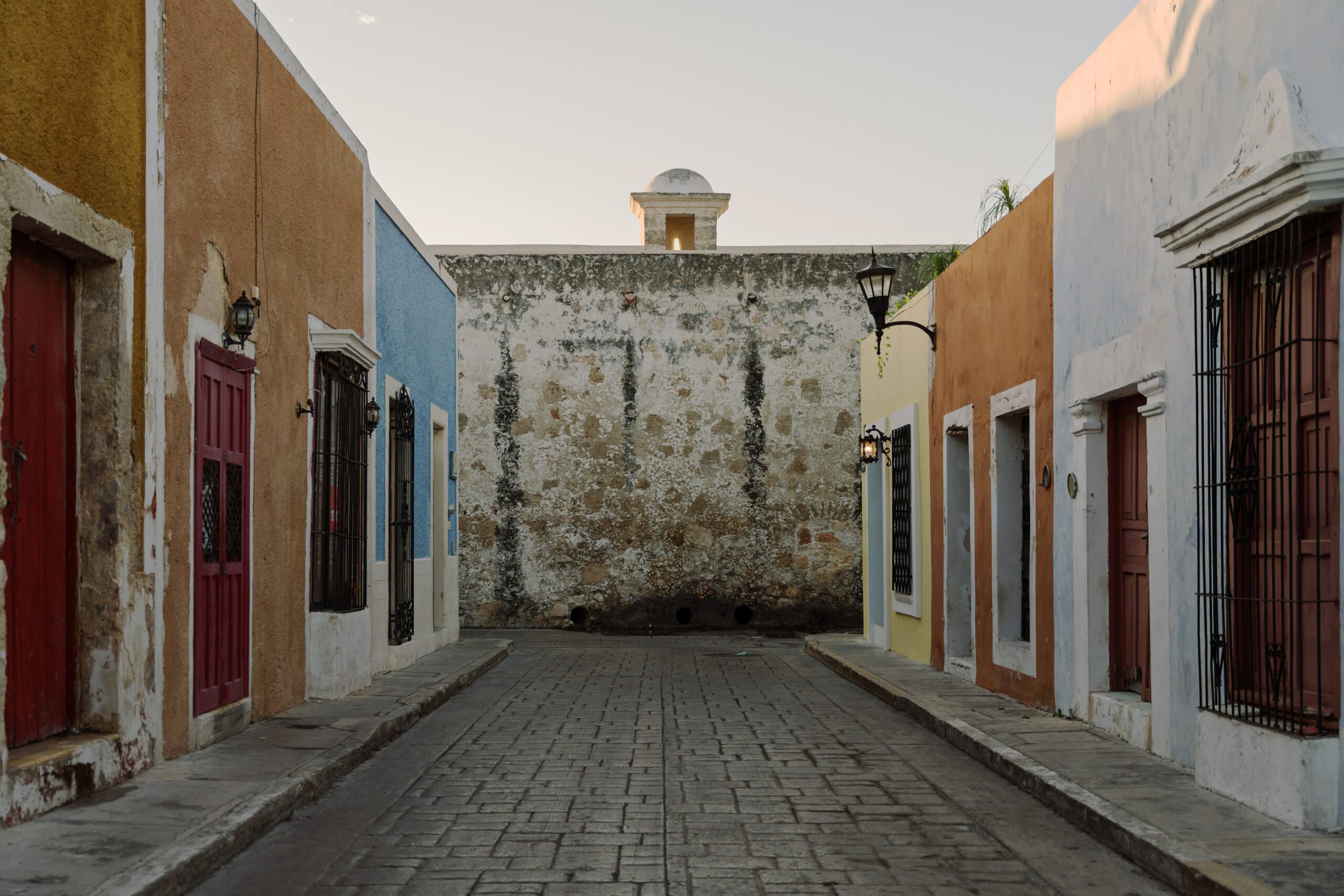
Color is the first thing you notice. Entering Campeche's historic center for the first time, most travelers stop mid-street, not in front of a particular building, but before the street itself: an unbroken succession of facades in yellow, pink, cobalt blue, terracotta, mint, and gold. This is not decoration. It is identity.
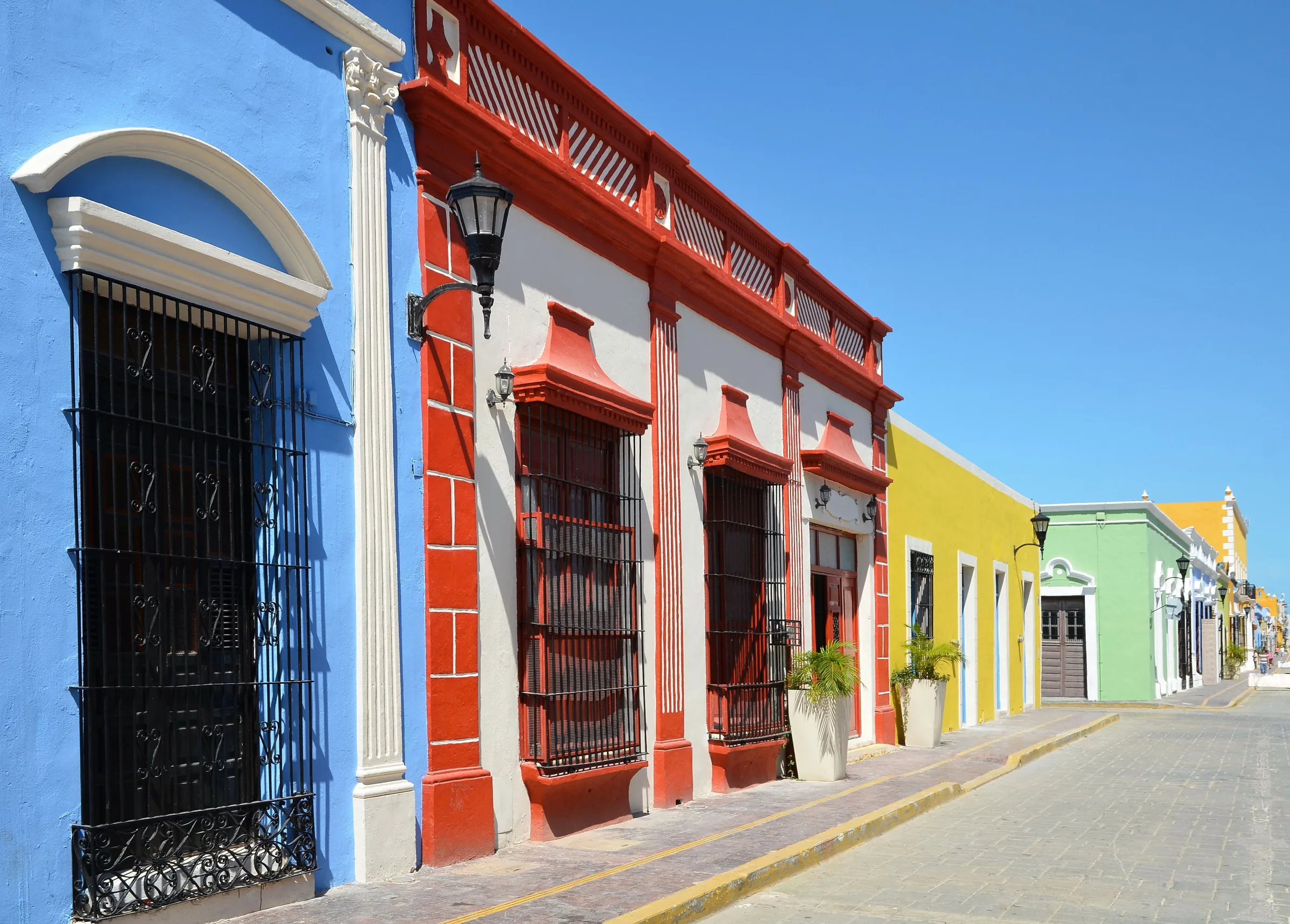
The colors of Campeche, in brief
- The historic center owes its image to a colonial palette of painted facades.
- Colors were regulated to preserve the harmony of the walled enclosure.
- Ochres, indigos, terracottas and greens dominate street after street.
- Color served practical, social and identity purposes.
- It is one of the best-preserved colonial color ensembles in the Americas.
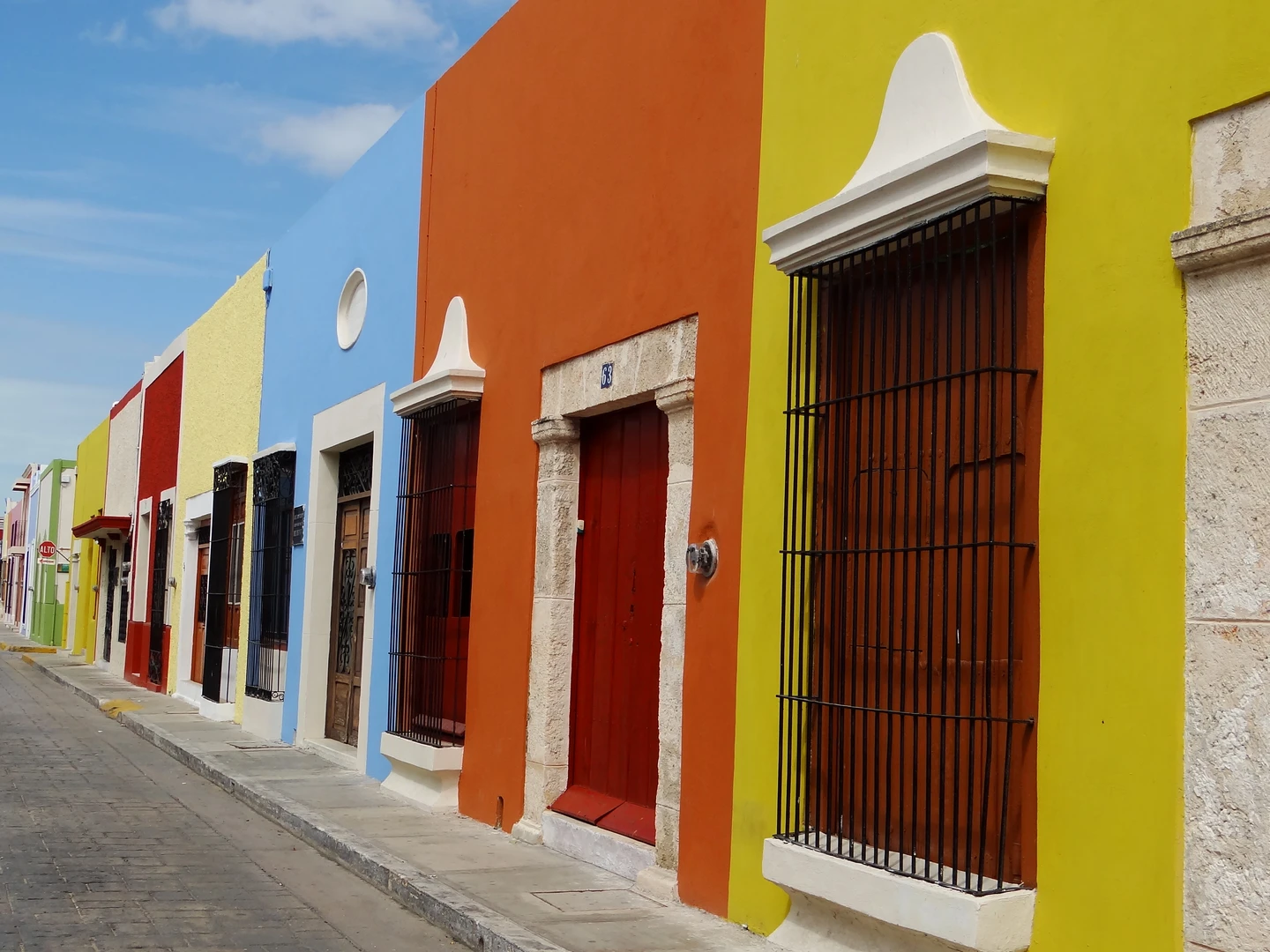
Calle 61 and its row of colored facades, Casonas MX, Campeche
Colonial origins
Campeche was founded by the Spanish in 1540, one of the first permanent settlements on the Gulf Coast of Mexico. The characteristic pastel-toned facades arrived gradually, over the course of the 18th and 19th centuries, when lime plasters mixed with natural pigments, mineral earths, plant dyes, imported colorants, became the standard finish. The restoration of La Casa Verde shows how that palette is applied today, with a facade color kept within INAH's rules.
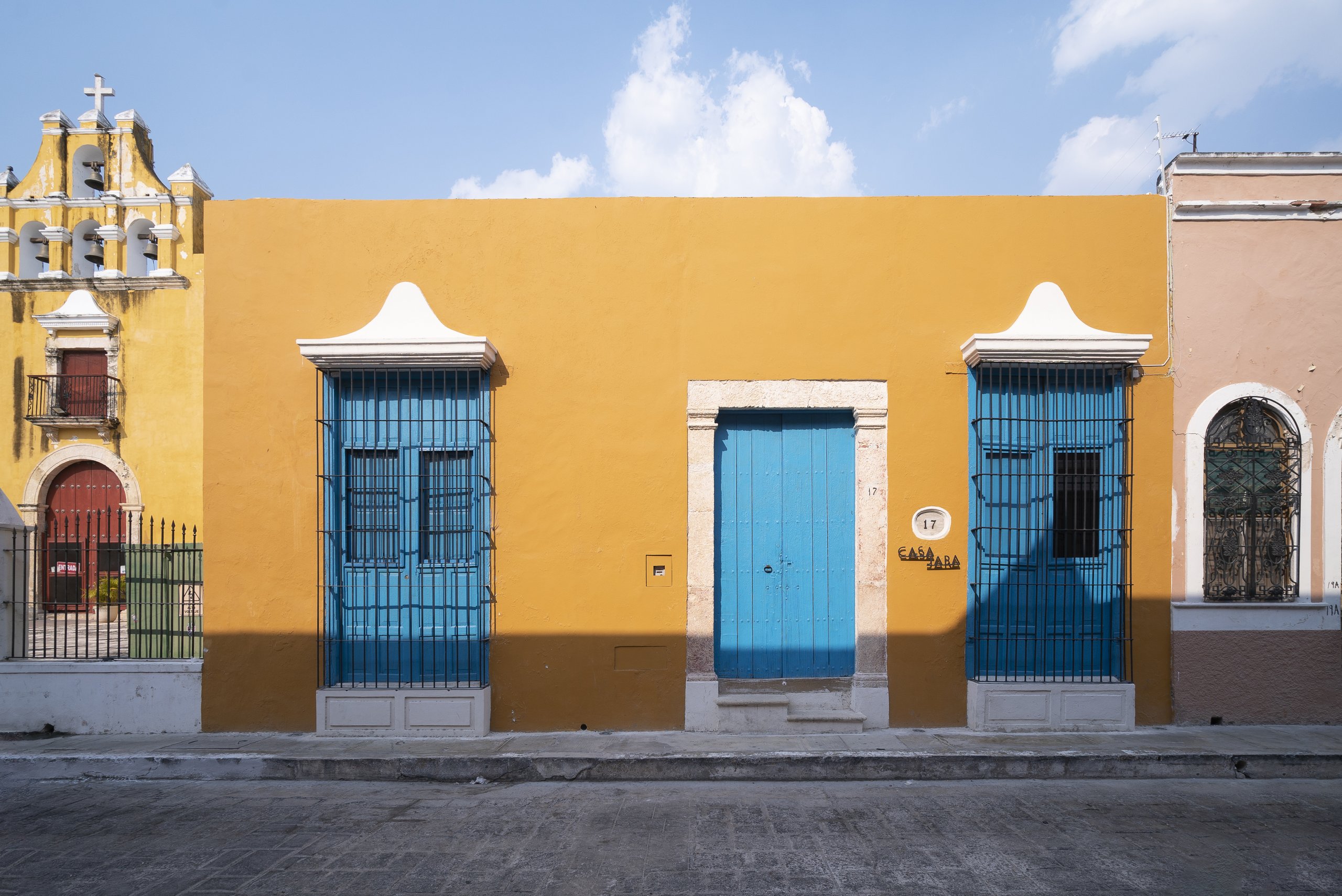
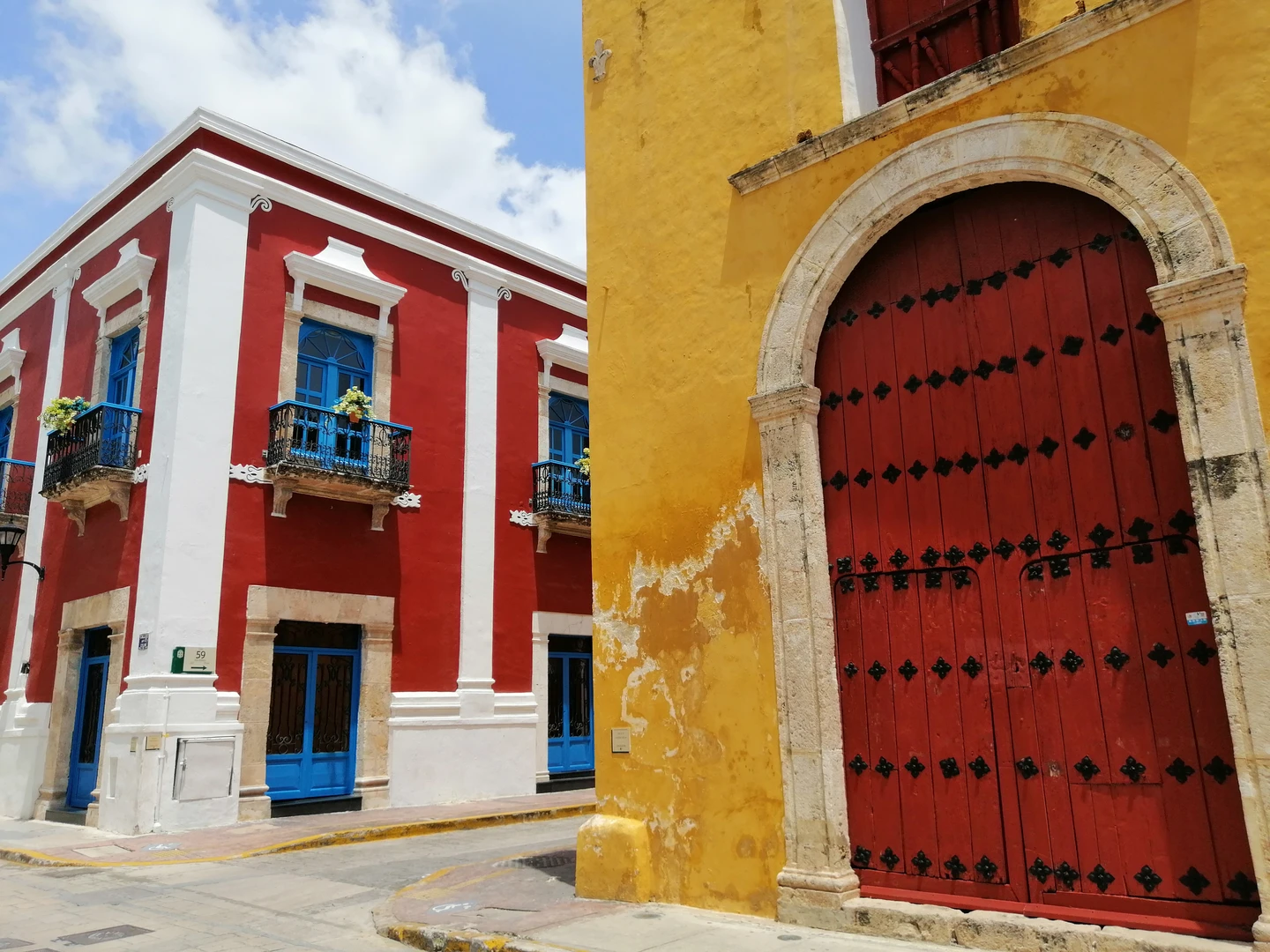
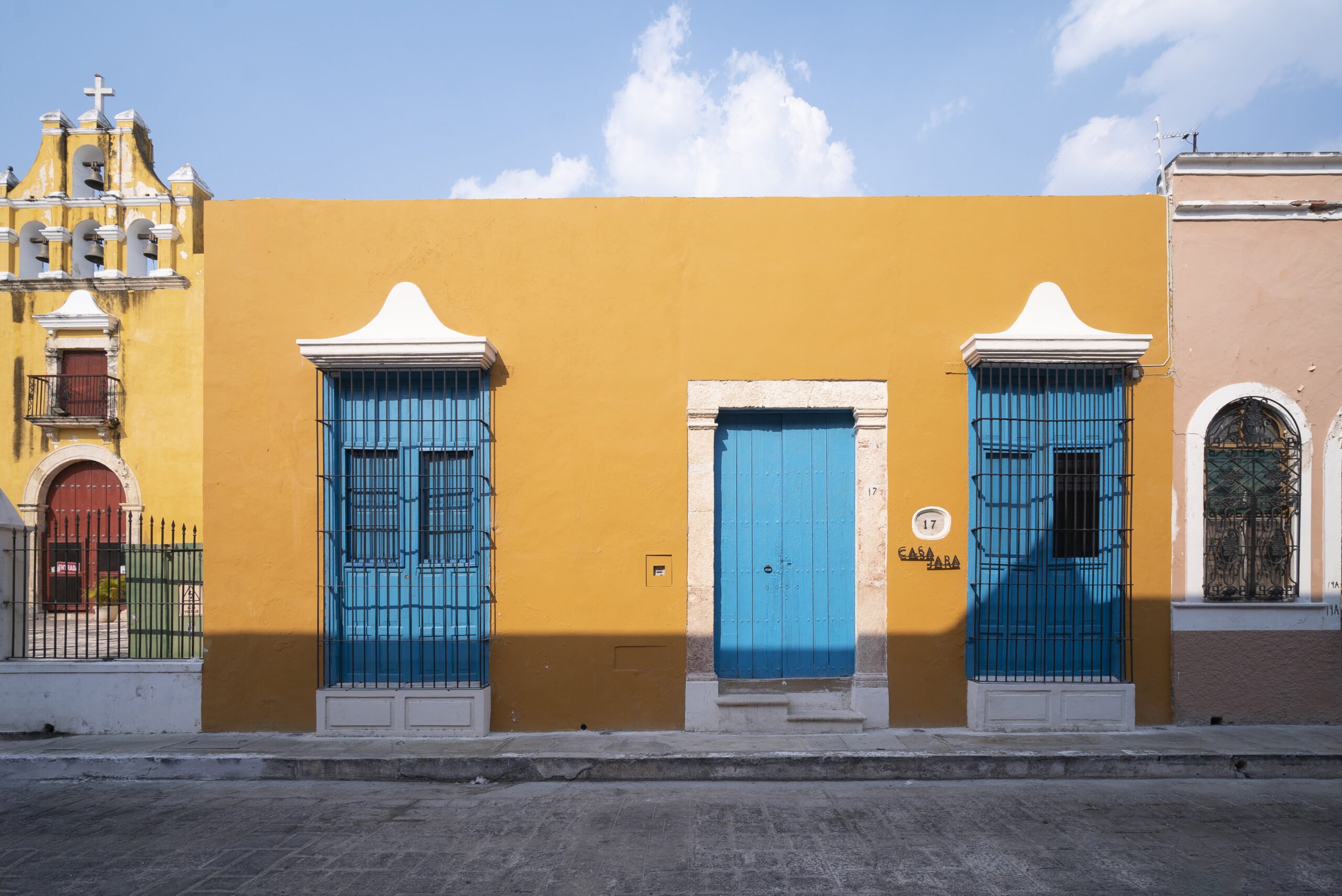
Red, blue and a century-old door: color as identity, Casonas MX, Campeche
The palette and what it reveals
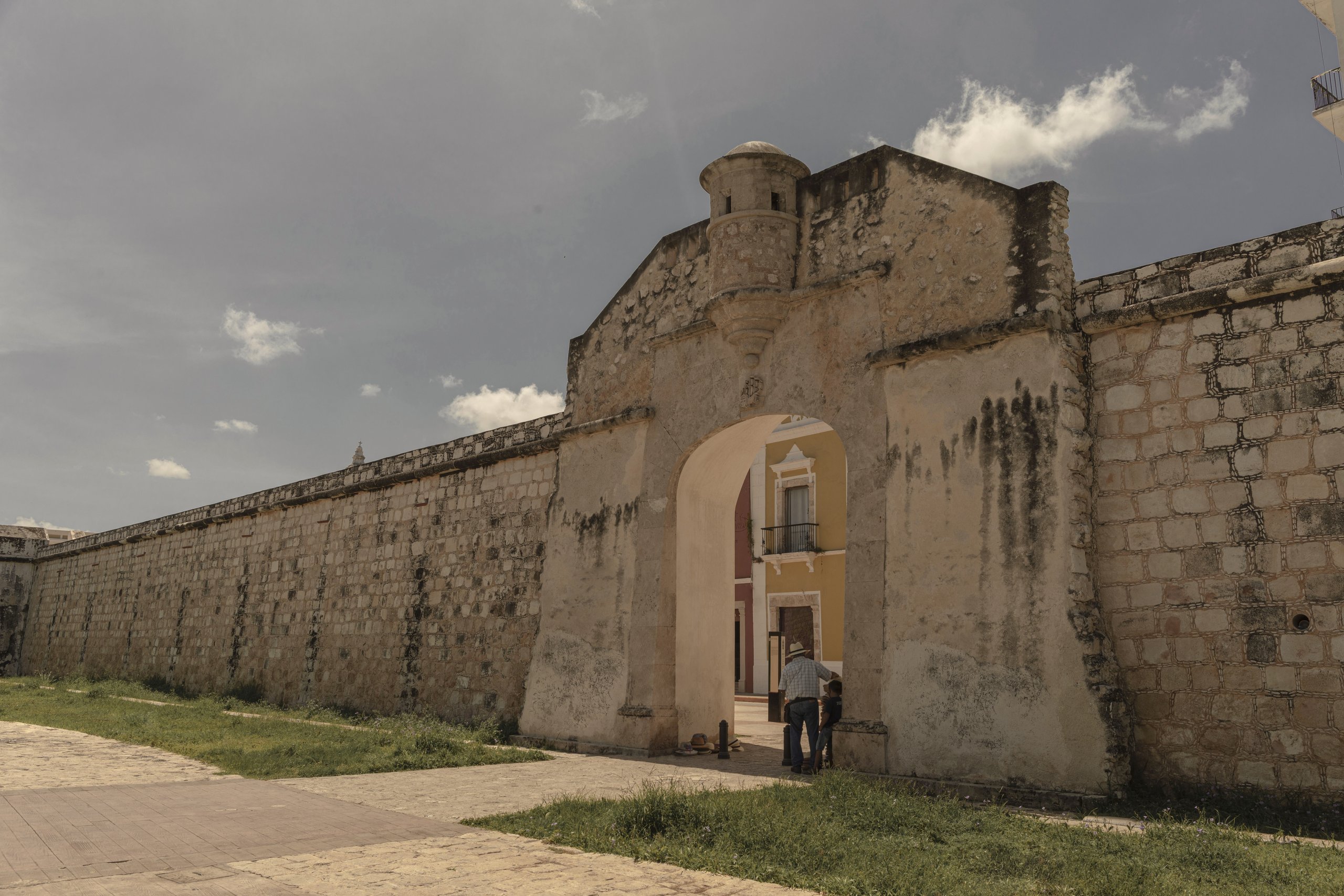
Facade colour is regulated to preserve the harmony of the whole: the Urban Image Regulation requires keeping a similar colour range, and any change is approved case by case through the municipality, with the sign-off of the Instituto Nacional de Antropología e Historia (INAH), in the same protected zone that received the UNESCO World Heritage designation in 1999.
Yellow and gold remain the most common, historically associated with civic and religious power.
Terracotta and ochre appear on residential streets, the warmest tones in the city's palette.
Cobalt blue and deep blue mark buildings that were historically among the most prosperous. Blue pigments were significantly more expensive than earth tones.
Mint green and sage green became more frequent in the 19th century, associated with the Porfirian period.
| Colour | What it usually signals |
|---|---|
| Yellow and gold | The most common; tied to civic and religious power |
| Terracotta and ochre | The warmest tones; common on residential streets |
| Cobalt and deep blue | Prosperous buildings; blue pigment was the costliest |
| Mint and sage green | More frequent in the 19th century, tied to Porfirian taste |
How to read a building
Start with the doors: the scale of the entrance and the quality of the carpentry speak to the resources of the original owner. Observe the windows. Ground-floor windows typically carry heavy iron grilles, a security element from a city that spent two centuries defending itself from pirate attacks from the Gulf. To take this reading into the street, lean on our architecture guide; the colour, too, shifts in accent from one neighbourhood to the next.
The living city
What makes Campeche's urban landscapes remarkable is not their preservation in amber, it is their continuous habitation. Most of the buildings you walk past are homes. The historic center is not a museum. It is a city that happens to be very old and very beautiful, and that has chosen to keep that beauty alive.
Planning your trip? Write to us on WhatsApp and we will send you Campeche in 72 Hours, our pocket guide, free of charge.
Receive the guide on WhatsApp →Sleeping among the colors
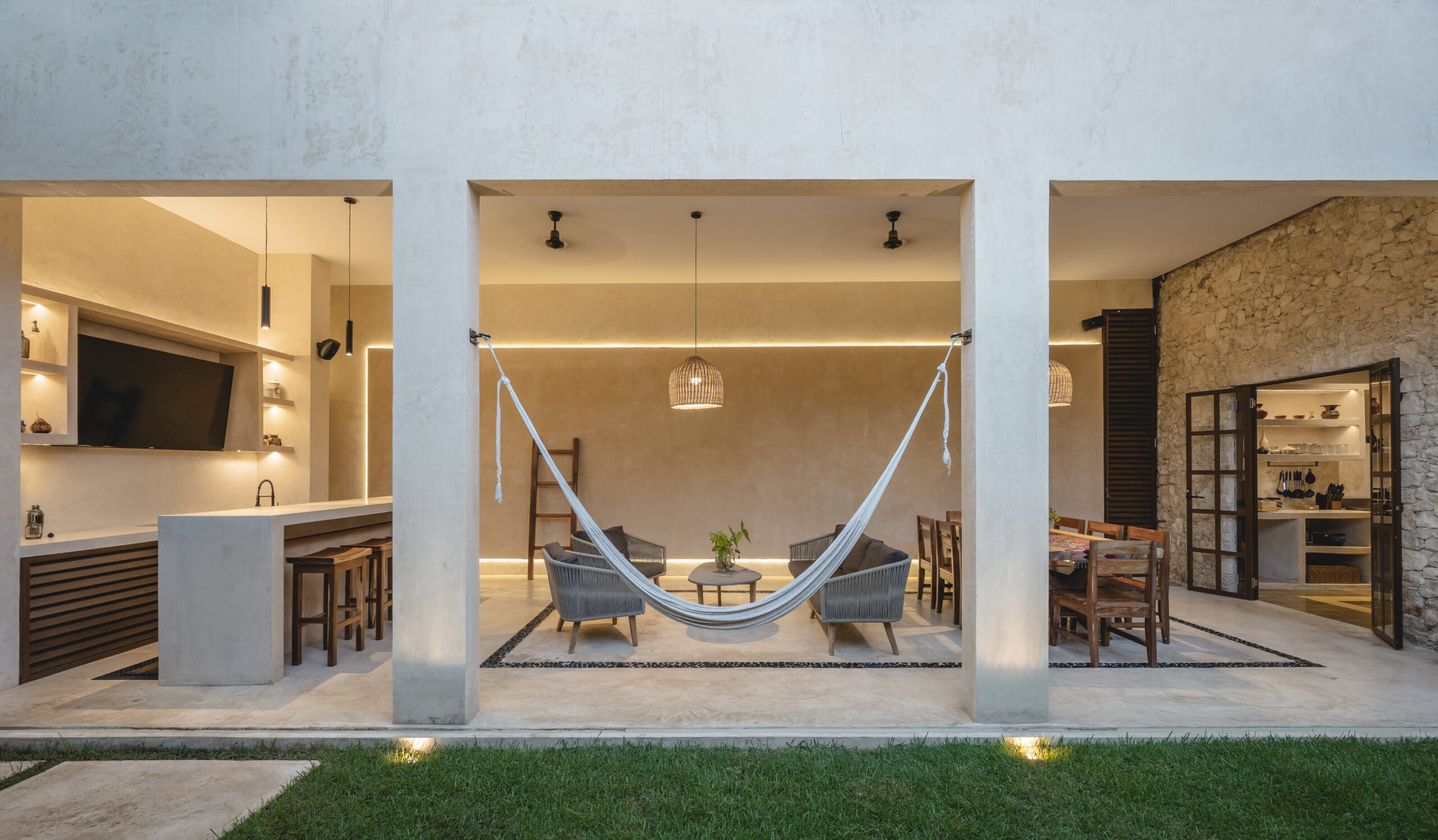
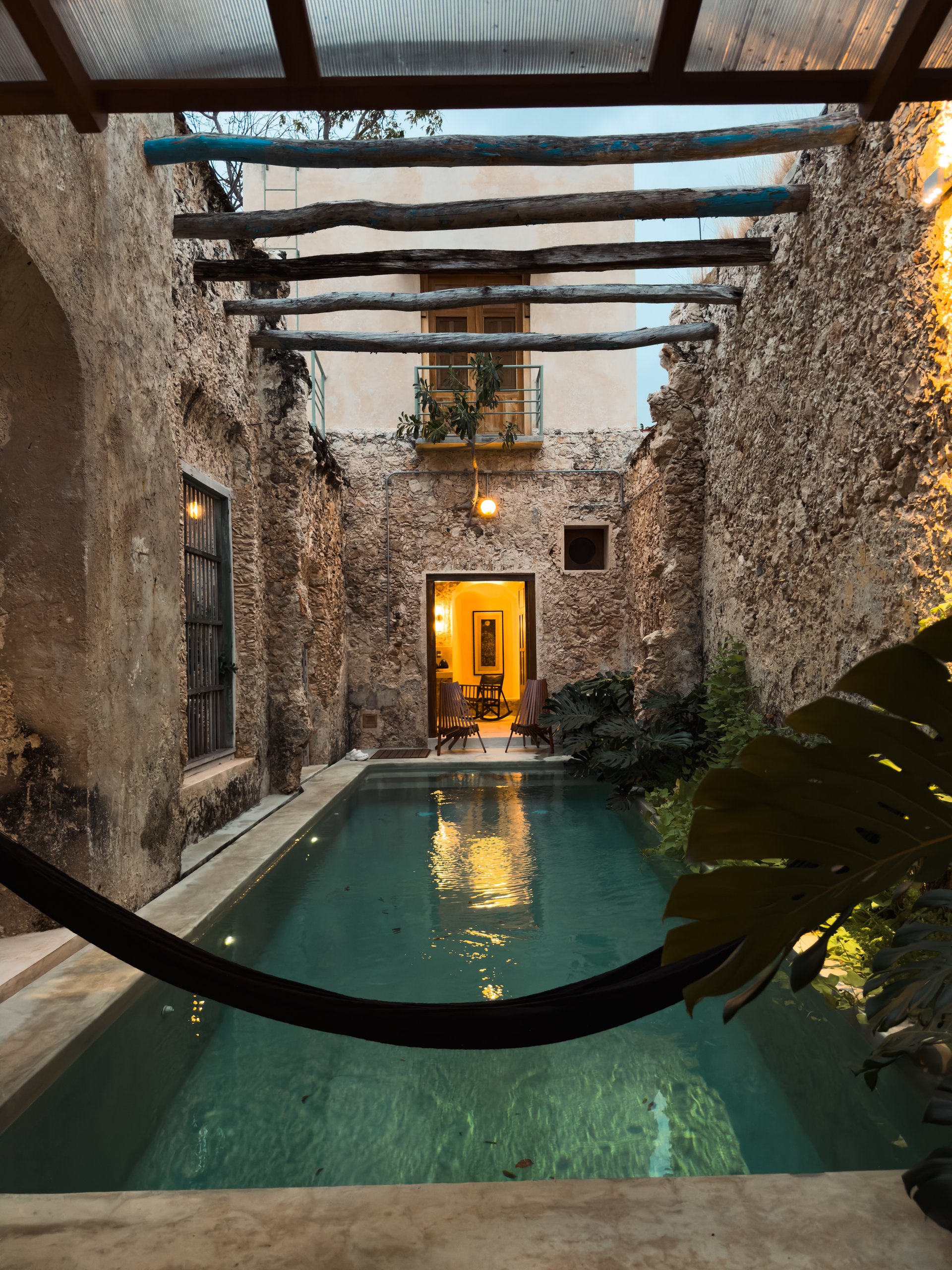
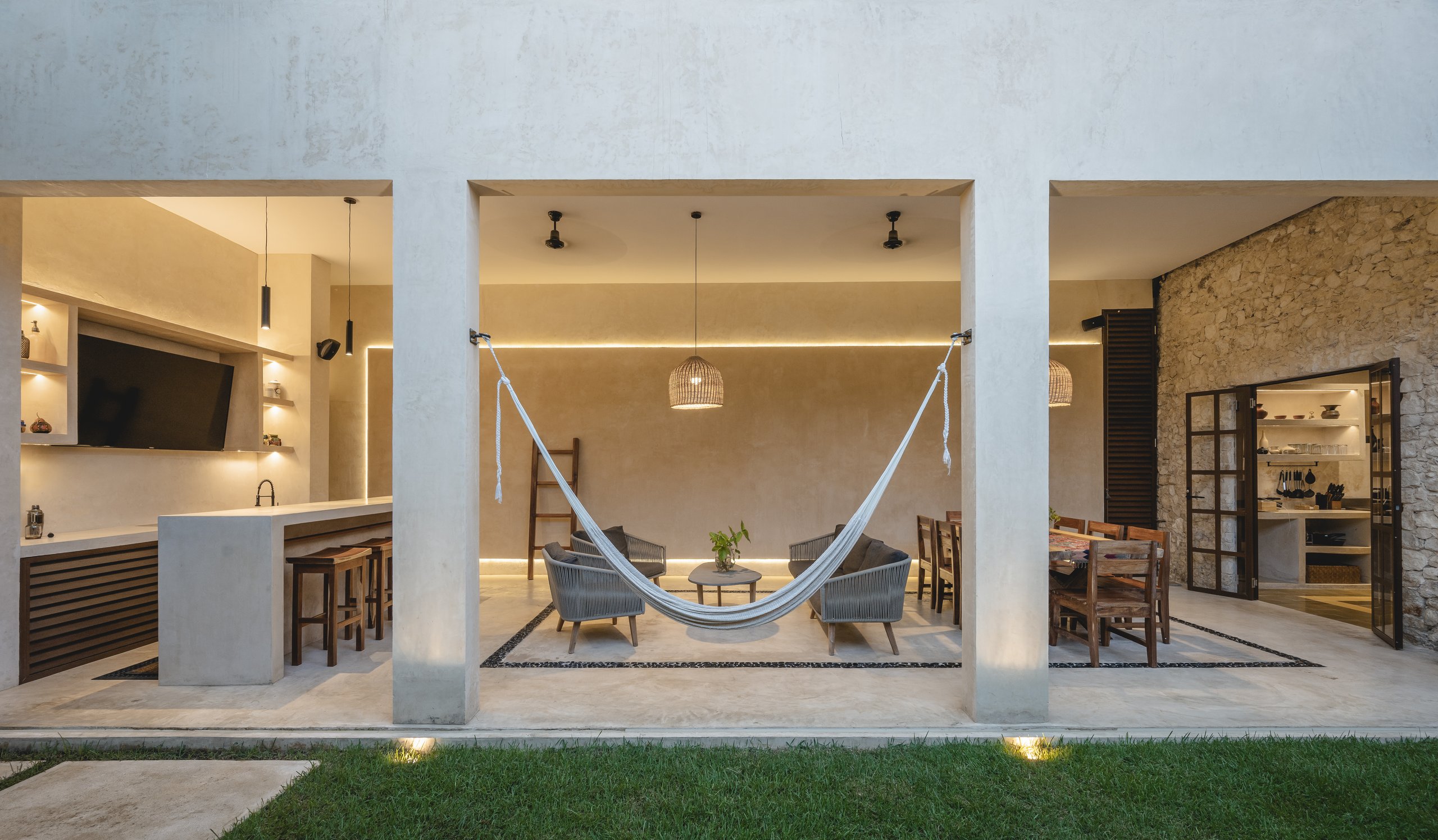
The best way to understand this palette is to wake up inside it. Casonas MX's restored homes, from Casa Japa to Casa Muralla, keep the colored facades and interiors that give the center its character. For context, read the architecture of memory and where to stay.
Frequently asked questions
Why are Campeche's houses so colorful?
Through colonial tradition and conservation rules that maintain the chromatic harmony of the UNESCO World Heritage center.
Which colors dominate Campeche?
Ochres, yellows, indigos, terracottas, pinks and greens, on lime-and-pigment facades. More context in Mexican colonial architecture.
Do the colors have a meaning?
They combined aesthetics, status and practical function (lime protected the walls); today they are a hallmark of the city's identity.
Where are the painted facades best seen?
Along the streets of the walled enclosure, on foot, especially at golden hour. Ideas in a weekend in the center.
Can you sleep in one of these colorful houses?
Yes: Casonas MX restores heritage homes in the center; see them in the collection.
Reviewed and fact-checked in July 2026 by the Casonas MX editorial team in Campeche, with the colour rules cross-checked against the municipal Urban Image Regulation and the UNESCO listing. We restore and live in these coloured houses inside the walled city.