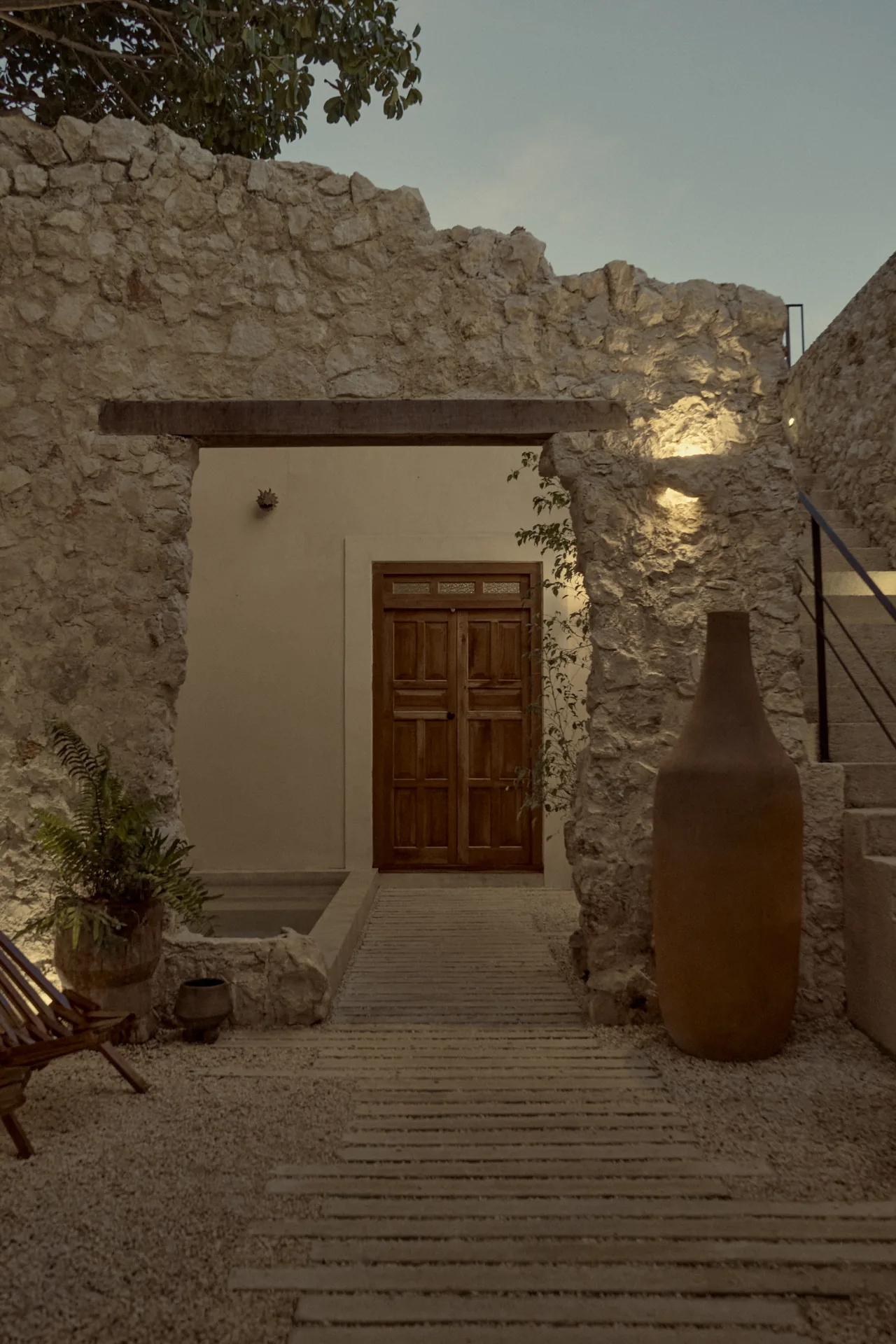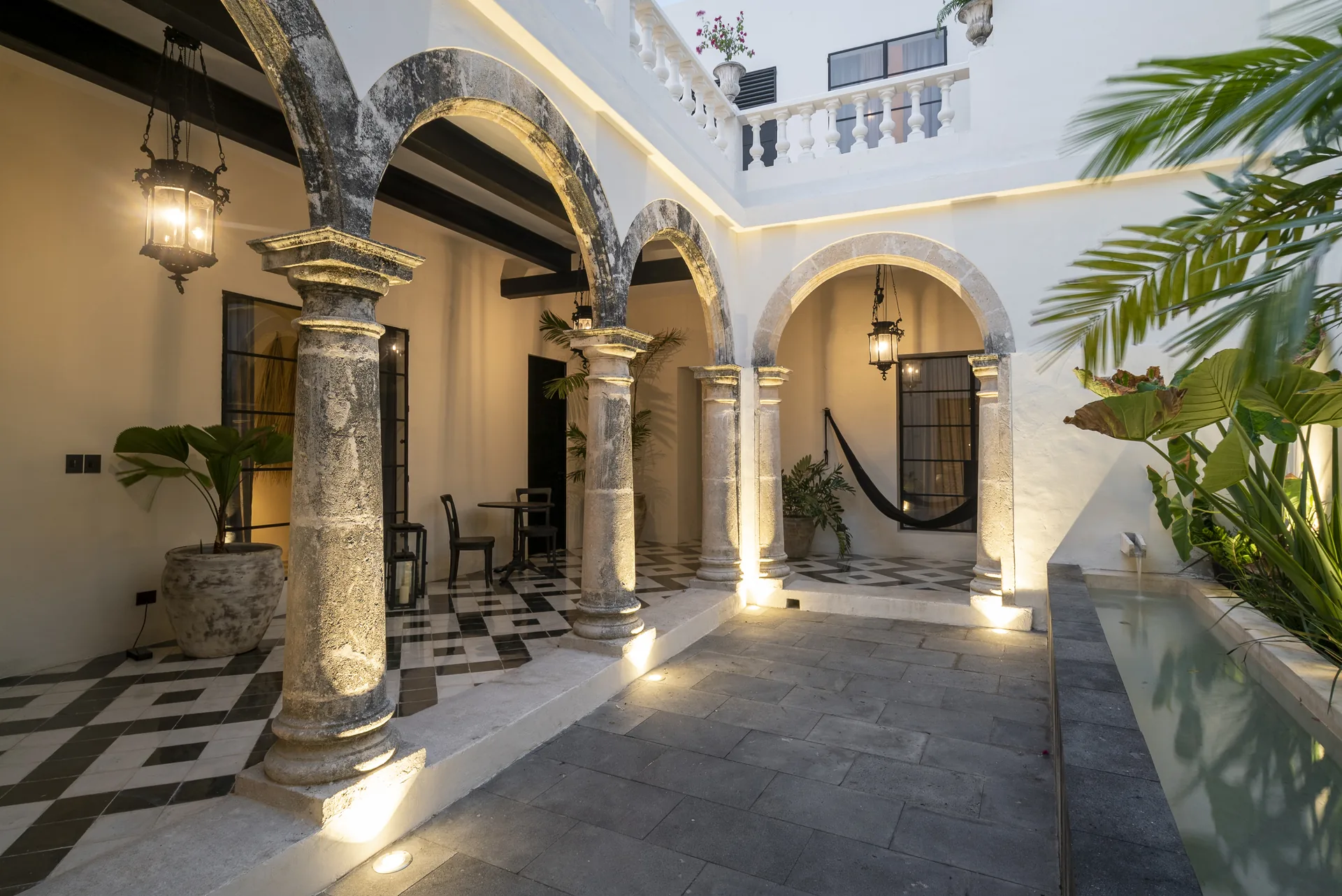
There is a difference no brochure quite captures: visiting Campeche from the outskirts is nothing like waking up inside its walled enclosure. Crossing the city in a day is one thing; stepping out in the morning to buy bread among ochre facades, watching the light slide down a three-century wall, and returning in the afternoon to a house that is itself part of that history is another.
That is why where to stay in Campeche is not a logistical footnote but the decision that shapes the whole trip. The short answer: the best area is the walled historic center or its immediate surroundings. The long answer, which street, which kind of house, for which kind of trip, is what this guide is about.
We write it from the inside. Casonas MX restores and inhabits heritage homes in Campeche, so this is not theory: it is what we have learned by living the city house by house.

The yellow facade of a colonial house in the historic center, Casonas MX, Campeche
Where to stay in Campeche, in brief
- The best area is the walled historic center or its immediate surroundings.
- Boutique heritage homes offer more privacy, space and character than a hotel room.
- Casonas MX is a collection of restored heritage homes, more than a hotel, spread across the center.
- There is a home for every trip: couples, families, groups, digital nomads and design travelers.
- Staying inside lets you walk to museums, bastions, restaurants and the malecón.
Comparing cities before you decide? Read Mérida vs Campeche too.
Why the area matters more than it seems
Campeche is a city built to human scale. Its fortified historic center, inscribed by UNESCO in 1999, fits almost entirely within a small grid of flat, short streets. From a well-placed house you can walk to the bastions, the Cathedral, the malecón and the best seafood tables without ever taking a taxi.
But location is only half of it. What sets the center apart is its rhythm. As the afternoon fades and the day-trip buses leave, the streets empty and the city changes character: facades glow in the warm light, courtyards breathe, and the silence we describe in what it feels like to stay inside the walls becomes almost physical. Stay outside and you miss that second city, the one that only appears at night.
Campeche's areas: where to sleep depending on what you want
Not all of the center is the same. These are the areas we know well:
- Inside the walled enclosure. The heritage heart: cobbled streets, restored houses, everything a stroll away. Its backbone is Calle 59, the pedestrian street of colored facades and open-air tables where the Narrativ lofts of the collection also live. Ideal for a first trip and for anyone who wants to live the center by day and by night.
- Along the foot of the wall. The edge where the colonial city meets the sea. Here a terrace can have the 17th-century stone canvas within arm's reach.
- Adjoining historic neighborhoods, San Román, Guadalupe, San Francisco. A few minutes on foot, quieter and full of local life: old churches, family eateries and fewer visitors. A good choice for longer stays.
If your trip revolves around the built heritage, Campeche for architecture lovers goes deeper into what lies behind those facades.
Boutique hotel, private villa or historic home: how to decide
Many travelers search for a “boutique hotel in Campeche,” but when they describe what they actually want, good location, considered design, privacy, an authentic experience, they are usually describing something else: a house.
A hotel handles the predictable well: a front desk, a restaurant, services on demand. A boutique heritage home offers a different scale of experience: the whole house to yourself, private courtyards, more room, and a direct relationship with the architecture rather than a standardized bedroom. Casonas MX lives precisely in that middle ground, the attentiveness of boutique with the intimacy of a residence, more than a traditional hotel and more intimate than a generic vacation rental: a curated collection of heritage homes.
What makes a restored historic home different
A historic home is defined not by its age but by how past and present coexist within it. In a good restoration, the masonry walls, the cement-tile (mosaico de pasta) floors, the beamed ceilings and the original proportions are not décor: they are the identity of the place. Onto that foundation goes the comfort a traveler expects, good beds, climate control, working bathrooms, reliable internet, impeccable cleanliness.
The balance is the craft: keeping the character without sacrificing comfort. When it works, the house feels neither like a museum nor a hotel, but like a place to inhabit. That is the logic of the house hotel: entire private homes with hotel service.
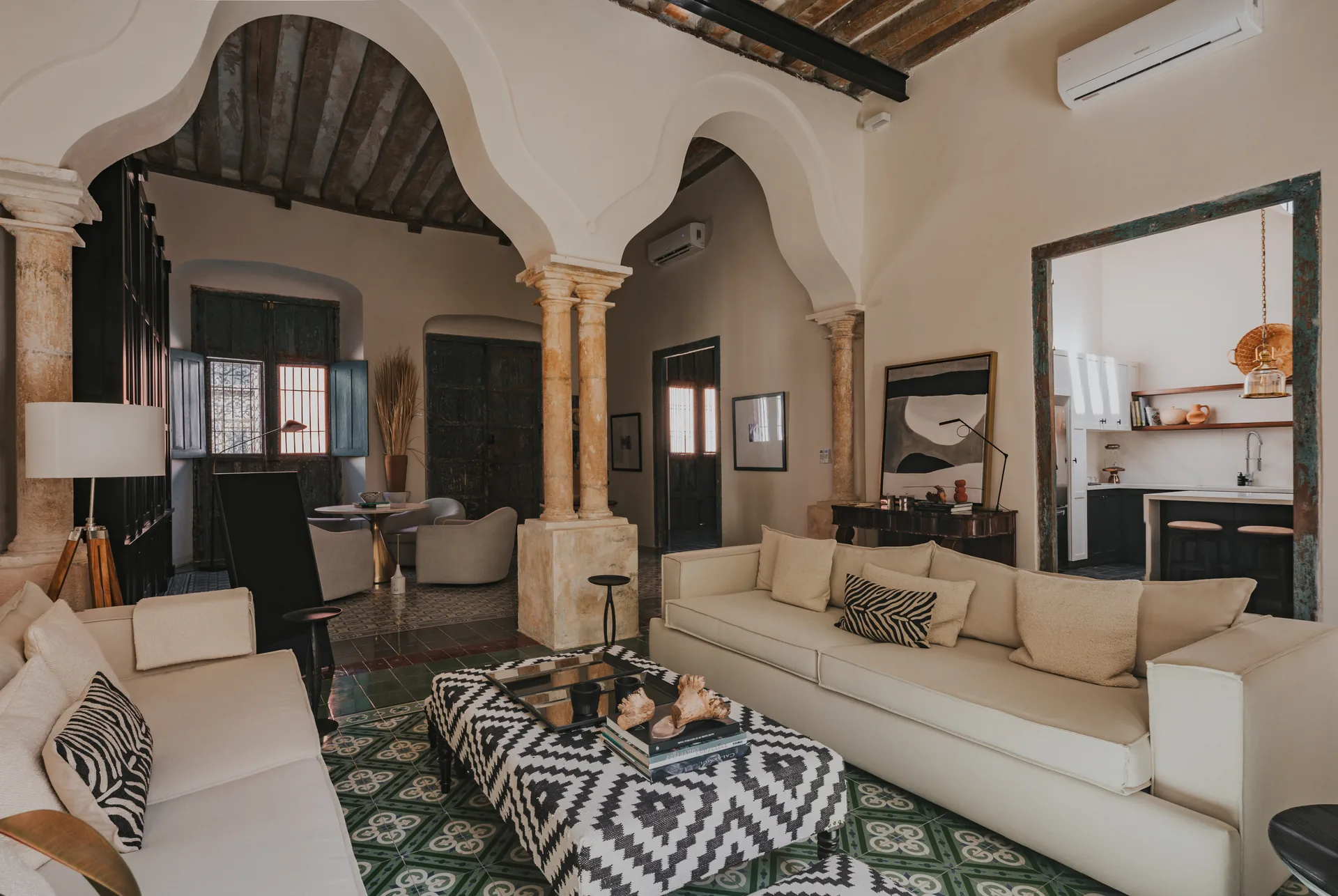
Columns, arches and original walls in a restored living room, Casonas MX, Campeche
Casonas MX: the city from the inside
Casonas MX is a Mexican premium-hospitality brand specializing in restored heritage homes in Campeche. Instead of one building, the collection is spread across the center, a hotel with no lobby, distributed among courtyards and streets, so that every stay happens in a house with its own history, not in a room identical to the one next door.
Each house has its own personality: some made for couples, others for families or groups; some with a courtyard, terrace or pool; others defined by their intimacy or architectural value. That variety is deliberate: it lets you match the trip to the space.
Which home for which trip
The useful question is not only where, but which. A quick orientation by who you travel with:
- Couples and romantic escapes. Intimacy, a good terrace and the wall nearby: Casa Muralla or Casa Pistache. More ideas in our guide for couples.
- Families and groups. A whole house, several bedrooms and space to gather: Casa Japa or La Casa Verde. For larger gatherings we combine homes; we coordinate it in groups and weddings.
- Digital nomads and design travelers. The contemporary lofts Lira, Numen, Solario and Serena, made to stay, work and live. More in digital nomads.
- Heritage travelers. Homes with historic weight such as Casa Ex Templo or Casa Zotz, for those who travel for the architecture itself.
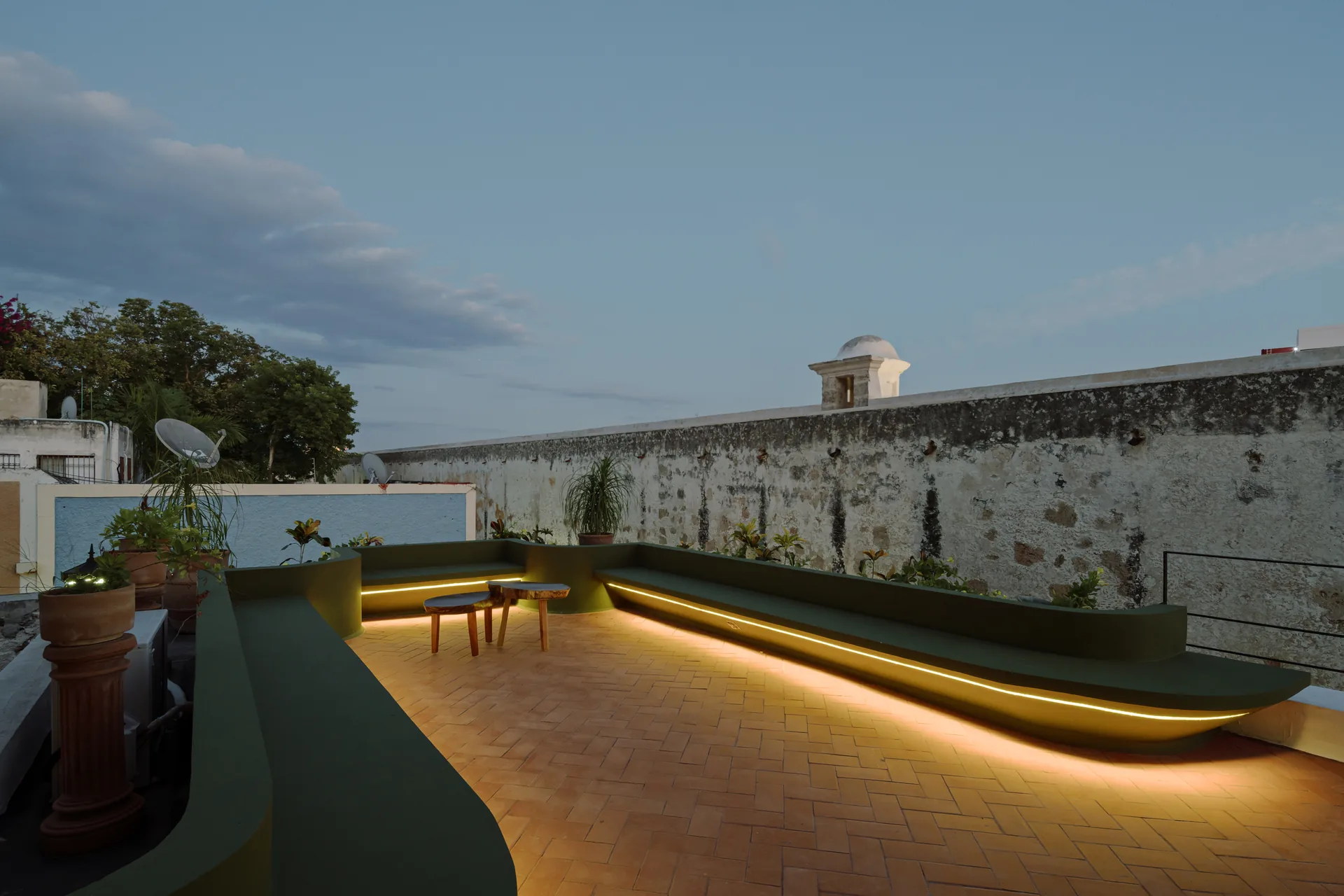
The 17th-century wall within arm's reach from the terrace of Casa Muralla, Casonas MX, Campeche
| You travel | Suggested home | Why |
|---|---|---|
| As a couple | Casa Muralla or Casa Pistache | Intimacy, a terrace and the wall nearby |
| Family or group | Casa Japa or La Casa Verde | Whole house, several bedrooms, shared spaces |
| Nomad or design-led | Lira, Numen, Solario or Serena lofts | Contemporary, made to work and live in |
| For the heritage | Casa Ex Templo or Casa Zotz | Historic weight and architectural value |
Planning your trip? Write to us on WhatsApp and we will send you Campeche in 72 Hours, our pocket guide, free of charge.
Receive the guide on WhatsApp →Five things worth checking before you book
- Location: check the exact address on the map. Some places advertise as historic center and sit fifteen minutes away by car; inside the walls means being able to walk back home at midday.
- Privacy: ask what a whole house actually means. If the courtyard, the pool or the entrances are shared with other guests, it is not a private house.
- Architecture: tell restoration from reproduction. Original pasta-tile floors, wooden beams and masonry walls are hard to fake; ask for real photos of the space.
- Service: the test comes before you book. If communication is slow or generic during the inquiry, it will not improve during the stay; a single point of contact with a name is worth more than a front desk.
- Local knowledge: your host should live the city. Restaurant reservations, transfers to Edzná or a chef in the courtyard: the difference between a host and an administrator shows from the first recommendation. More in our experiences.
Getting around and when to come
Inside the center almost everything is done on foot; it is flat, compact and safe by day and by night. For excursions to Edzná or the natural reserves a transfer makes sense, and we arrange it without friction; to order the days, follow our Campeche itinerary. The best season is the dry one, November to April, we detail it in when to visit Campeche, and to plan your arrival there is our guide to getting to Campeche.
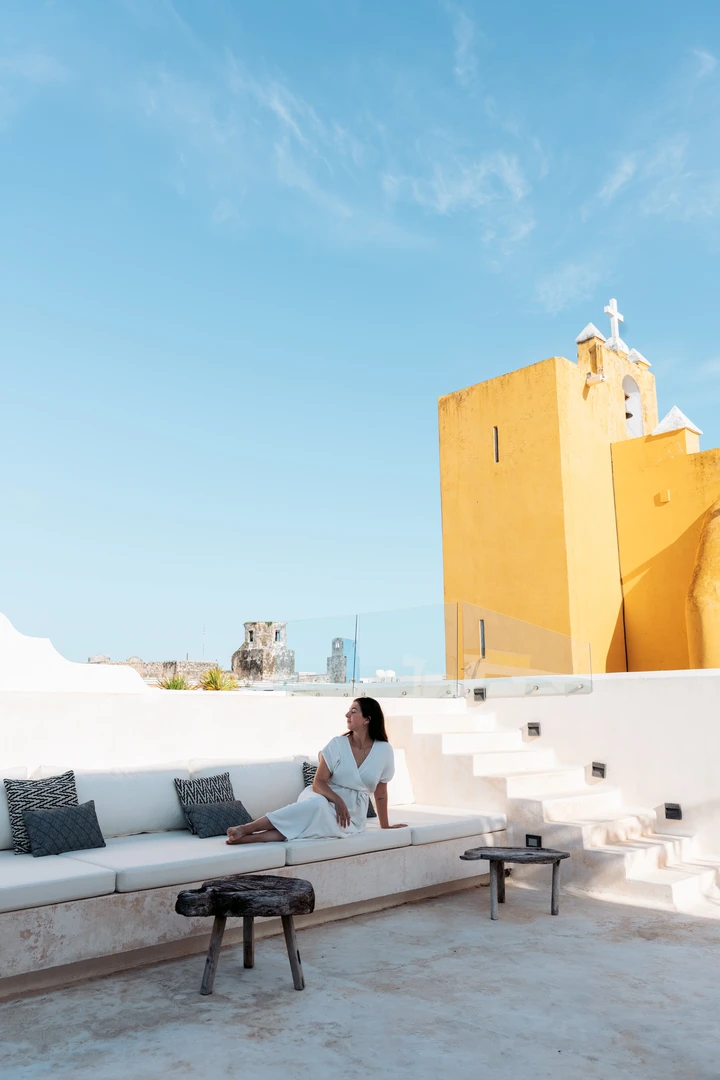
A rooftop above the historic-center rooftops, Casonas MX, Campeche
Book direct, stay better
Booking directly with Casonas MX, by WhatsApp or email, means a conversation with the people who know each house, and the chance to shape the stay: recommendations, transfers, a chef in the courtyard or an experience designed for your group. That closeness is, in the end, the difference between sleeping in Campeche and living it.