There is a question more and more travelers ask in front of the screen: I want the privacy of an entire house, but I do not want to give up the service of a good hotel. Does that exist? It does, and it has a name: the house hotel. It is more than a boutique hotel and more than a vacation rental with a lockbox: a third category with rules of its own, perfected in a handful of places around the world, and in southeastern Mexico it lives inside the walled city of Campeche.
This guide explains the category from the inside: what defines it, where it comes from, how it differs from its neighbors, and what it feels like in practice, house by house.
What is a house hotel
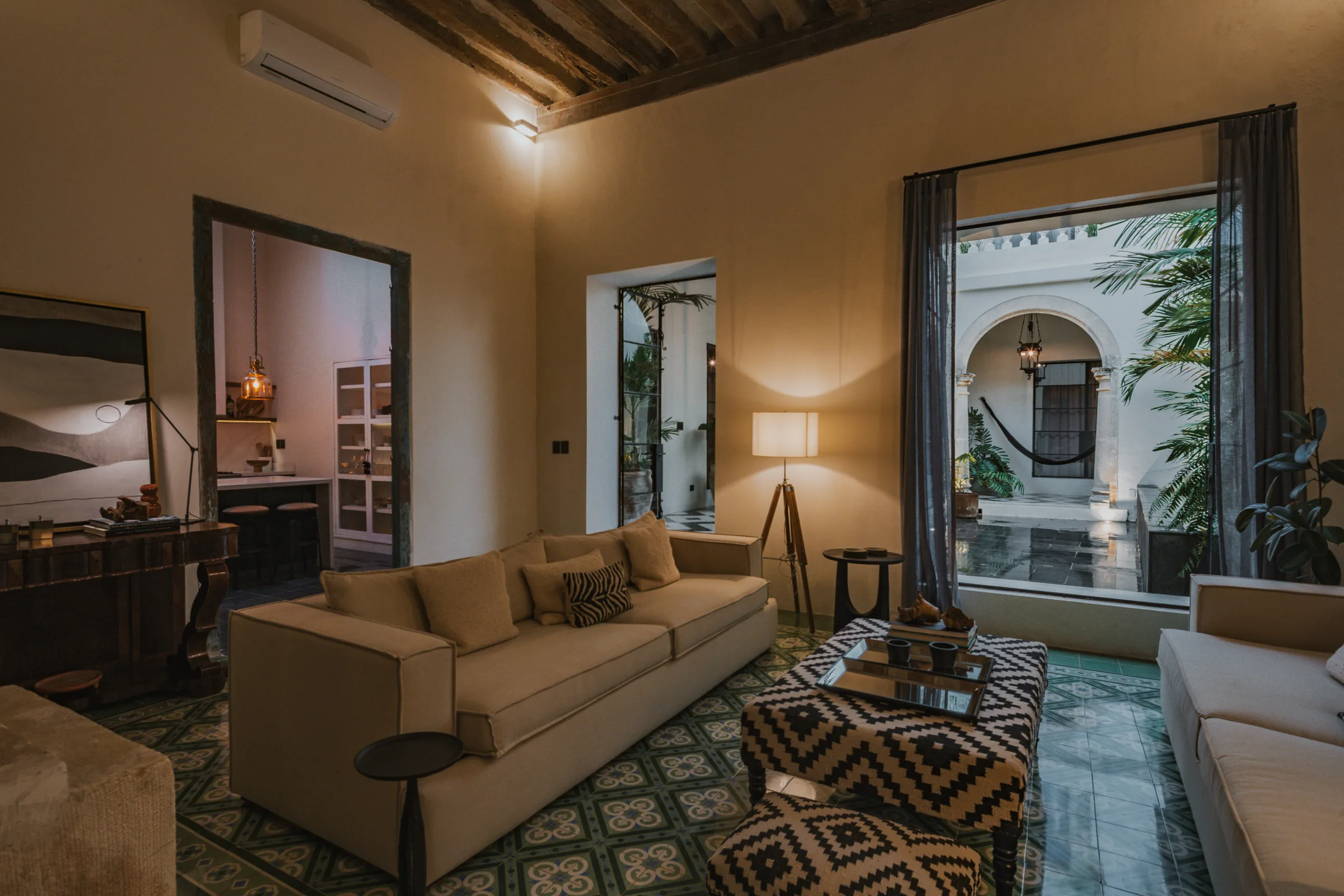
A house hotel is a hotel whose rooms are not rooms: they are entire houses. The main way to book is the whole house or loft. Layouts and outdoor spaces vary by stay; six casonas have a private pool. A single hospitality team looks after every stay, with a House Manager who coordinates arrival and departure. Breakfast is included at all of them; at Casa Japa, La Casa Verde and Casa Zotz a cook prepares it, and a private chef is available on request. The conversation with the team is direct before, during and after the trip.
The formula fits in two sentences: “The privacy of a home. The service of a hotel.” In practice, it means opening the door of your own house when you come back from the city, and having someone to write to when you need something: at Casonas MX that conversation happens on WhatsApp, from the first question to the last recommendation.
A category with references around the world
The model is rare because it demands something hard to assemble: several restored historic houses within the same protected urban fabric, plus a hotel team operating them as one collection. Where it has been achieved, reference brands have emerged. In Santo Domingo, Casas del XVI hosts guests in houses of the Colonial City with a butler per house. In Trancoso, Brazil, UXUA Casa Hotel restored historic casas on the Quadrado with local artisans and turned them into a design icon. In Italy, the albergo diffuso model, the hotel dispersed through the houses of a village, of which Sextantio is the most cited example, proved that sleeping in a restored village can be an experience of cultural luxury.
Campeche belongs to that short list of places where the model is possible: a fortified city inscribed by UNESCO in 1999, with entire blocks of eighteenth- and nineteenth-century casonas a few minutes' walk from one another. It is exactly the geography a house hotel needs.

Boutique hotel, vacation rental, house hotel: the difference
The confusion is natural, because the house hotel takes the best of two worlds. The difference is easier to see in columns:
| Criterion | Boutique hotel | Vacation rental | House hotel |
|---|---|---|---|
| The space | A room; common areas are shared | A house, with luck | An entire house, curated and restored |
| The service | Front desk and staff in the building | Depends on the host | House Manager and breakfast at every house; a cook and daily housekeeping at Casa Japa, La Casa Verde and Casa Zotz; a professional team behind every house |
| Who answers | The hotel | An individual host | A hospitality brand with years of operation |
| Privacy | That of a room | That of the house, without service | That of the house, with service |
| For groups | Separate rooms | One house, if it fits | Houses combined until the whole group is hosted |
If you are weighing that decision for a specific trip, our comparison of boutique hotel versus private home in Campeche develops it point by point, including the cases where the conventional hotel is the better answer.
How it works in practice: the Casonas MX collection
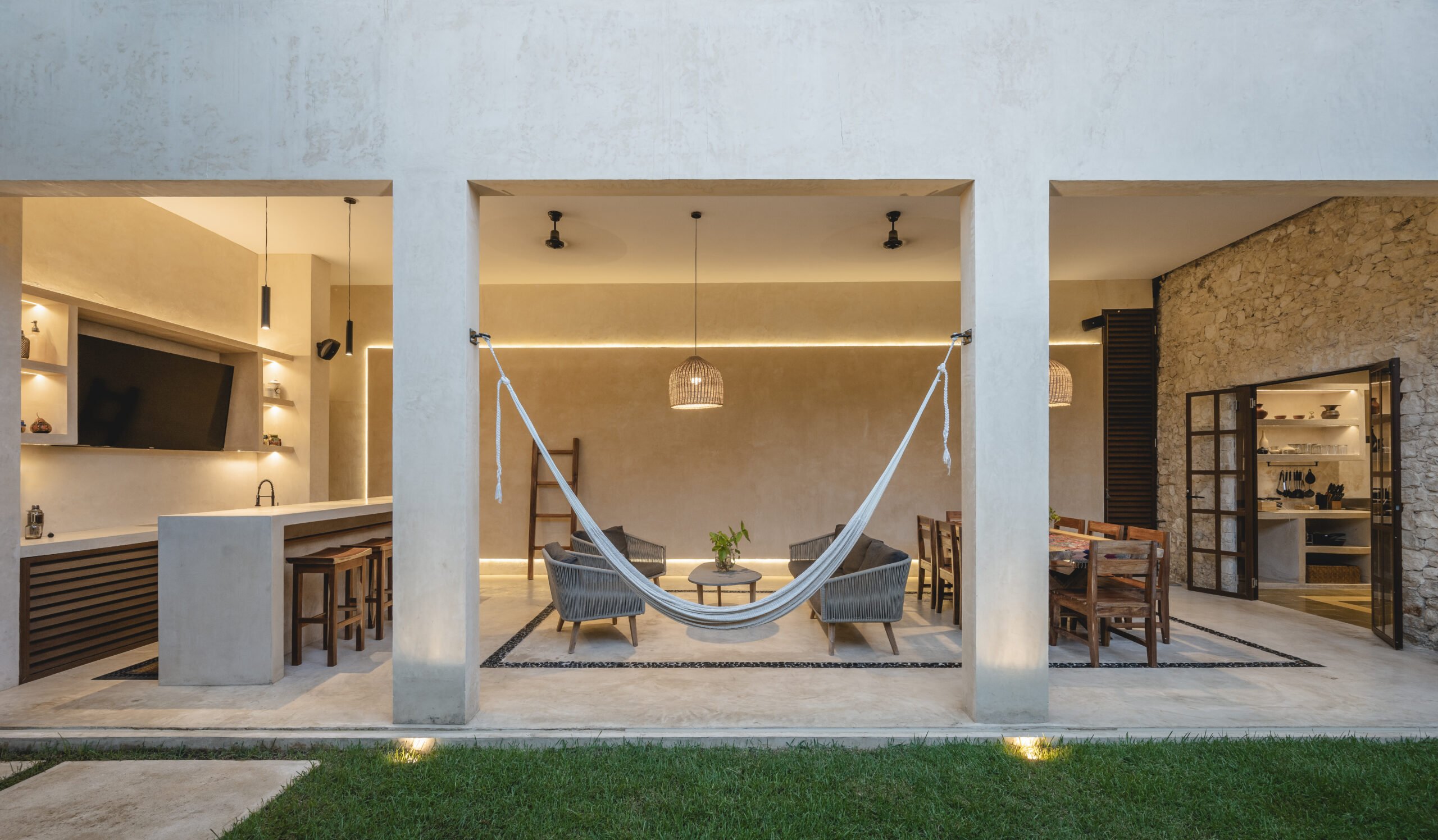
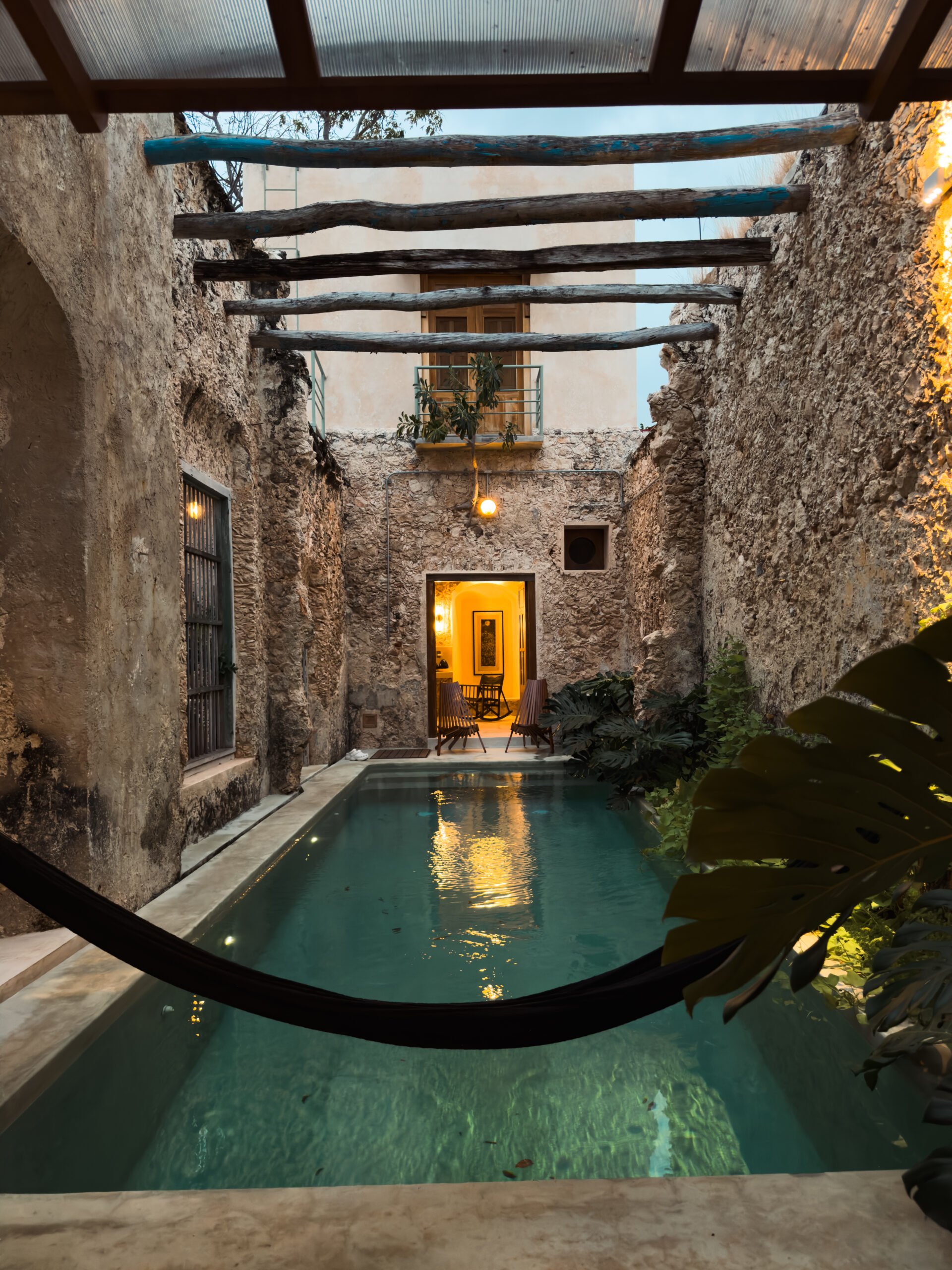
In Campeche, Casonas MX is a house hotel: eleven stays inside the walled city, all a few minutes' walk from one another and from the malecón. Seven are restored heritage casonas sleeping 2 to 10 guests each, with courtyards, a private pool in six of them and, in several, original beams and floors; four are one-bedroom contemporary lofts across two casonas, one on Calle 59 and the other on Calle 12, combinable and sleeping up to 4 guests each. Together: 21 bedrooms and capacity for 58 guests.
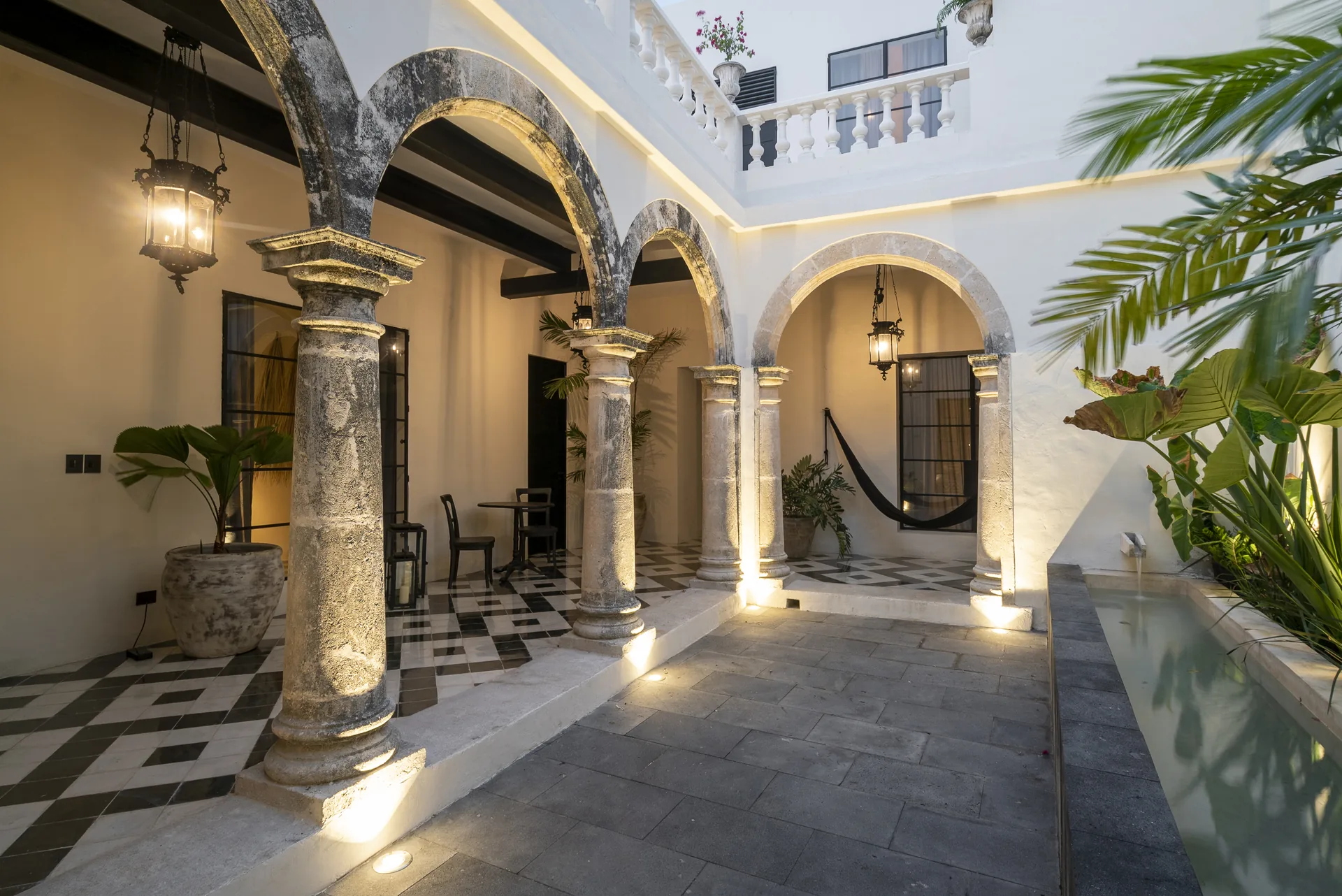
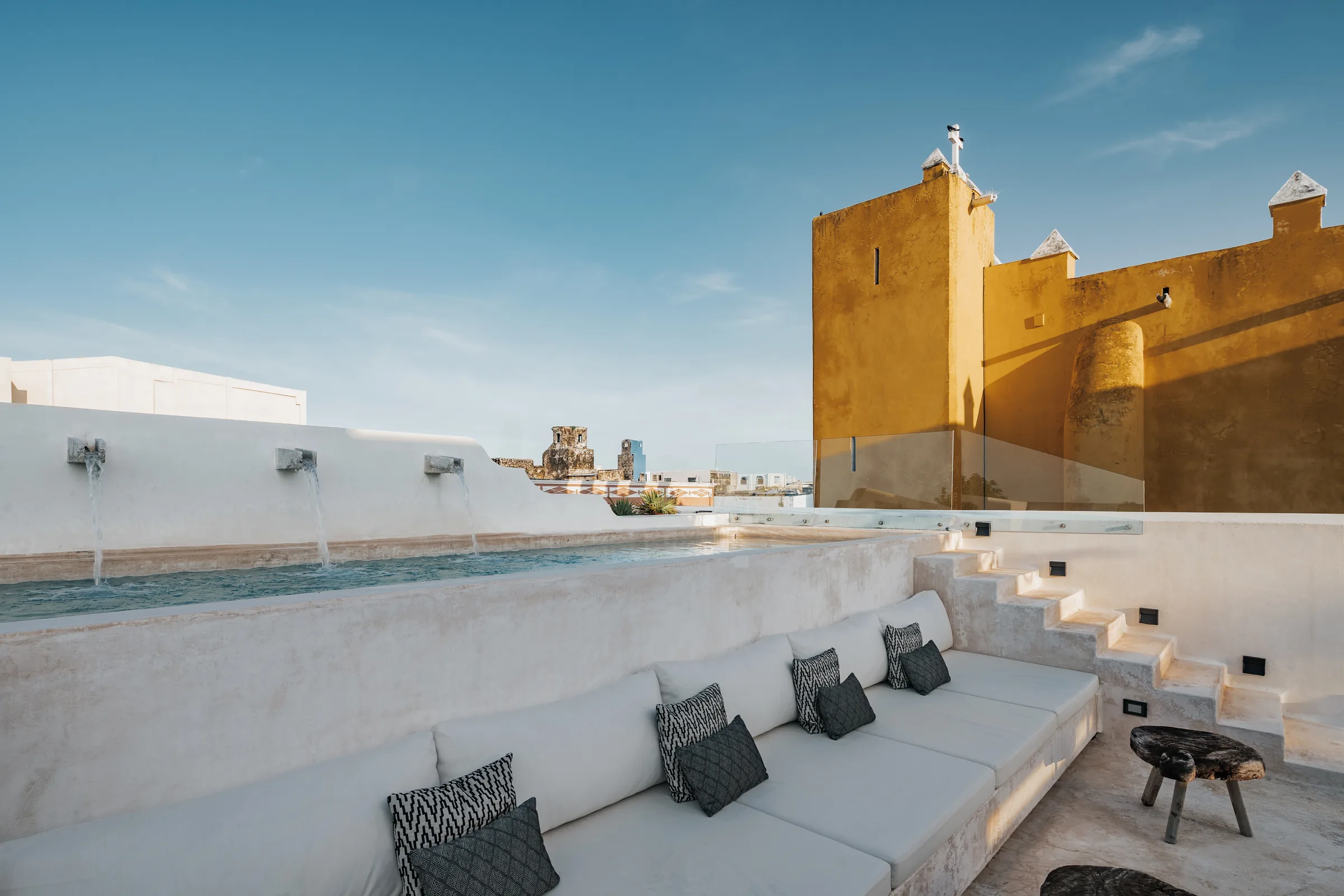
Each house has its own character, and part of that character has been recognized by others. Casa Japa has been part of the MICHELIN Guide hotel selection since April 2026, and the restoration of La Casa Verde won First Place in Restoration at the 7th Premio Península of AAI México in 2023. For guests, these recognitions translate into concrete spaces: at Casa Japa, a courtyard of stone arches and columns greets you from the entrance, and the rooftop pool looks out over the Jesús church; at La Casa Verde, you walk on the pasta-tile floors and under the wooden beams the restoration kept. The philosophy behind every rescue is set out in our restoration manifesto. What they all share has a name of its own: a House Manager, the single point of contact for each stay, who knows the city house by house. Casa Japa, La Casa Verde and Casa Zotz also have a cook for breakfast and daily housekeeping; at all of them, a private chef is available on request. When the group grows, the houses can be combined: Casa Japa and Casa Estrada, for example, are on the same street, Calle 55, and a group can split between the two without being far apart.
Who a house hotel is for
For families and groups who want to share breakfast in their own house. For couples who prefer a house for two, like Casa Muralla with its rooftop facing the wall, to a hotel room. For weddings and celebrations that need several generations sleeping near one another. For work retreats that need one house as headquarters and others as bedrooms. And for the traveler who understands that in a heritage city the best way to be there is not to look at it from a lobby but to inhabit it from within, as we tell in staying inside the walls.

The city as part of the hotel
In a house hotel, the hallway is the street. Stepping out of Casa Japa and walking among colored facades to the Plaza Principal, a few steps away, is as much part of the stay as the rooftop pool. That is why the model only works in cities made for walking: Campeche's walled city, with its sixteenth-century grid and its bastions, is one of them. Our guide on where to stay in Campeche explains the neighborhoods and distances; the short answer is that from any of the houses, the center, the bastions and the malecón can all be explored on foot.

Meet the seven casonas and the four lofts, and find your home in the walled city.
See the collection →Frequently asked questions
What is a house hotel?
A collection of houses and lofts operated by a single hospitality team with hotel services: a House Manager, breakfast included, a cook at Casa Japa, La Casa Verde and Casa Zotz and a private chef on request. The main way to book is the whole house or loft, not a room, and one brand answers for all of them.
Is a house hotel a hotel?
Yes, in everything a guest expects from a hotel: professional cleaning and presentation standards, a concierge, a team that answers throughout the stay and one brand behind every booking. And it is more than a hotel: instead of a room, the main way to book is a whole house or loft. That is why Casonas MX sits naturally among the hotels of Campeche, as a category of its own within the city's hospitality.
How is it different from a vacation rental?
In the service, and in who answers. A vacation rental hands over keys; a house hotel delivers an operated stay: an available concierge, hotel standards of cleaning and presentation, a cook for breakfast at Casa Japa, La Casa Verde and Casa Zotz and a private chef on request, and a professional team that knows every house because it restored it and inhabits it.
And from a boutique hotel?
In the space. A boutique hotel offers rooms with shared common areas; a house hotel offers entire houses: their kitchen, their outdoor spaces and, in most cases, their pool. The hotel service exists, but it comes to the house instead of waiting in a lobby.
What services does it include at Casonas MX?
A House Manager as your single WhatsApp contact, and breakfast included at every house. At Casa Japa, La Casa Verde and Casa Zotz, a cook prepares breakfast and there is daily housekeeping in the house; at the others, daily housekeeping is available at an extra cost. On request, a private chef and experiences in and around the city. For larger groups, we combine nearby houses, all managed by the same team.
How many guests can stay?
The full collection spans eleven stays (seven casonas and four lofts) and 21 bedrooms, with capacity for 58 guests: casonas sleeping 2 to 10 and lofts sleeping up to 4 each. A group can take one house or combine several, all within a few minutes' walk of one another inside the walled city.
Reviewed and verified in September 2026 by the Casonas MX editorial team in Campeche. Collection data (eleven properties, 21 bedrooms, 58 guests, casonas sleeping 2 to 10) reflect the current Casonas MX inventory. The category's international references (Casas del XVI in Santo Domingo, UXUA Casa Hotel in Trancoso, and Italy's albergo diffuso model, with Sextantio as its example) are cited from their official sites and the Michelin Guide. Campeche's World Heritage inscription (UNESCO, 1999) is verified against official sources. Casa Japa's MICHELIN selection was verified on the Guide's official listing, and La Casa Verde's award in our press room. We restore and inhabit heritage houses inside the walled city.
Planning your trip? Message us on WhatsApp and we will send you Campeche in 72 Hours, our pocket guide, free of charge.
Get the guide on WhatsApp →