
Manifesto
Restoration Manifesto
A house with centuries of history deserves more than a renovation: it deserves an interpretation. This is how we restore, and how we inhabit, the houses of the walled city of Campeche.
A house with centuries of history deserves more than a renovation: it deserves an interpretation. This is how we restore, and how we inhabit, the houses of the walled city of Campeche.
There are two ways to treat a historic house: turn it into scenery or bring it back to life. At Casonas MX we chose the second. We are a collection of eleven houses inside the walled city of Campeche, a UNESCO World Heritage Site, and every one of them joined the collection the same way: through a patient, authorized, documented rescue.
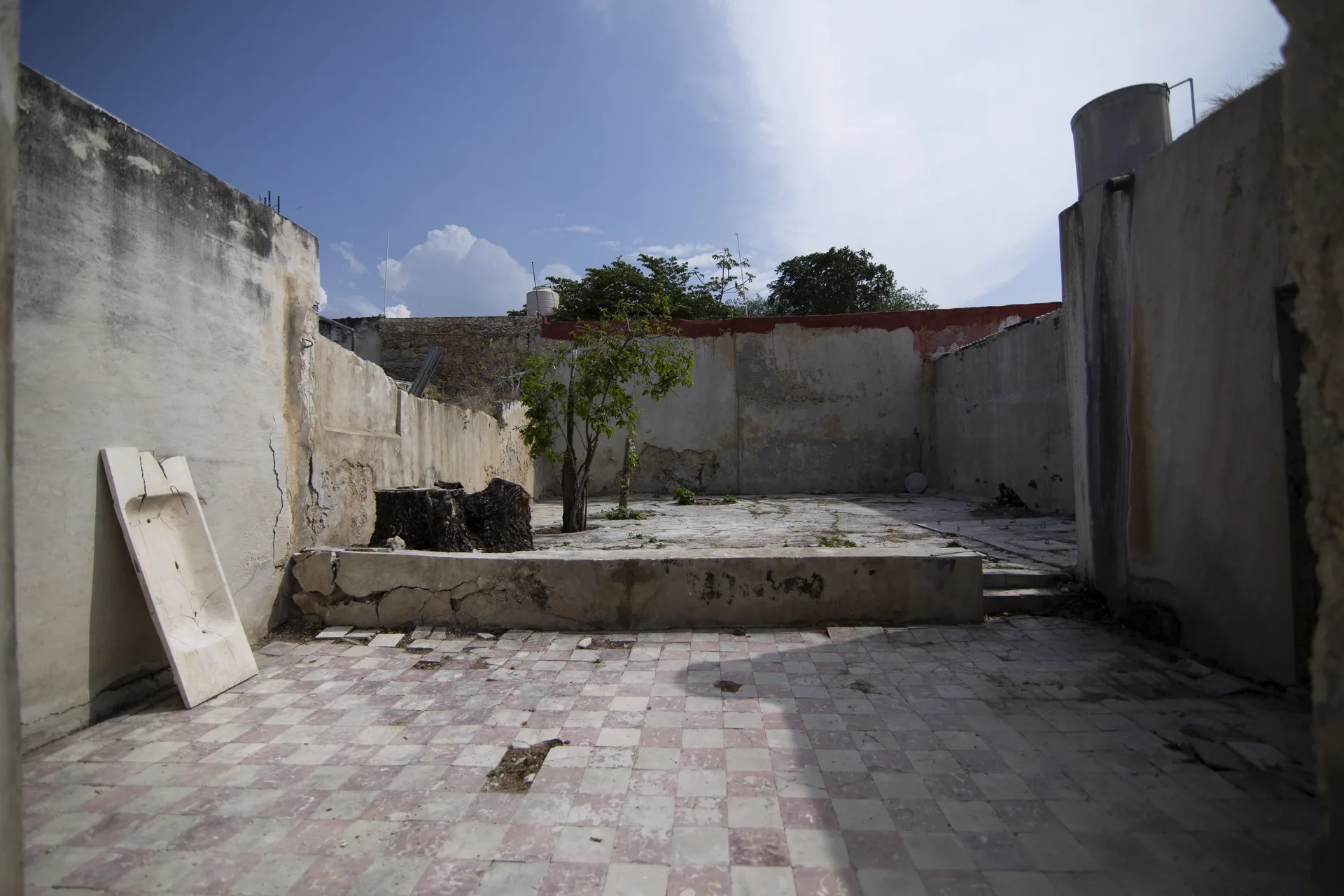
Every intervention begins with a diagnosis: as-found drawings, a record of what is original and what was added, and an element-by-element decision on what is preserved, what is consolidated and what is replaced. The house is not corrected: it is read.
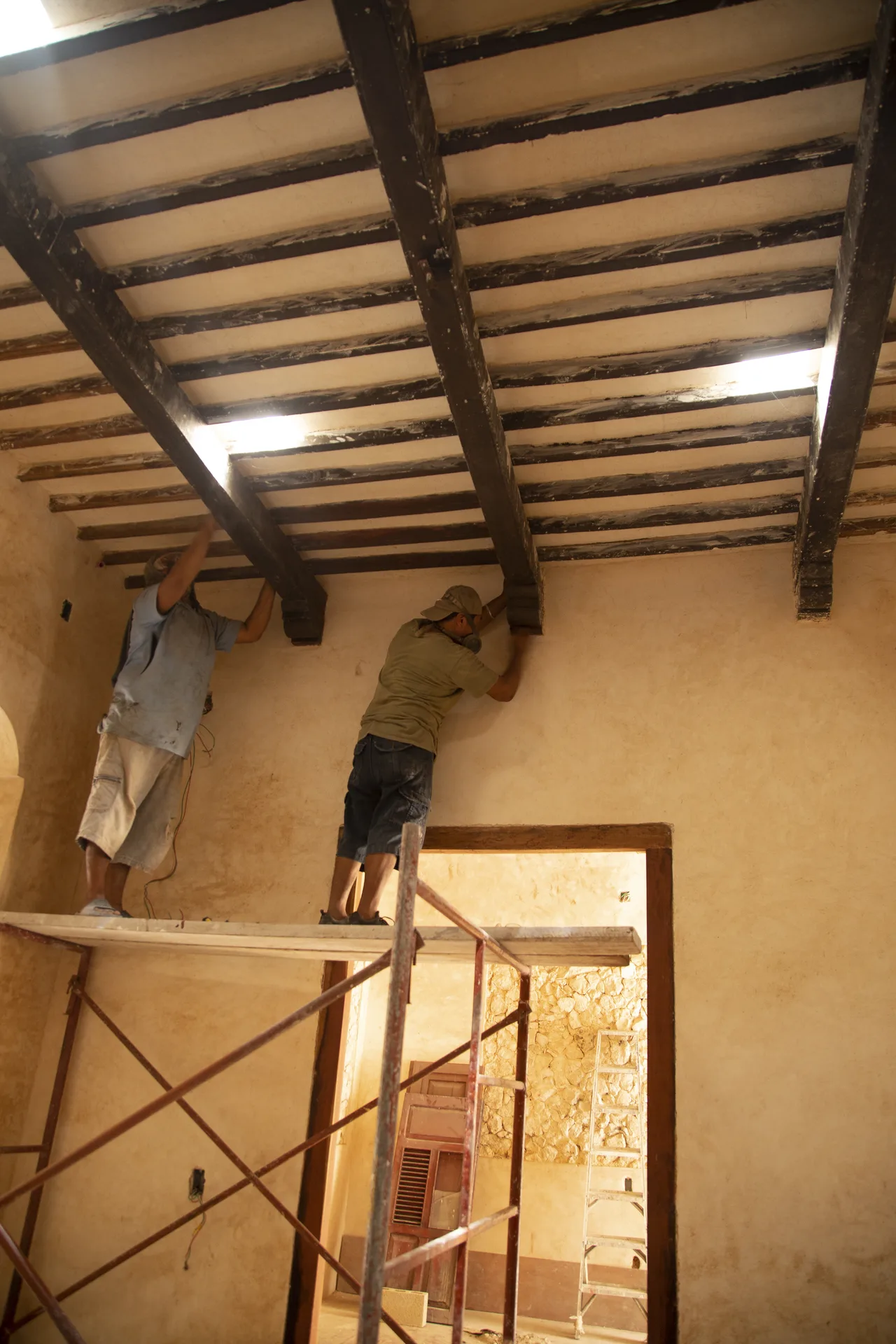
Beams that still carry their load stay. Pasta-tile floors with a century of geometric patterns stay. Doors and shutters are restored, not replaced. The difference between restoring and redoing lies in restraint.
Walls recovered with lime-based mixes, traditional stuccoes of the peninsula such as chukum, local woods. Materials that age with dignity and let the original masonry breathe instead of sealing it.
When a house can take a contemporary annex, it is built as one: honest, distinguishable, in dialogue with the historic fabric. Imitating the past is another way of erasing it.
Inside the protected monument zone, facades, heights and the colour palette follow INAH guidelines. We do not treat this as paperwork: it is the third voice in every project.
A restored house that nobody lives in slowly goes dark again. Our houses complete their rescue when someone sleeps in them: kitchen lit, courtyard in use, and a House Manager who knows them by heart.
In 1999, UNESCO inscribed the Historic Fortified Town of Campeche on the World Heritage List under criteria (ii) and (iv). That recognition makes the entire historic centre a protected monument zone: every wall, every roof and every colour belongs to a protected ensemble, and every intervention requires prior authorization from Mexico’s National Institute of Anthropology and History (INAH).
What that process looks like from the inside, layer by layer, is told in the first documented case of the series: the restoration of La Casa Verde, designed by Richaud Arquitectura, built by Rafael Rodríguez Blanquet and completed in 2023. The second case is now published: the restoration of Casa Ex Templo, Gold Medal at the Bienal de Arquitectura Campechana 2026.
We do not keep a single house firm. Each house chose its architect, and that plurality is part of the method: different eyes on the same grammar of crujías, courtyards and masonry walls. These are the signatures behind the restored houses of the collection.
The method has been judged by others. La Casa Verde’s restoration won First Place in Restoration at the 7th Premio Península by AAI México in 2023 and was a candidate for ArchDaily’s Building of the Year 2025. Casa Ex Templo received the Gold Medal and Casa Estrada the Silver Medal at the Bienal de Arquitectura Campechana 2026, in the Intervention in Built Architecture category, awarded by the Colegio de Arquitectos de Campeche A.C., both to Arq. Francisco José Bernés Aranda (Workshop); Ex Templo also holds an Honourable Mention from the XV Yucatecan Architecture Biennial 2023 and was a finalist in Architectural Digest México’s Iconos del Diseño 2022. Casa Japa is part of the MICHELIN Guide selection.
The full dossier, with links to every publication and award, lives on our press page.
The historic centre is a protected monument zone inside the fortified town inscribed by UNESCO in 1999. Any intervention on a protected building requires prior authorization from INAH, which regulates everything from structure to the colour palette of the facades. The documented case of La Casa Verde walks through that process step by step.
There is no single firm: each house worked with its own architect. Richaud Arquitectura signed La Casa Verde; José Manuel Martínez Márquez, Casa Japa; Workshop Diseño y Construcción, Casa Ex Templo and Casa Estrada; PSA Estudio, Casa Muralla; Baqueiro Projects, Casa Pistache; and Casa Zotz, with design by Marcela Ávila and construction by Arq. Julio Miguel Pérez González.
They are not museums: they are lived in. Each house is booked in its entirety, as a private residence with hotel service, within the Casonas MX house hotel model. The best way to know a restoration is to sleep in it.