This is a practical guide to walking Campeche and reading its architecture: what to see, how to recognize a colonial house from the inside, and where to stay to sleep in one. The city reads like an open-air museum, only inhabited. Walk its streets and within a few blocks you will see a 17th-century wall, lime-and-color facades, doors hiding courtyards, and cement-tile floors already a century old. It is not a stage set: it is a living city where the architecture still does its job.
That integrity earned it, in 1999, inscription on UNESCO's World Heritage List, as the Historic Fortified Town of Campeche. For the traveler who moves through architecture, not just the postcard, Campeche is one of the best-preserved colonial ensembles in the Americas, and one of the few cities where you can not only see it but sleep inside it.
We write this guide by restoring and inhabiting those houses. What follows is what we have learned about how to read, and live, Campechean architecture.
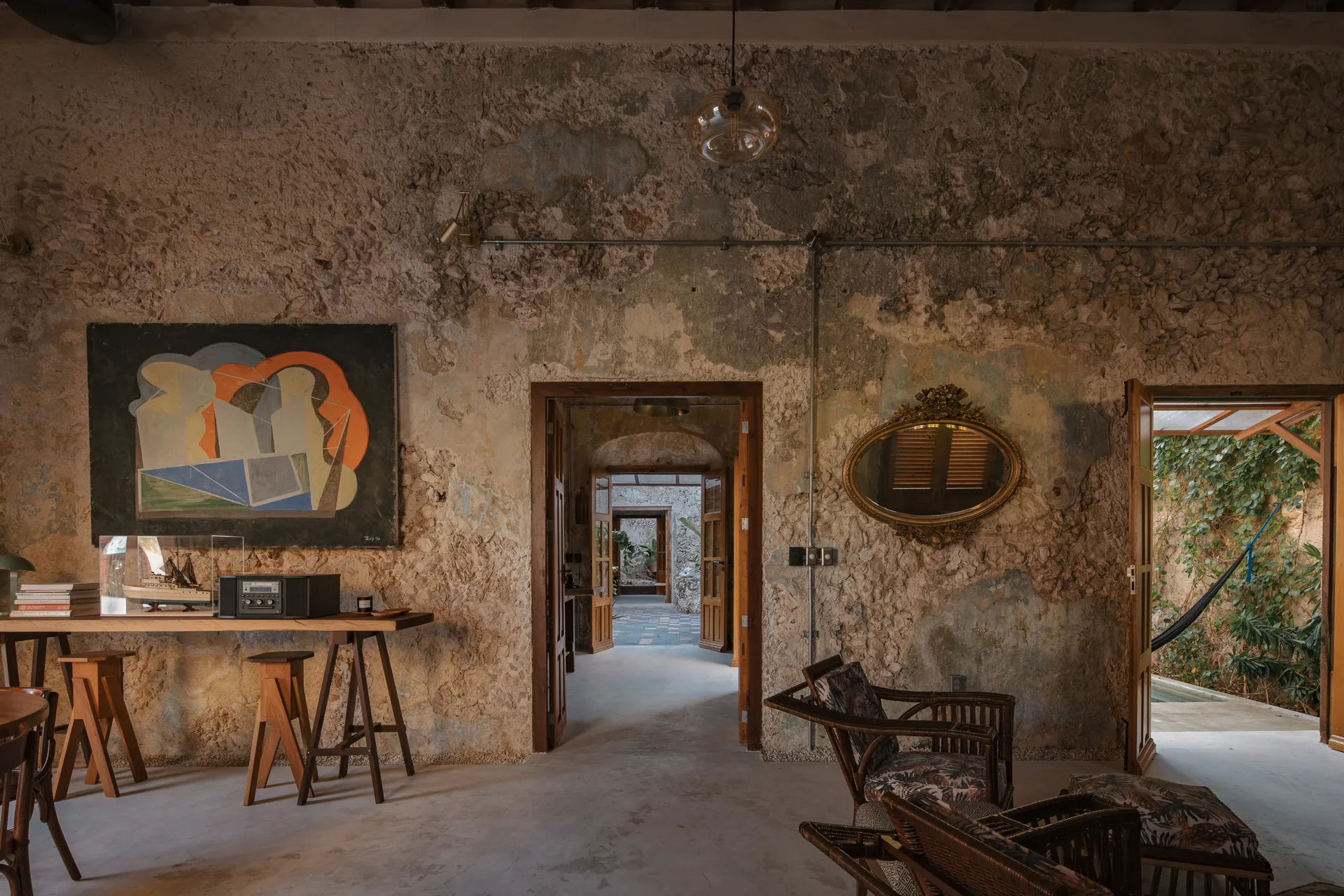
Stone walls and a beamed ceiling: Campechean domestic architecture, Casonas MX, Campeche
Campeche for architecture lovers, in brief
- A UNESCO World Heritage fortified historic center (1999).
- Walls, bastions, colonial facades and homes with interior courtyards.
- A blend of defensive, religious, colonial and domestic architecture.
- The best base is a restored historic house inside the walls.
- Casonas MX specializes in inhabiting that heritage.
For the full historical context, read Mexican colonial architecture.
A fortified city: walls, bastions and grid
Campeche is, above all, a walled city. In the 17th century, pirate raids forced the center to be ringed by a hexagon of walls with eight bastions that still defines it; of its four original gates, two survive. That defensive layer, the Land Gate, the Sea Gate, the San Carlos and Santiago bastions, is not a tourist add-on: it is the urban skeleton on which everything else grew. We tell the story behind those walls in Campeche, a pirate-proof city. Facing the Plaza Principal, the arcades of the Cuauhtémoc Building compress five centuries of that same history into a single corner.
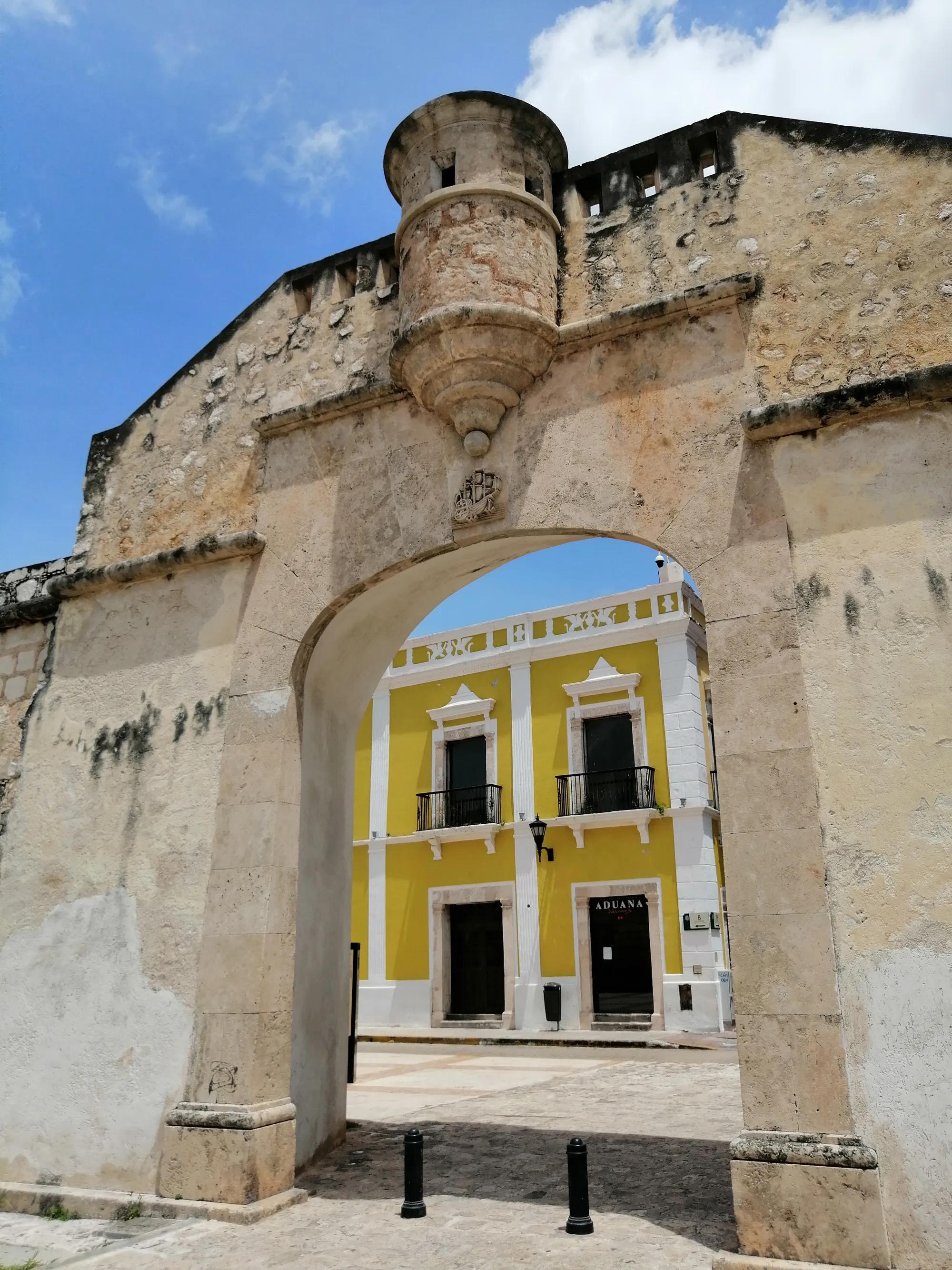
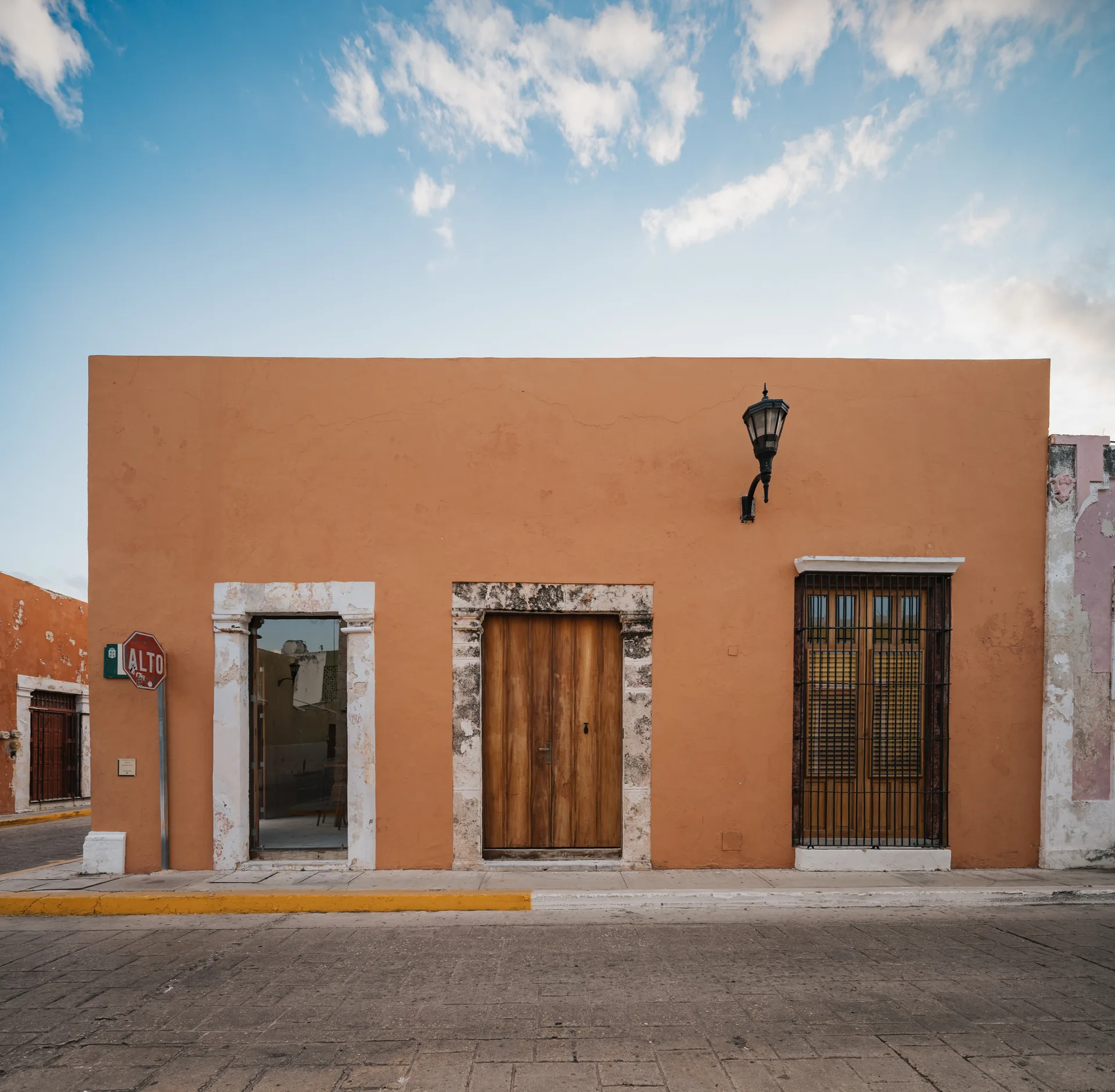
The Land Gate: the threshold of the fortified city, Casonas MX, Campeche
The courtyard house: the heart of domestic architecture
Behind the facades, one brilliantly simple scheme repeats: the courtyard house. Thick masonry walls that hold the cool, a discreet face to the street and a generous interior organized around a courtyard that gives light, air and social life. That relationship, sober outside, expansive inside, is the signature of Campechean architecture.
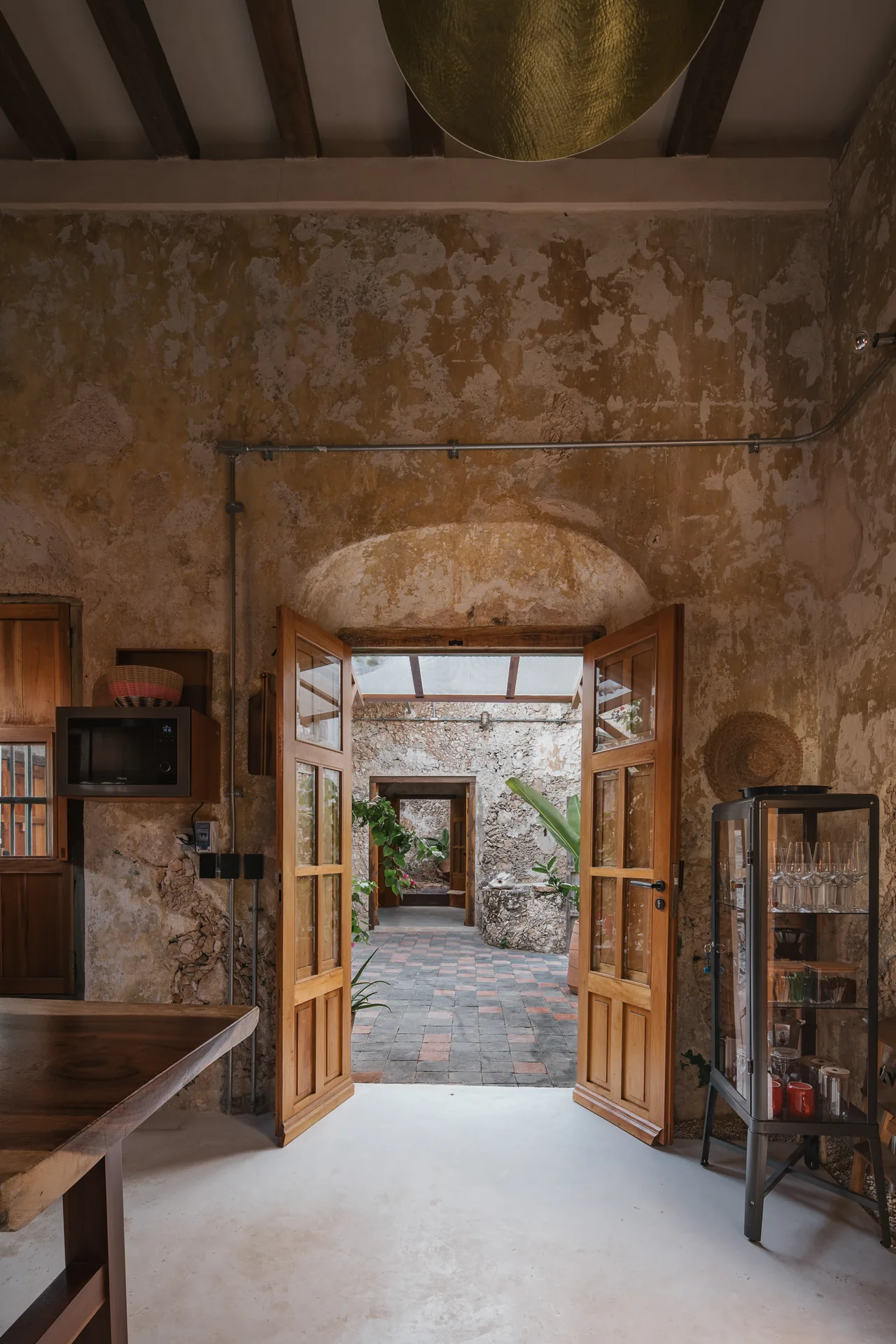
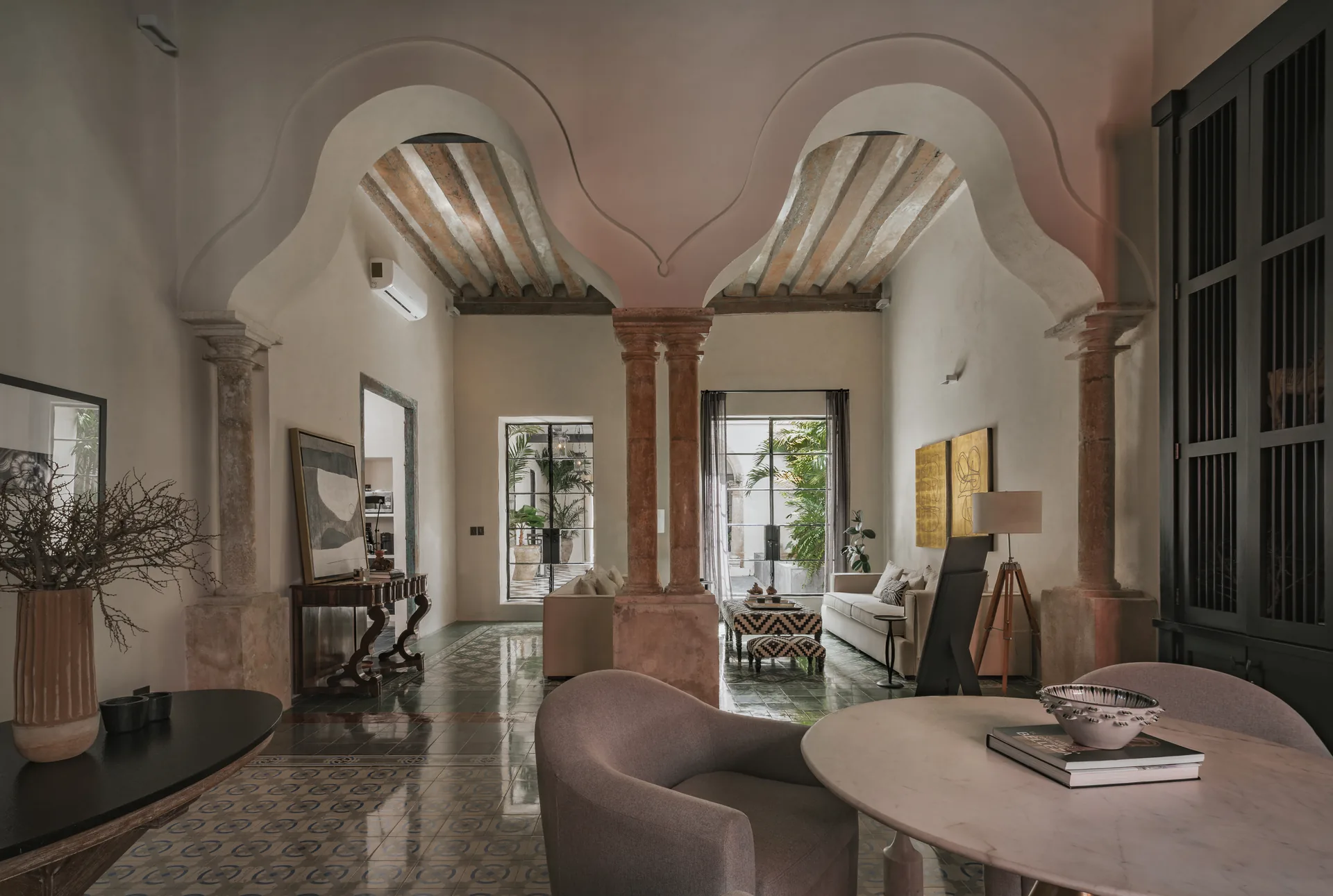
The colonial arch: structure and threshold between the home's spaces, Casonas MX, Campeche
The detail that reveals the craft: tilework, beams, lime and color
Campeche's architecture is recognized in its materials. The cement-tile (mosaico de pasta) floors, hand-pressed pigmented cement, bring a different pattern to each room; the beamed ceilings give height and cool air; lime protects and breathes; and the color of the facades composes, street after street, one of the best-preserved colonial palettes on the continent. Learning to read those details changes the way you walk the city.
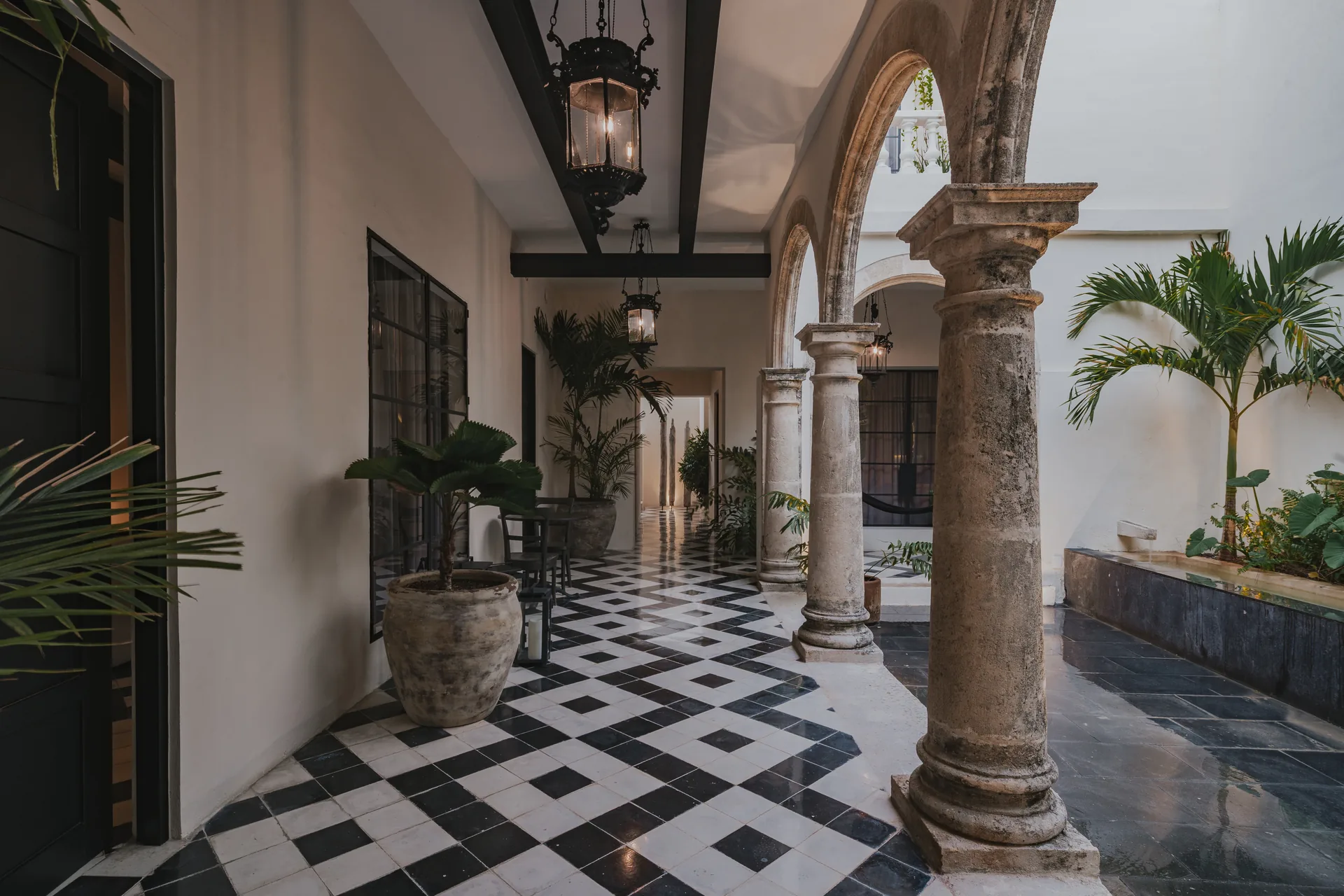
Patterned floors and filtered light: the detail that reveals the craft, Casonas MX, Campeche
Restoration is not erasure
To conserve is not to freeze. Good restoration respects the original walls, floors and proportions as part of the identity of the place, and adds contemporary comfort without imposing it. The challenge, and the craft, is for the house to keep telling its story while you live in it today.
What to see if you care about architecture
- The gates and bastions: the Land Gate and Sea Gate, the San Carlos, Santiago and San Pedro bastions. To see it in a single day, follow our Campeche itinerary.
- The grid and the streets: Calles 59 and 55, pedestrian spines of restored facades.
- The sacred and the civic: the Cathedral, deconsecrated former temples and old Porfirian mansions.
- The neighborhoods: San Román, Guadalupe and San Francisco, explore the five traditional neighborhoods, and the city's museums.
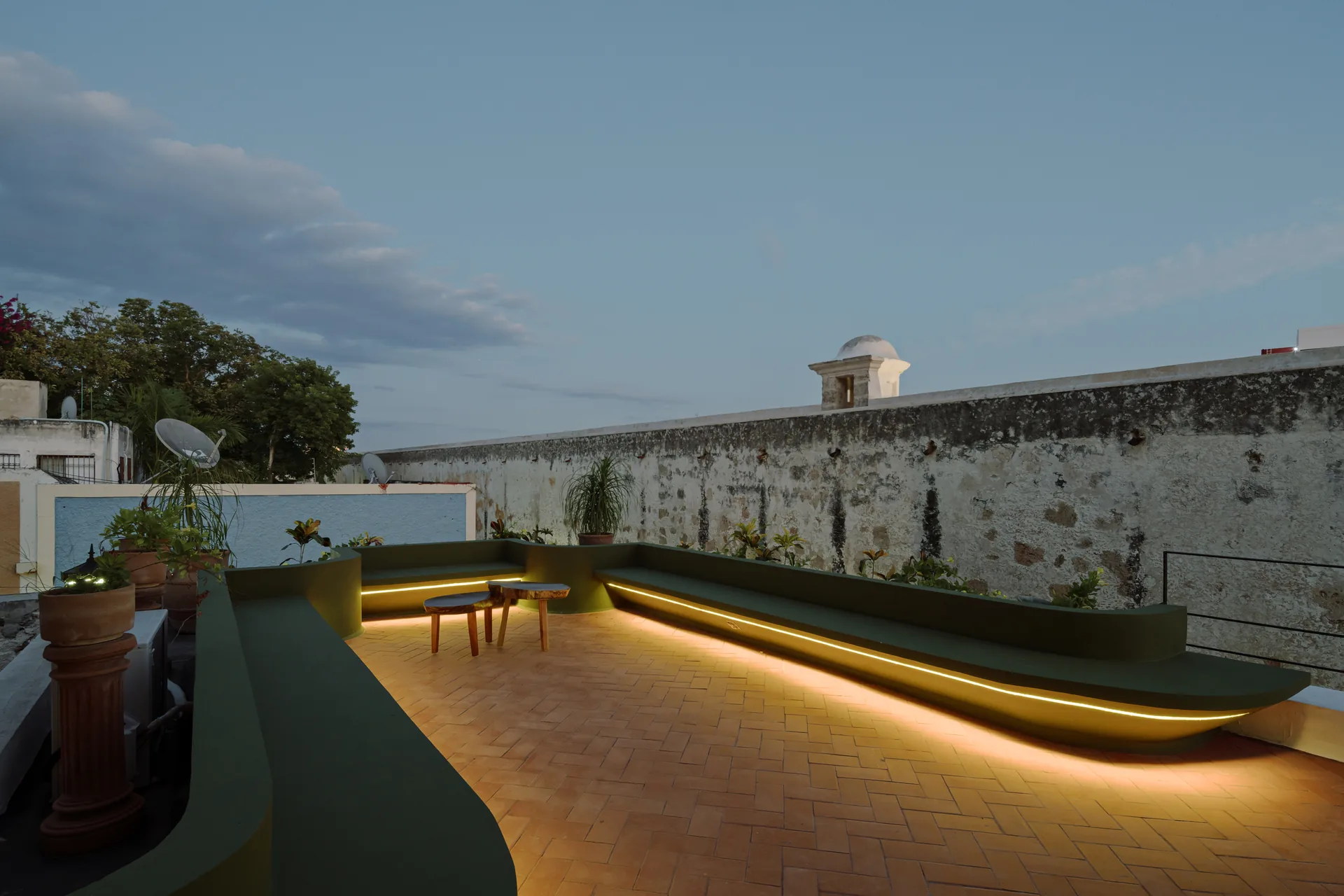
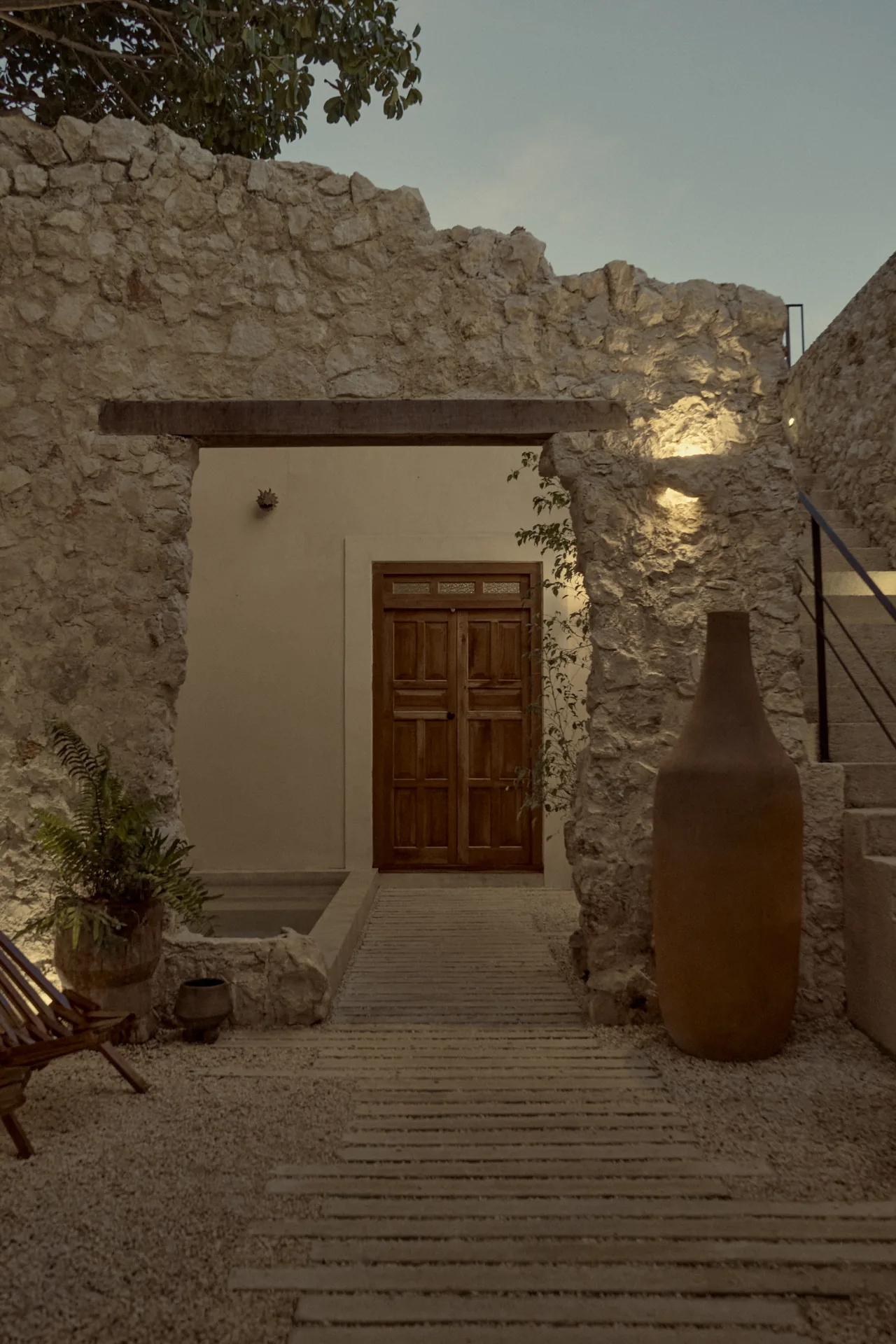
The 17th-century wall and the rooftops of the center, from the inside, Casonas MX, Campeche
Where to stay: inhabiting the architecture
The best way to understand this architecture is to sleep inside it. Homes such as Casa Zotz, Casa Ex Templo, Casa Japa or Casa Muralla let you wake among original walls and courtyards. We develop this in where to stay in Campeche and in what it feels like to stay inside the walls.
Explore the restored heritage homes in the collection.
View properties →Why Campeche draws design travelers
Interest in Campeche is no longer only historical: architects, designers and digital nomads arrive drawn by its scale, its light and its authenticity. For that contemporary traveler, the design lofts Lira, Numen and Solario speak to the heritage in a current language. More in digital nomads.
Book direct
To design a trip around Campeche's architecture, which house, which routes, what to see, write to us by WhatsApp or email. We know each house and each street, and planning directly with us means a stay made to measure, house by house and street by street.
Planning your trip? Write to us on WhatsApp and we will send you Campeche in 72 Hours, our pocket guide, free of charge.
Receive the guide on WhatsApp →