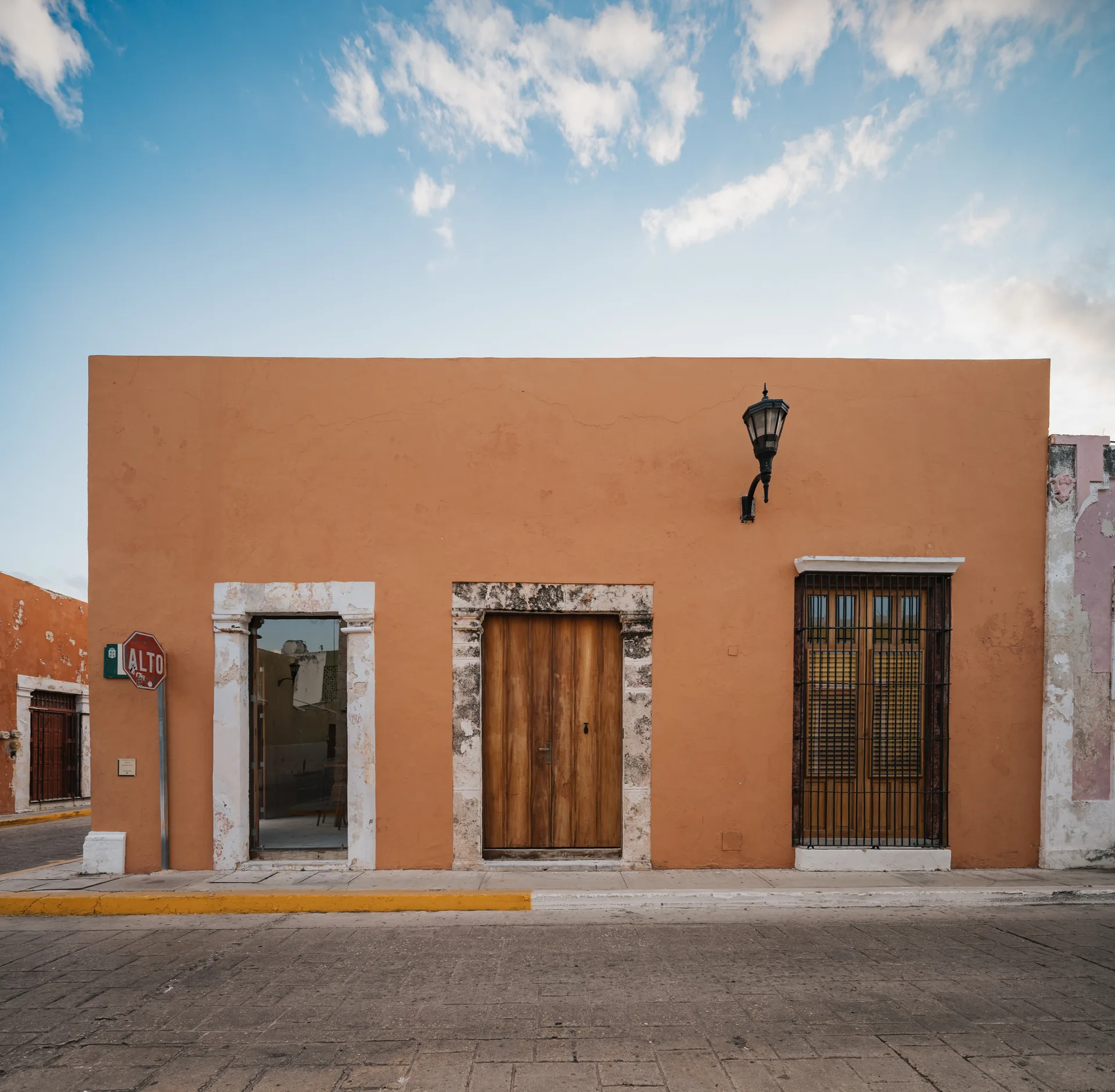
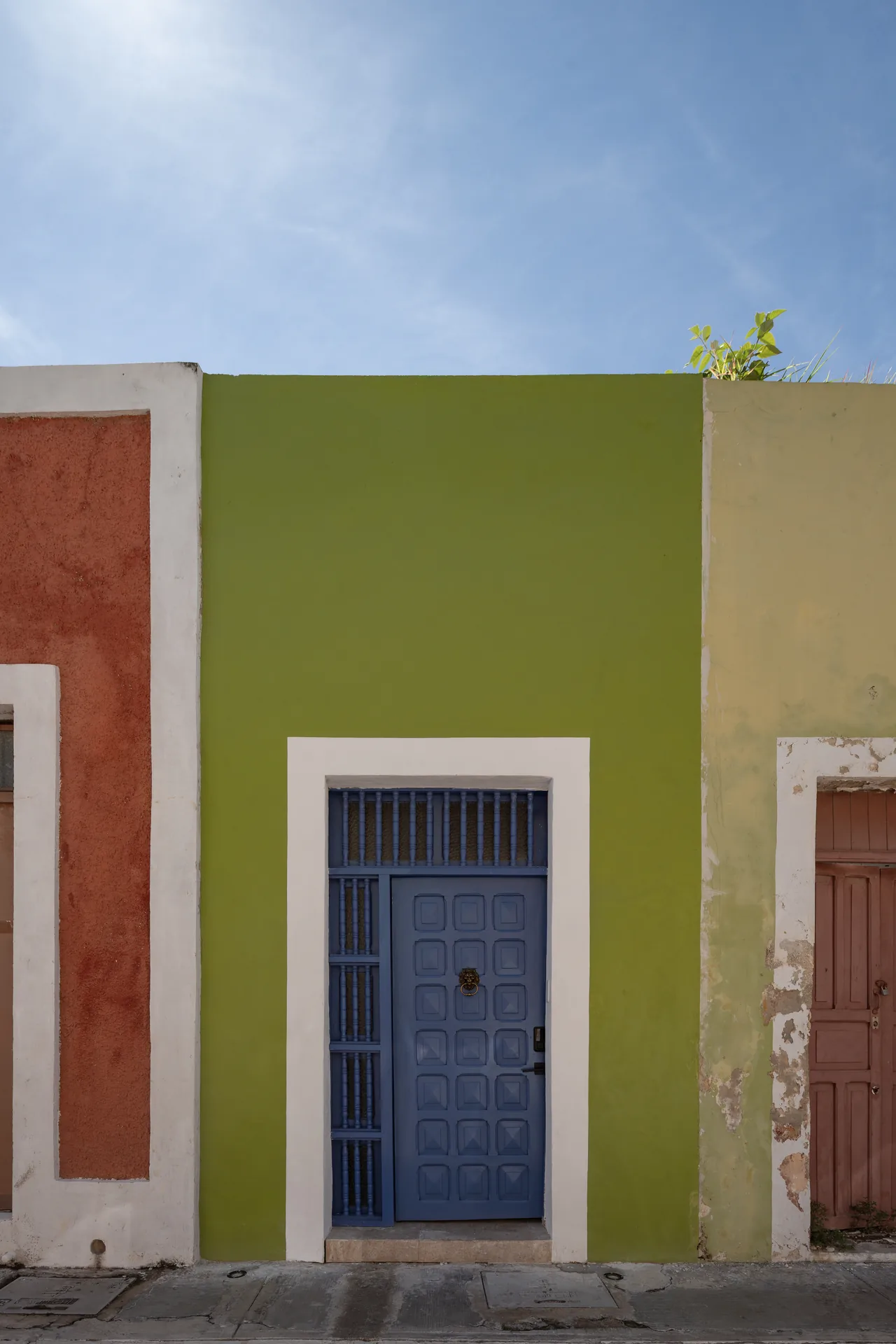
Mexico is home to some of the most beautiful colonial cities in the world, but few combine architectural heritage, authenticity and state of preservation the way Campeche does. Protected for centuries by its walls and enriched by maritime trade, this Gulf-coast city preserves one of the most complete and intact bodies of colonial architecture in the Americas, and it was precisely for this that UNESCO inscribed it as a World Heritage Site in 1999.
This guide walks through what makes Campeche's colonial architecture unique, why it has been so well preserved, and how it can still be lived in today.
A city born at the crossroads of continents
Founded in 1540 by Francisco de Montejo, atop the former Maya city of Ah-Kim-Pech (Can Pech), Campeche became one of the most important ports in New Spain, the second on the Gulf after Mérida. Goods, ideas and trades passed through its docks, and that prosperity funded the construction of elegant residences and public buildings. European architectural traditions merged with local materials, the tropical climate and regional craftsmanship, producing a distinctive urban landscape that can still be read in every street.
What defines colonial architecture in Campeche?
Several characteristics distinguish the city's historic architecture:
- Large wooden entrance doors marking the threshold from the street.
- Thick masonry walls that keep interiors cool.
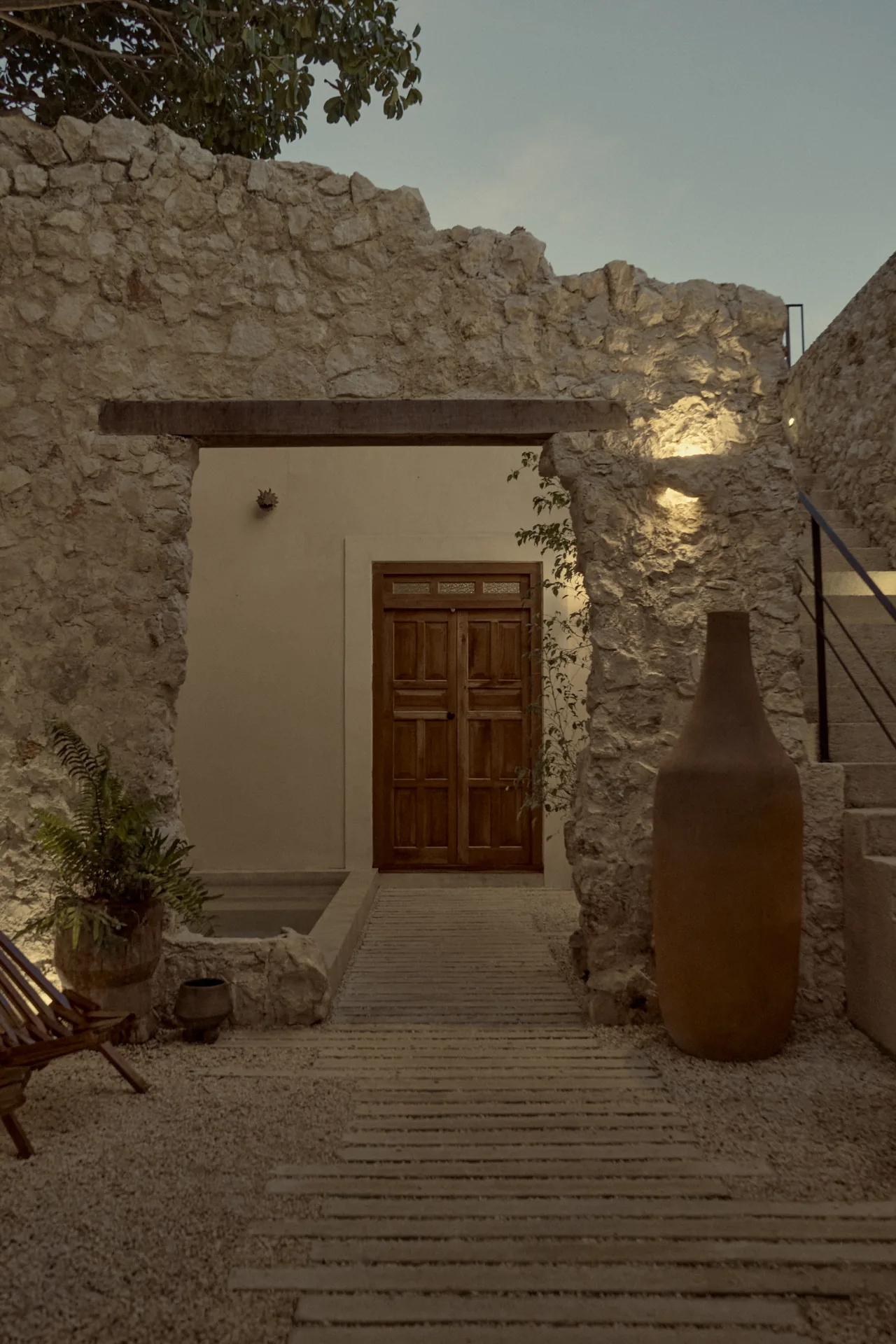
- Interior courtyards around which the whole house is organised.
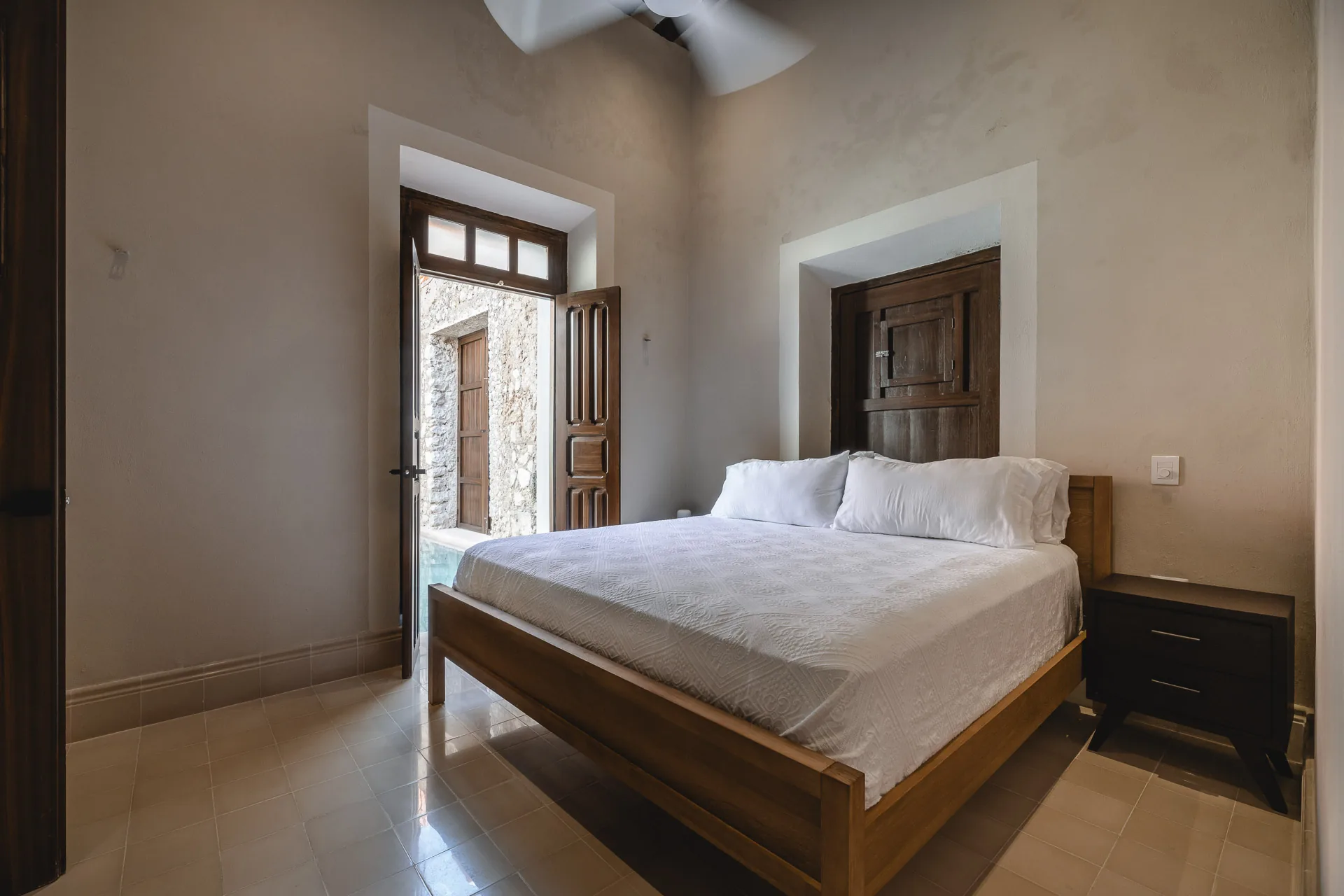
- High ceilings with exposed wooden beams.
- Decorative ironwork on grilles, balconies and windows.
- Brightly coloured facades, one of the city's signatures.
- Shaded arcades and corridors that shelter from sun and heat.
None of these elements was merely decorative: each answered both the tropical climate and the social life of the period. In the most literal sense, this was intelligent architecture, designed to inhabit space with light, air and shade working in your favour.
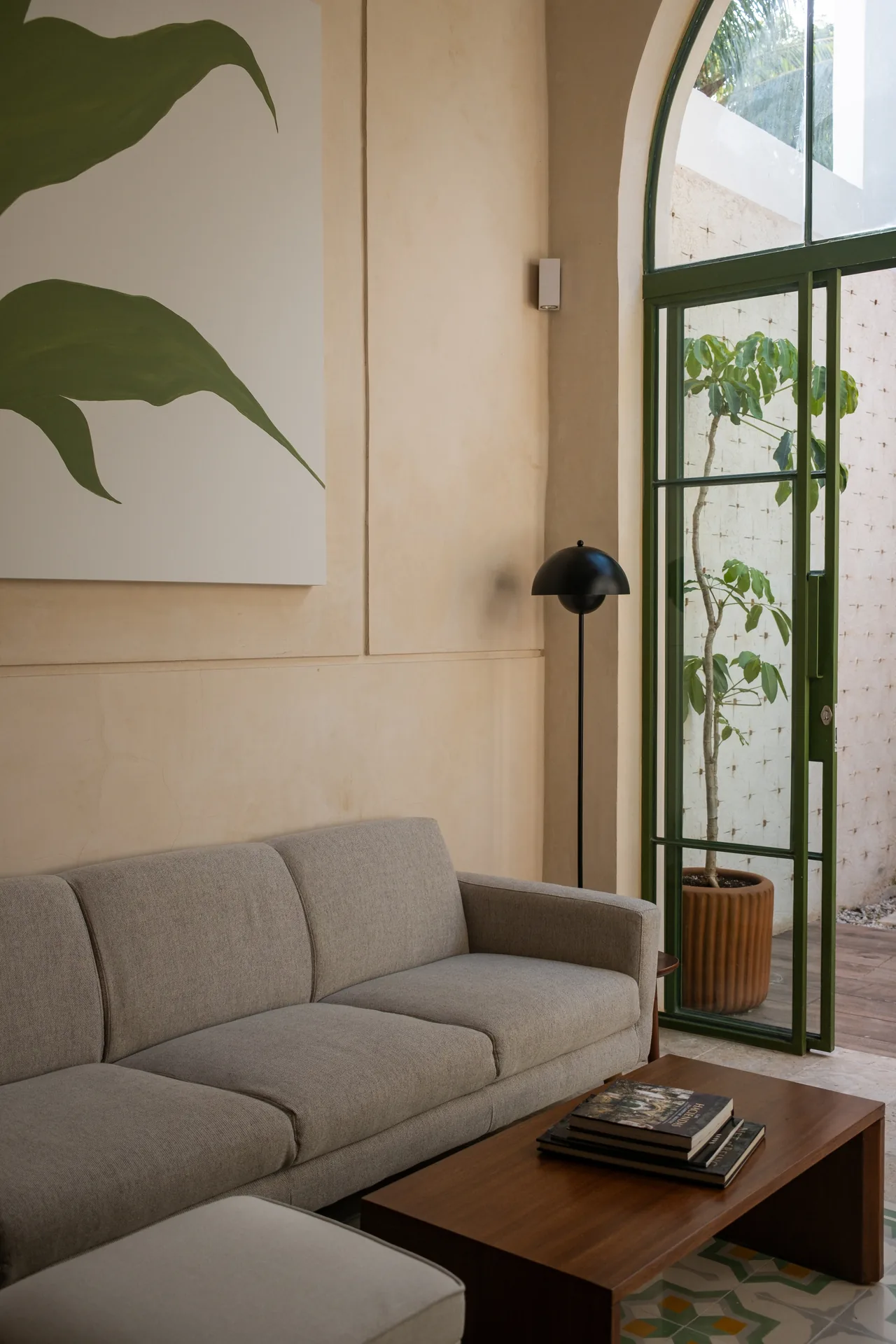
The courtyard house: the heart of colonial life
The Campeche colonial house was conceived around a central courtyard. That open space was far more than an aesthetic detail: it governed natural ventilation, distributed light, provided privacy and served as the stage for family life. Rooms opened onto it, and the surrounding corridors let people move in the shade throughout the day.
Many of Campeche's restored mansions keep this logic intact. It is one of the city's most revealing experiences, understanding that the courtyard is not an added luxury, but the principle that organises the entire architecture.
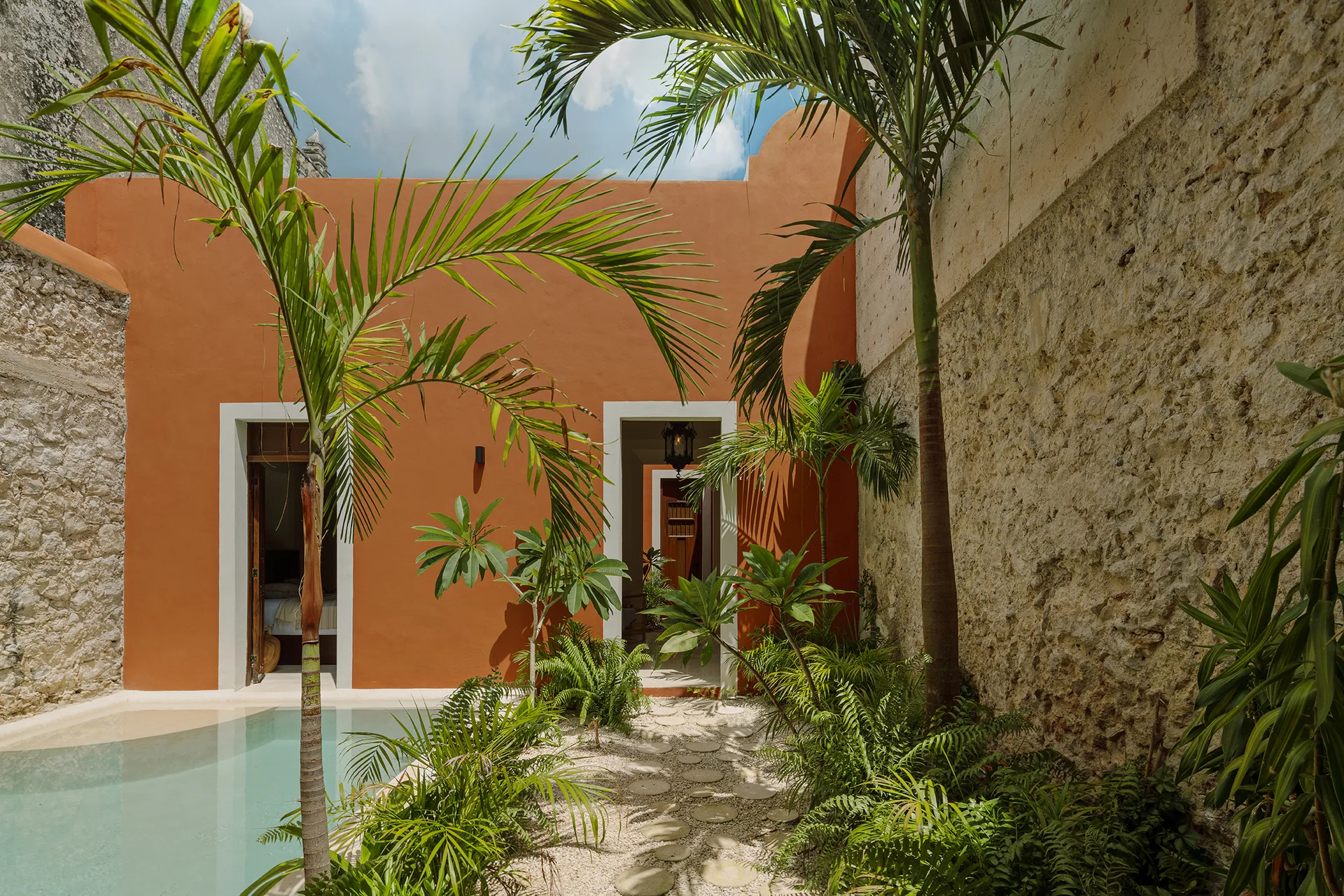
Colour as identity
If anything makes Campeche unmistakable, it is its palette. Ochres, terracottas, indigos, pinks and greens run across the facades of the historic centre and turn every street into a composition. Far from a contemporary whim, this polychromy is part of the city's urban tradition. We explore it in depth in Campeche's painted houses: a guide to the city's colonial colour palette.
A living architectural museum
Unlike many historic districts that function mainly as tourist attractions, Campeche remains a lived-in city. Its mansions still serve as residences, cultural venues, restaurants and heritage accommodation, and their bastions as museums. That continuity, old buildings still fulfilling a purpose, is what keeps the architecture alive. We explore the idea in the architecture of memory.
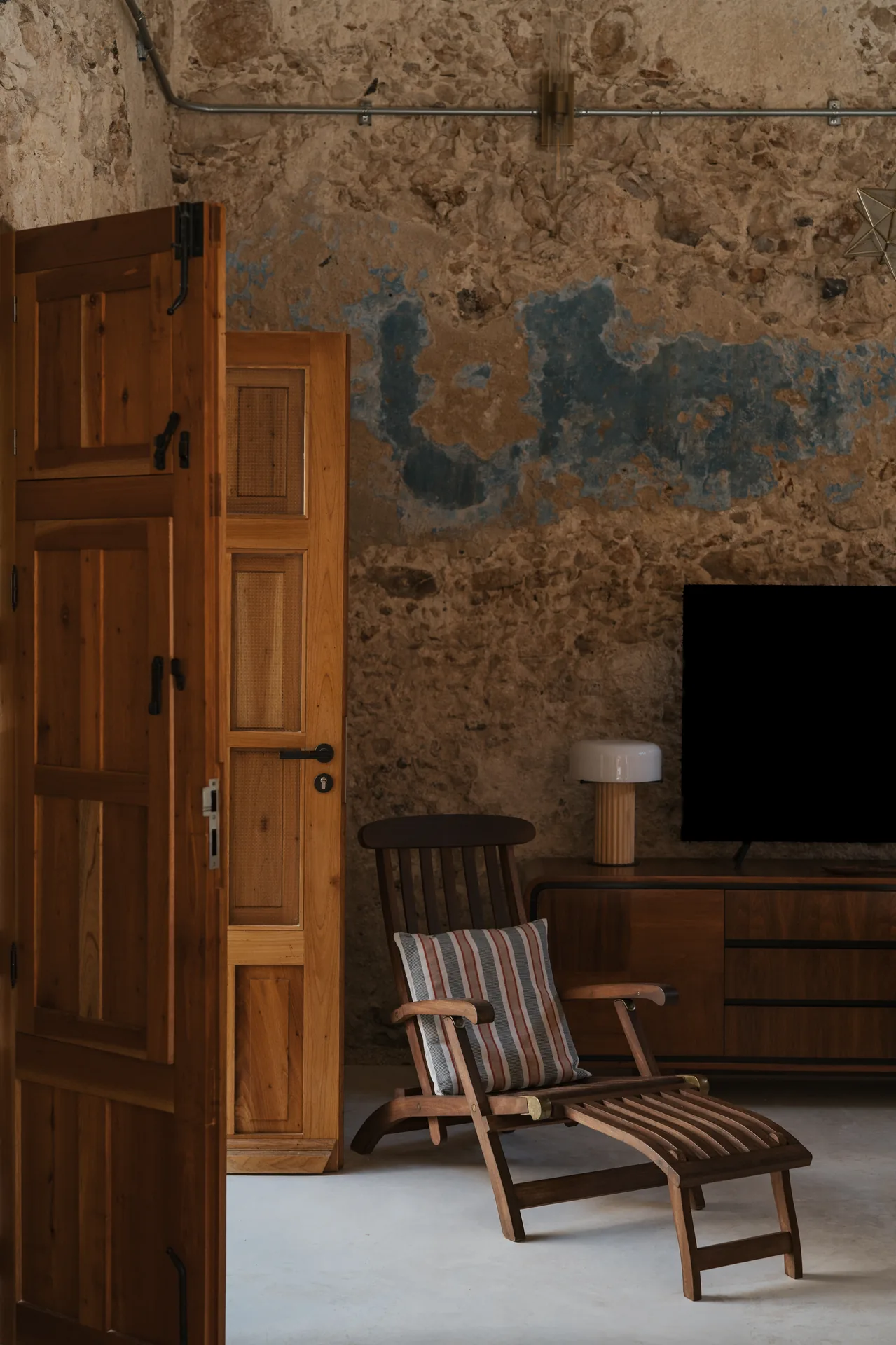
Why preservation matters
Preserving heritage is not only about protecting old buildings. It means keeping a city's identity alive and passing its history to the next generations. Campeche's case shows that a historic building can remain relevant, and economically viable, without surrendering its cultural meaning. Careful restoration and adaptive reuse are, today, the best guarantee that these houses will remain standing. The rescue of La Casa Verde is a recent example of that balance between conservation and contemporary intervention.
Campeche compared with other colonial cities
Mexico has great colonial cities, Mérida, Oaxaca, San Miguel de Allende, Guanajuato, Puebla, and each deserves its own trip. What sets Campeche apart is a combination of three things rarely found together: a walled enclosure with seven of its eight bastions and two gates still standing, unified in 1686 by the French engineer Louis Bouchard de Becour into a defensive hexagon, a compact scale you can cover on foot, and a low tourist density that has let the urban fabric survive without being over-exploited. One fact sums it up: along with Quebec City, Campeche is one of the few towns in North America that still keeps its historic wall standing.
City
Distinctive trait
Intact wall
Tourist density
Campeche Walled town with 8 bastions; Baroque grid Yes (rare in the Americas) Low Mérida Paseo de Montejo mansions; large scale No Medium-high San Miguel de Allende Baroque center; gallery life No High Oaxaca Green cantera stone; craft tradition No High
Inhabit Campeche's colonial architecture from within, in a restored heritage home.
View the collection →Where to see, and live in, Campeche's colonial architecture
The best way to understand this architecture is not to look at it from the street, but to live it: to cross the great door, feel the thickness of the wall, wake up facing a courtyard. The restored mansions in our collection keep their original courtyards, beams, ironwork and walls, and sit within the walled historic centre. To place each home in the context of the city, start with the city and with Campeche for architecture lovers, or follow a multi-day itinerary across the region.
Frequently asked questions
Why is Campeche a UNESCO World Heritage Site?
For its Historic Fortified Town: an exceptionally well-preserved colonial urban ensemble, with walls, bastions and an almost intact original street grid. UNESCO inscribed it on its World Heritage list in 1999.
What architectural style does Campeche have?
A civil colonial architecture, courtyard houses, coloured facades, masonry walls and decorative ironwork, combined with a remarkable military heritage of walls and bastions built to defend the city from pirates.
Which is the best-preserved colonial city in Mexico?
Campeche is one of the strongest candidates: as a walled city, compact in scale and low in tourist density, it has preserved one of the most intact colonial ensembles in the Americas.
Can you stay in a restored colonial house in Campeche?
Yes. Casonas MX offers restored historic mansions inside the walled city, keeping their original courtyards, beams and walls while adding contemporary comfort.
Campeche is not simply a city where colonial architecture survives. It is a city where architecture is still part of daily life, reminding us that the most valuable heritage is not the kind observed behind glass, but the kind that continues to be inhabited.
Reviewed and fact-checked in July 2026 by the Casonas MX editorial team in Campeche, with historical and conservation detail cross-checked against the UNESCO listing (Historic Fortified Town of Campeche, 1999). We restore and live in heritage homes inside the walled city.
Planning your trip? Write to us on WhatsApp and we will send you Campeche in 72 Hours, our pocket guide, free of charge.
Receive the guide on WhatsApp →