A route that does not end where it began
Almost every Yucatán Peninsula road trip follows the same sequence: arrive in Cancún, then Valladolid, Chichén Itzá, Mérida and back to the Caribbean for the flight home. It is not a bad route. It brings together a small city, one of Mexico's great archaeological sites and the cultural capital of Yucatán, and each of those places deserves the hours it is given.
Its limitation appears at the end. Returning to Cancún means reserving a substantial part of the trip for driving back along the corridor already travelled. The alternative is not to replace Mérida or set it against Campeche: it is to keep Mérida and continue southwest, towards Uxmal and the Puuc region, to Campeche, the historic fortified city on the Gulf of Mexico that UNESCO inscribed on the World Heritage List in 1999.
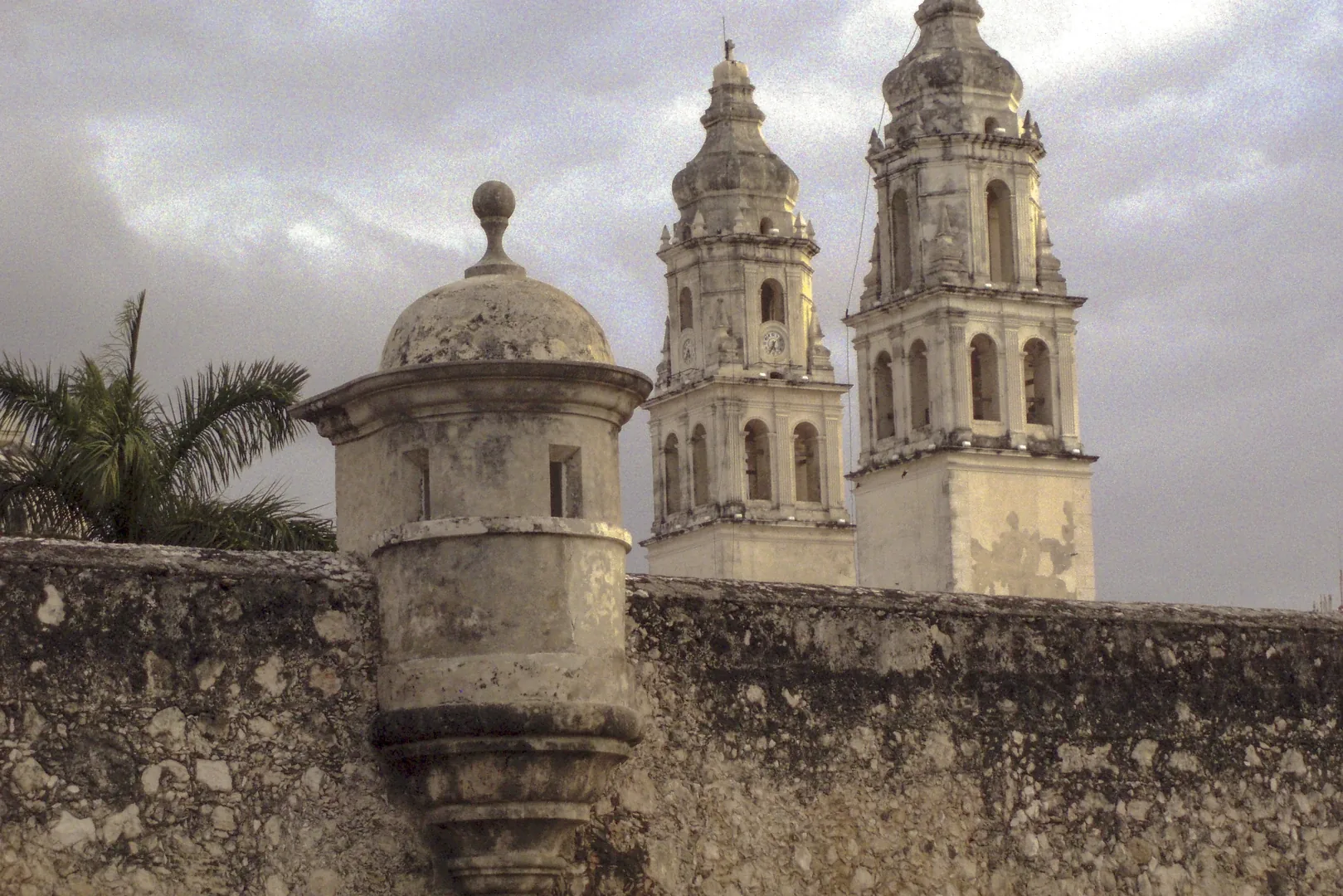
Campeche introduces a different urban landscape and a different rhythm: a compact walled precinct, traditional barrios, a seafront promenade and a scale that lets you cover the centre on foot. Mérida and Campeche serve different purposes, and together they make a fuller journey.
This is a seven-day itinerary through Yucatán and Campeche for people who travel slowly and prefer cities to resorts. Cancún acts as the gateway; Valladolid, Mérida and Campeche are the bases of the trip.
How to read the route
There are three distinctions worth having clear before you reserve, because many guides get them wrong.
First: Chichén Itzá is about 45 kilometres from Valladolid each way. The visit involves close to 90 kilometres of round-trip driving, and ends back in Valladolid.
Second: the direct transfer between Mérida and Campeche follows Federal Highway 180. It is about 180 kilometres and normally takes between two hours and a quarter and two and a half, depending on the route and conditions.
Third: Uxmal is not on that corridor. It lies about 80 kilometres south of Mérida, in the Puuc region, and visiting it before reaching Campeche turns the transfer into a full day on the Puuc and Chenes road.
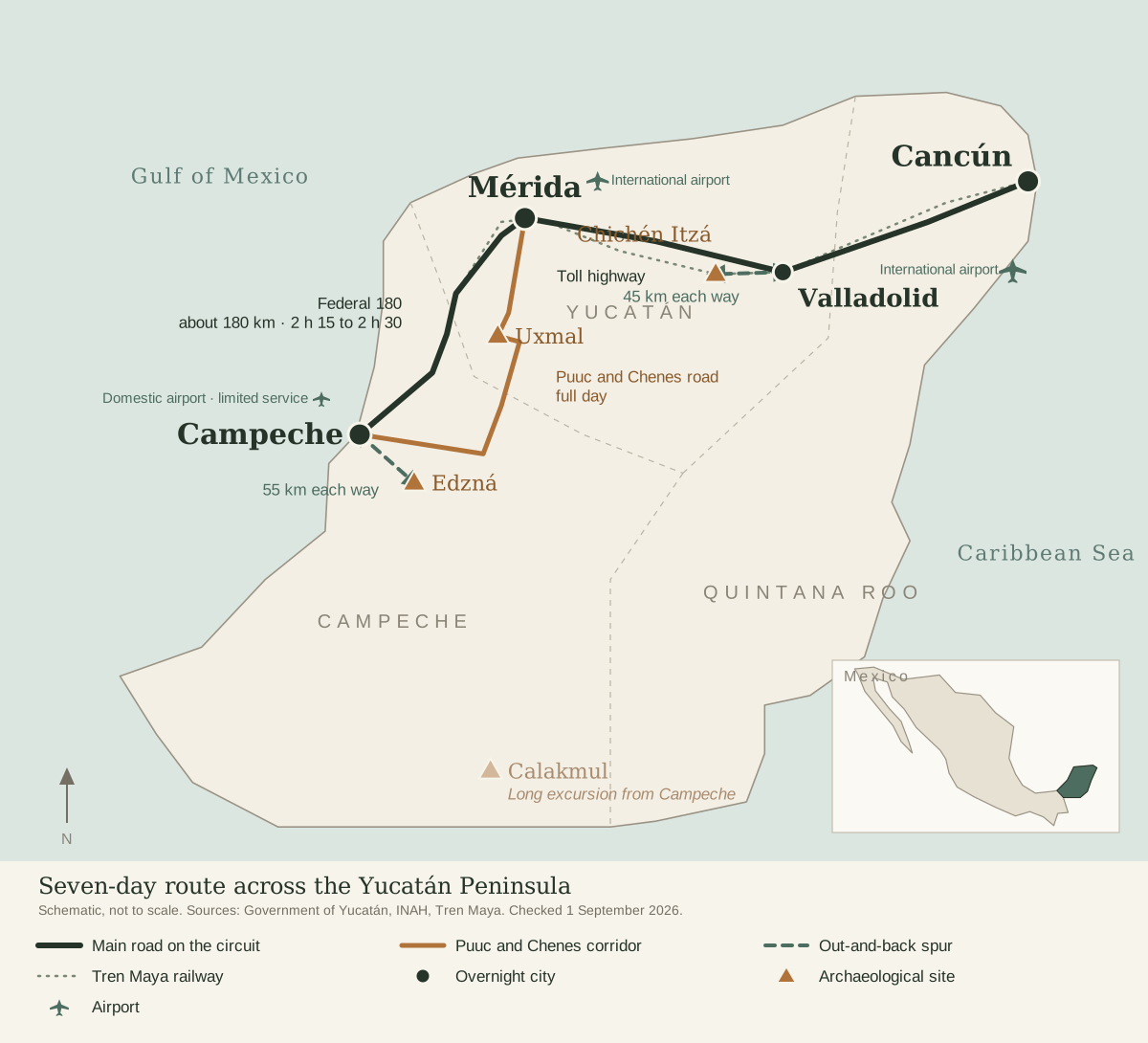
Seven-day, six-night itinerary
| Day | Route |
|---|---|
| Day 1 | Arrive in Cancún and drive to Valladolid, about 160 kilometres. First night in Valladolid. |
| Day 2 | Chichén Itzá early: 45 kilometres each way, close to 90 round trip. Return to Valladolid for the second night. |
| Day 3 | Drive to Mérida on the toll highway. First afternoon and night in the Yucatecan capital. |
| Day 4 | A full day in Mérida: markets, museums, architecture and the plazas as evening falls. Second night. |
| Day 5 | Road day through the Puuc and Chenes region: Uxmal, then on to Campeche. Not the direct Federal 180 transfer; reserve the whole day. First night in Campeche. |
| Day 6 | A full day in Campeche: the walled city, the traditional barrios and the malecón at sunset. Second night. |
| Day 7 | A slow morning in Campeche and departure by train, bus or a flight connection confirmed in advance. |
The distribution is simple: two nights in Valladolid, two in Mérida and two in Campeche. The journey becomes clearer when archaeological days and transfers do not compete with the best hours in each city.
Day 1: Cancún to Valladolid
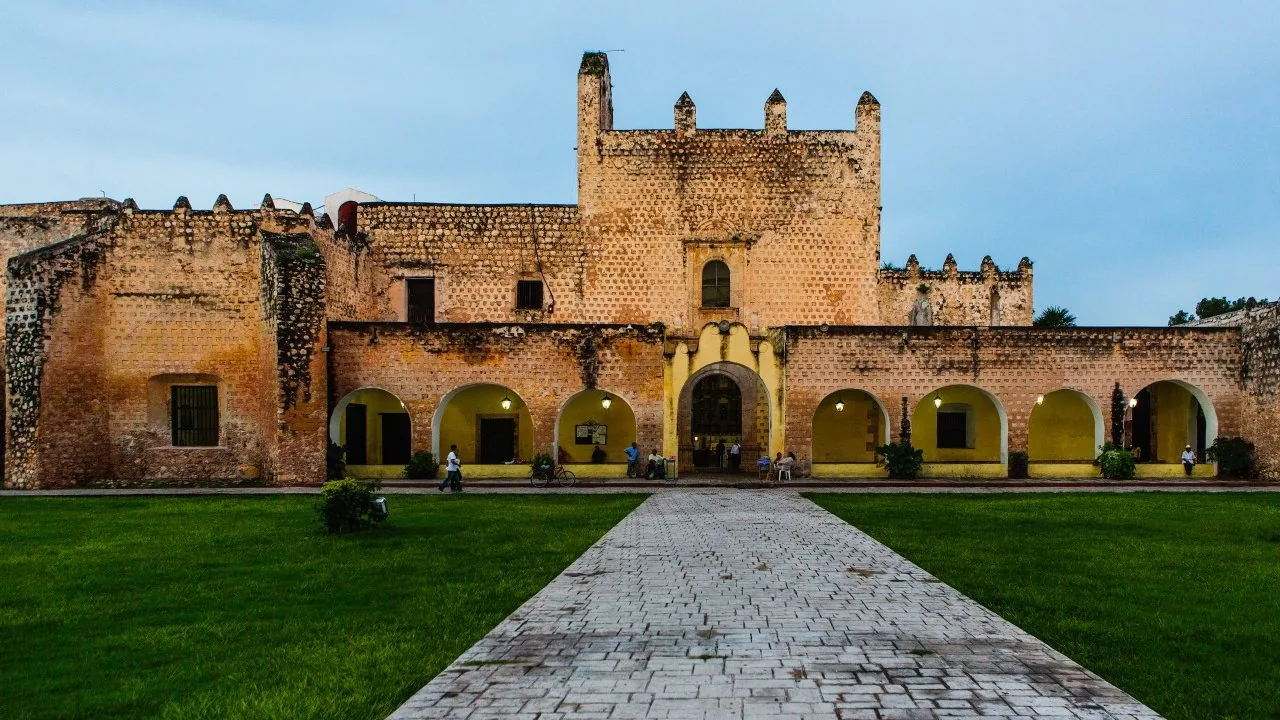
Cancún serves here as the arrival airport, not the centre of the trip. After collecting the car or connecting with ground transport, the route continues to Valladolid. The first afternoon needs no exhaustive programme: settle in, walk through the centre and leave the cenotes for whatever the arrival time allows.
Day 2: Chichén Itzá and back to Valladolid
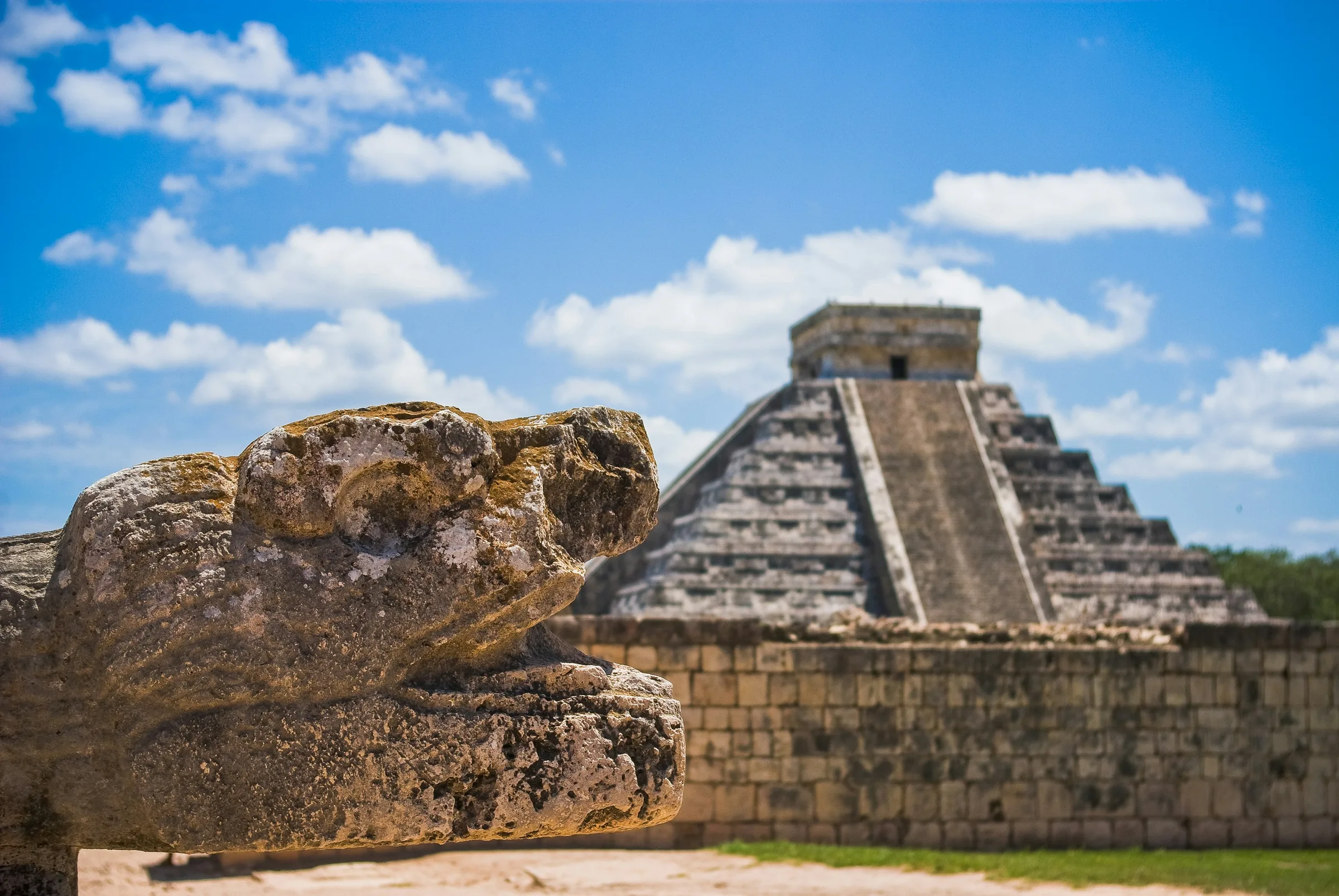
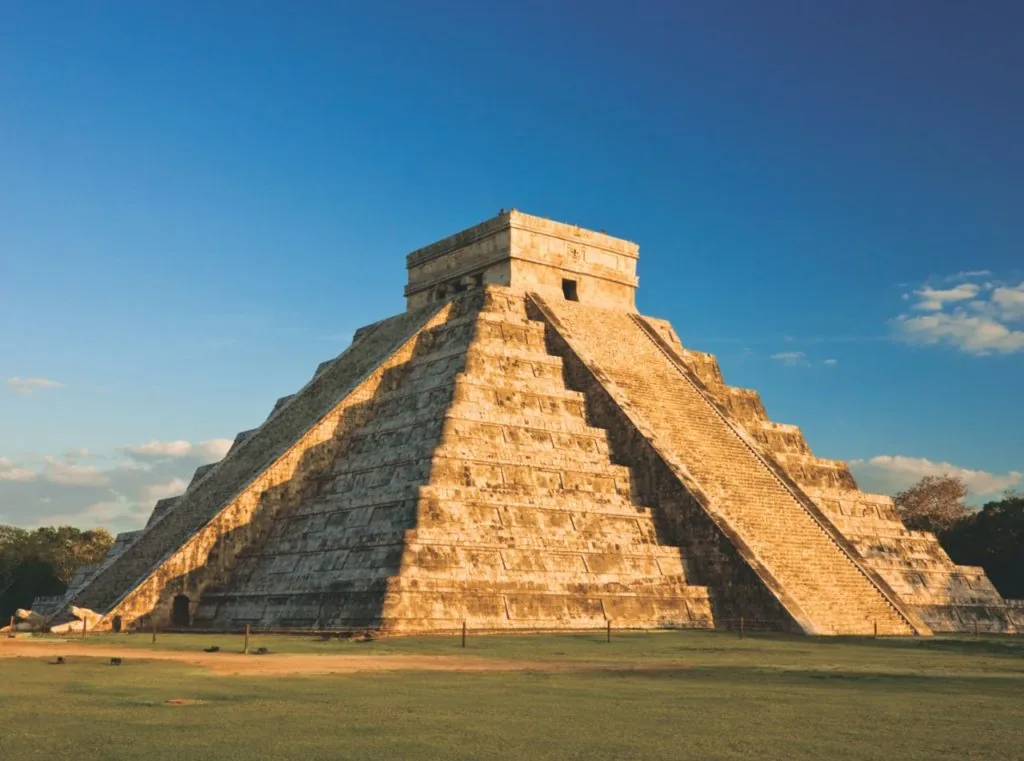
Chichén Itzá deserves an early start. From Valladolid it is about 45 kilometres each way; the full visit adds close to 90 kilometres of driving and ends back in Valladolid. Describing it this way matters: it lets you calculate time and energy without the false impression that every day advances along new road. The second night avoids chaining the site to another transfer and gives the afternoon back to Valladolid.
Days 3 and 4: Mérida on its own terms
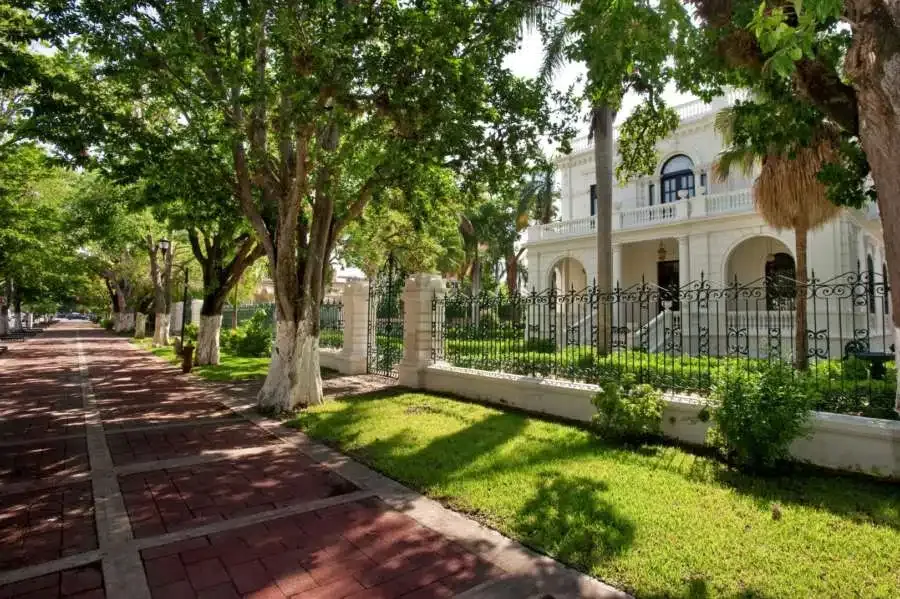
Mérida is not a technical stop. Two nights allow an arrival afternoon and one full day, and the value of that pause lies in combining markets, museums, domestic architecture and plazas as the heat eases. There is no need to turn the city into a checklist: better to choose a few visits and keep time for walking. Campeche does not replace this experience; it continues it at a different scale, on a different waterfront and through a different urban history.
Day 5: Uxmal and the Puuc and Chenes road day
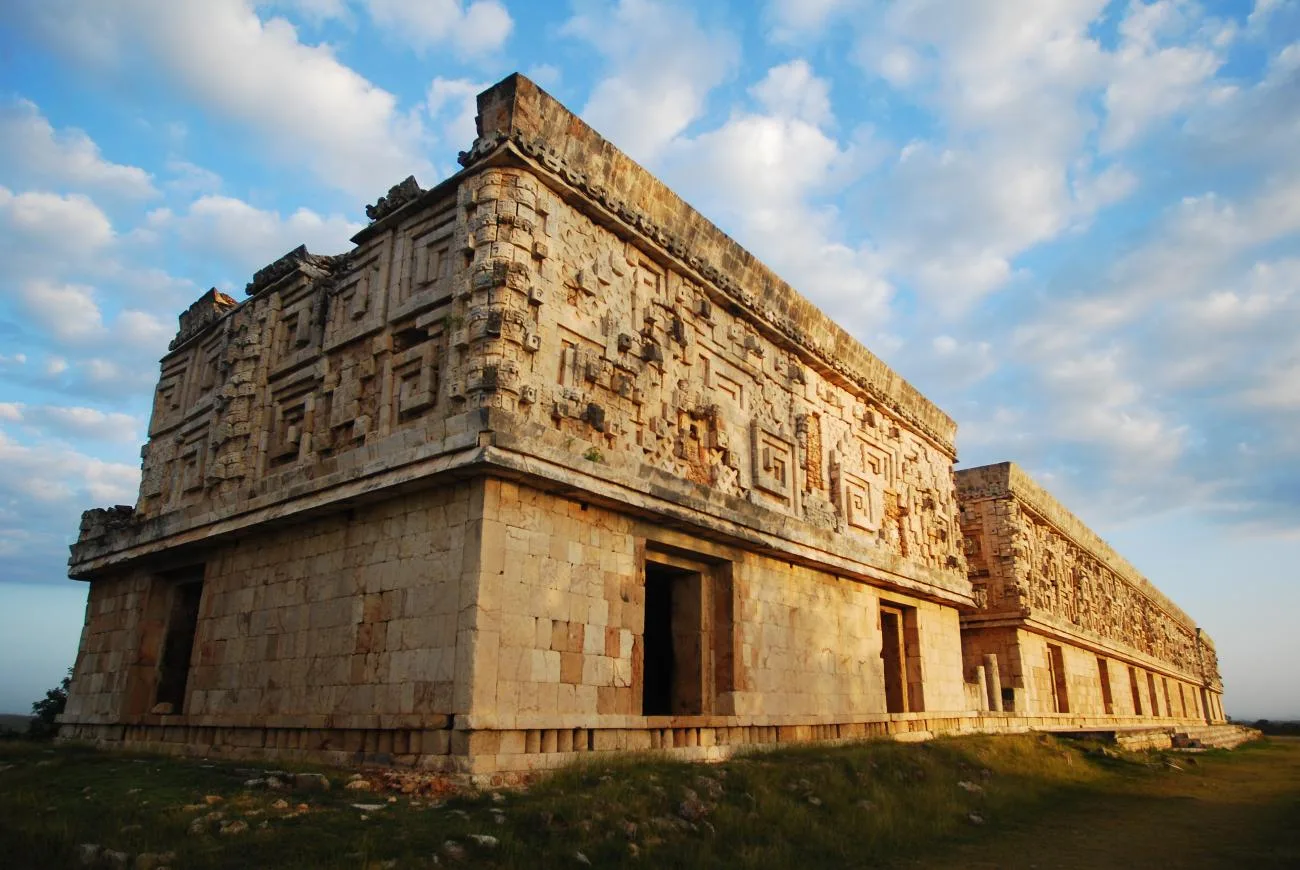
This is the day that demands the most logistical care. Uxmal lies about 80 kilometres south of Mérida, and although it is often described as being in the direction of Campeche, it is not on the direct Federal 180 corridor. Including it means taking another road through southern Yucatán and the Chenes region.
That is why the day must never be written as "Mérida to Campeche, two hours, with a stop at Uxmal". The two hours and a fraction belong to the direct transfer, not to this day. Leave early, visit Uxmal without rushing and treat the rest of the drive as a full road day. Confirm the route, the state of the roads and your estimated arrival before setting off, and do not schedule commitments for the first afternoon in Campeche.
Anyone who prefers less driving can skip Uxmal, take Federal 180 directly and reach Campeche by mid-morning.
Day 6: A full day in Campeche
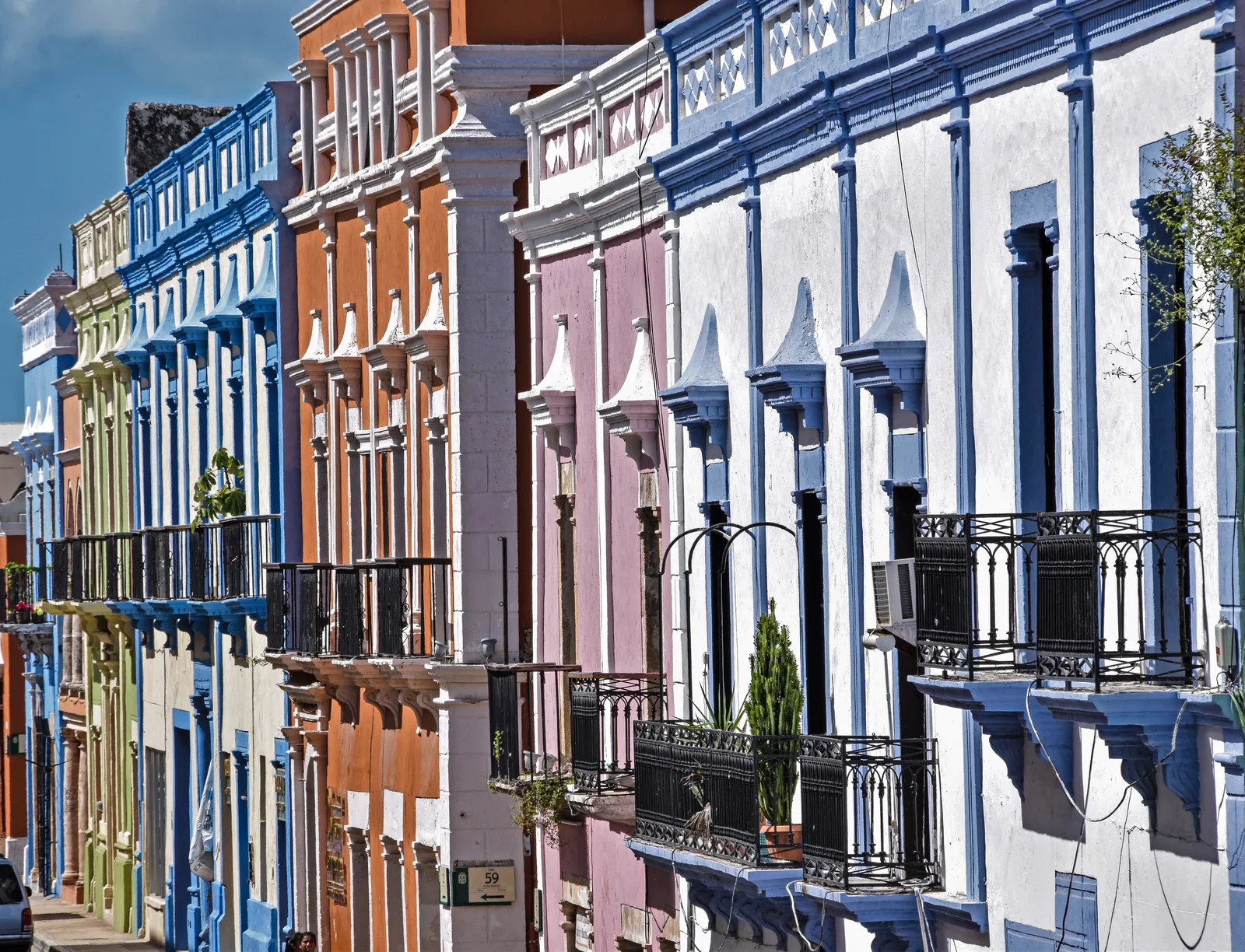
After several days on the road, Campeche works best when it is not treated as a half-day stop. A full day allows you to cover the historic precinct in the morning, return to the house during the hottest hours and go out again towards the barrios or the malecón at sunset. The Historic Fortified Town of Campeche was inscribed by UNESCO in 1999 under criteria (ii) and (iv); the protected property covers 181 hectares, crossed on foot from end to end.
Where to sleep, and why inside the walls, is covered in our guide to where to stay in Campeche. And if you are still weighing whether to add the city, the answer is in our article on whether Campeche is worth visiting.
Day 7: Departing from Campeche
The main route ends with a slow morning and departure. San Francisco de Campeche station is part of the rail corridor that links Mérida Teya and Cancún, and there are long-distance bus connections.
On flying, it is worth being clear: Campeche has an airport, but its air connectivity is limited and does not compare with Cancún's. Any departing flight must be confirmed before the itinerary is reserved. If no suitable connection exists, the train or bus to Mérida, which has an international airport, offers more flexibility.
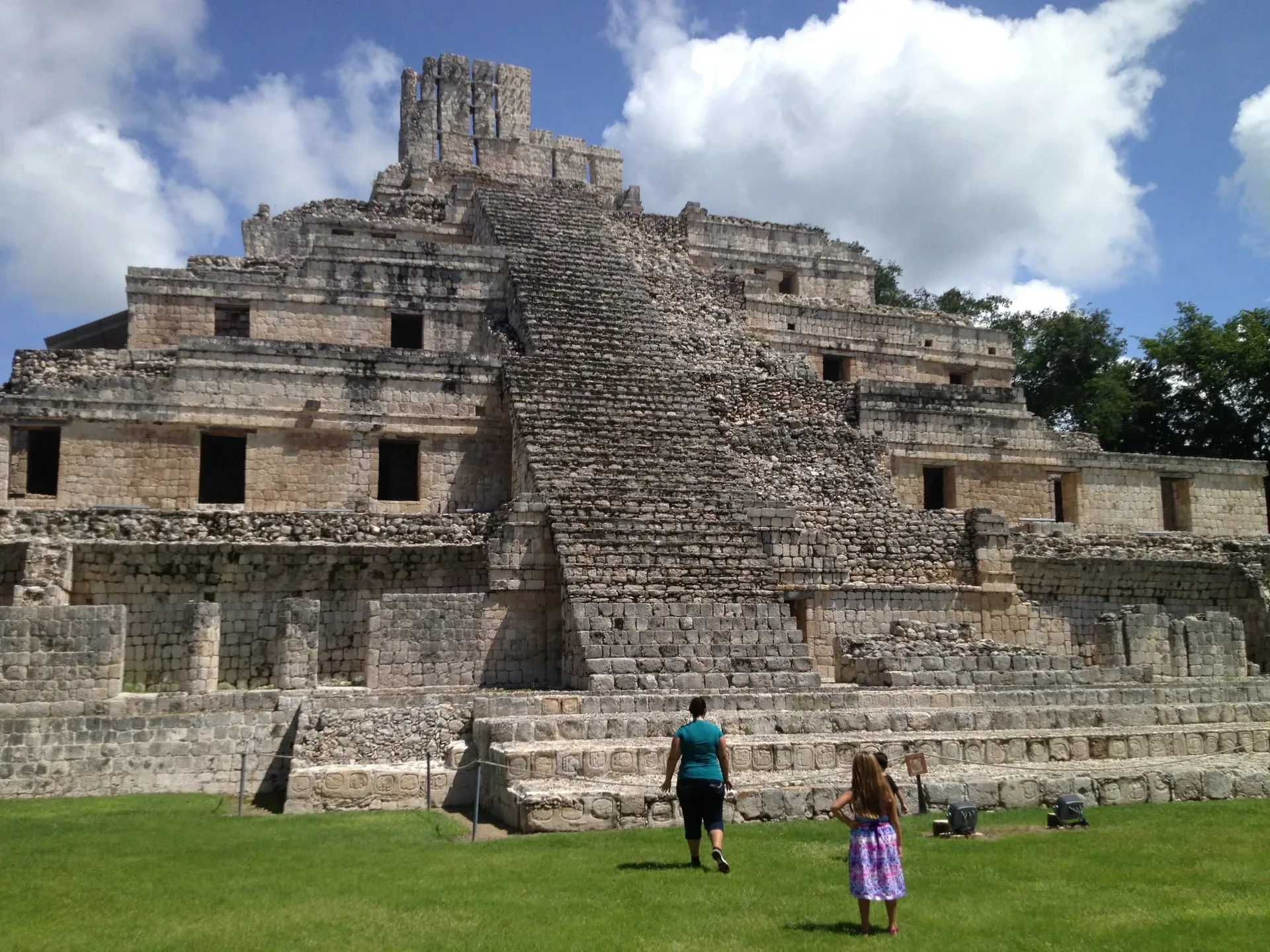
The Edzná extension
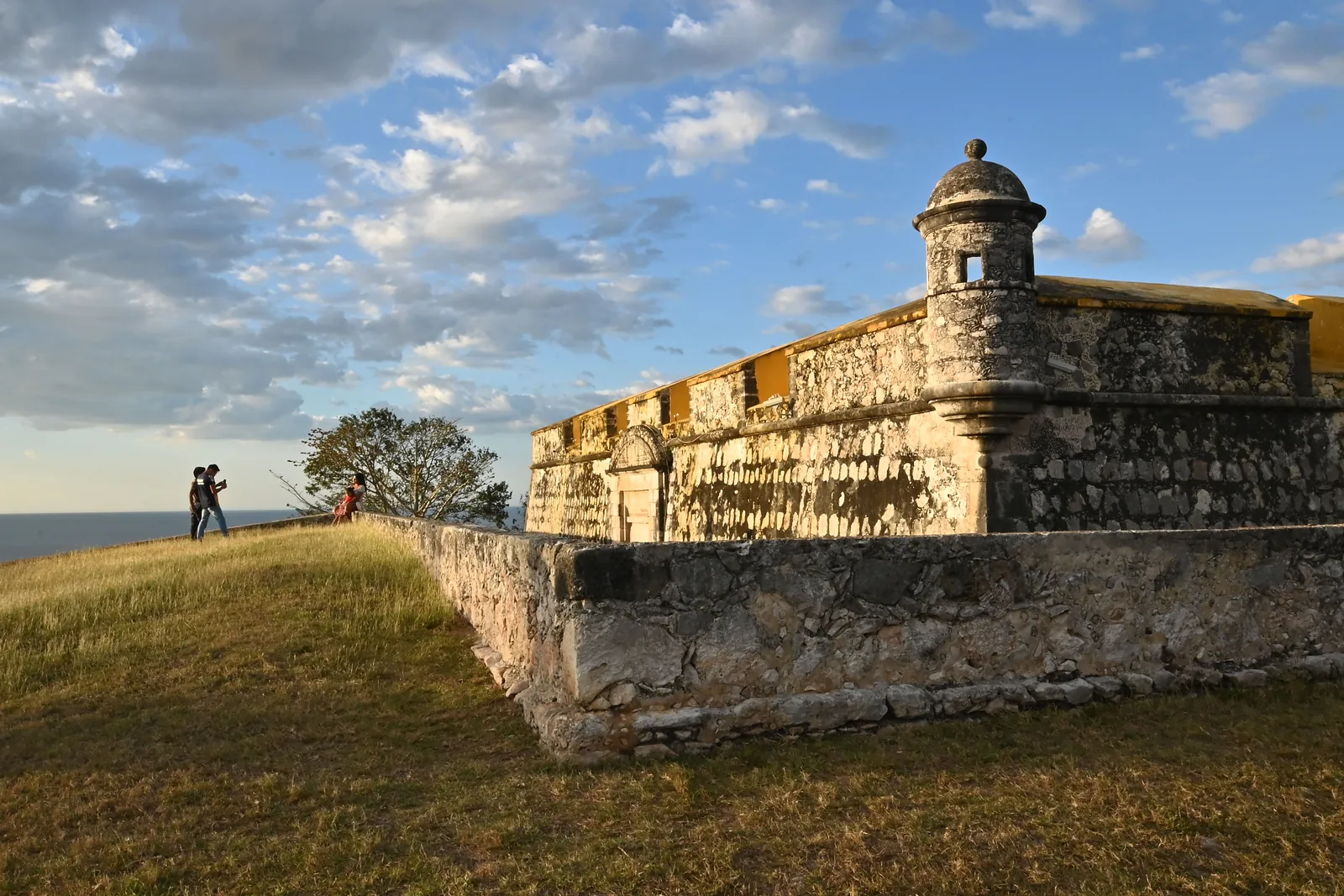
Edzná lies 55 kilometres from Campeche; visiting it involves about 110 kilometres of round-trip driving. Adding Edzná on day 7 and sleeping in Campeche again extends the trip to eight days and seven nights, with departure on day 8. It is not part of the seven-day, six-night route: it is an extension for those who want to go deeper into the Campeche stretch. Confirm opening hours and access conditions with INAH before travelling. With more days still, Campeche is also the natural base for the long excursion to Calakmul, which we cover in a separate guide.
Compact version: five days and four nights
The route can be shortened, but it forces choices: one night in Valladolid, two in Mérida and one in Campeche. In this version Chichén Itzá is visited on the way to Mérida, and it is best to choose between Uxmal and more city time. Keeping two nights in Campeche turns the trip into six days and five nights. It is worth being that precise, because mixing days with nights is the most common way to arrive one day short.
The route without a car
A car makes Chichén Itzá, Uxmal and Edzná easier, but the main urban corridor can be organised without driving. First-class buses link Cancún, Valladolid, Mérida and Campeche, and the Tren Maya publishes services between Cancún, Mérida Teya and San Francisco de Campeche, subject to the timetables in force on your travel date. Mérida's station lies outside the historic centre, which adds time to each transfer. A car-free route works best when it concentrates on the cities and arranges the archaeological excursions separately. The logistics are in our guide to the Tren Maya to Campeche.
When to travel
From November to April temperatures tend to be more moderate and conditions favourable for road days; the hotter, wetter months demand more flexibility and reward you with fewer visitors. In any season three rules hold: visit the archaeological sites early, never calculate long road days with non-stop driving time, and confirm opening hours, roads and transport a few days before leaving.
Where Campeche fits
Campeche makes sense when it receives at least one night; two allow you to understand the city. It is not a substitute for the Yucatecan capital: Mérida offers metropolitan scale, cultural institutions and a broader urban life; Campeche offers a compact fortified precinct, an immediate relationship with the Gulf and an experience made almost entirely on foot. That combination is precisely the argument for the trip. Anyone wondering how many days Campeche needs on its own will find the full answer in our article on whether Campeche can be seen in a day.
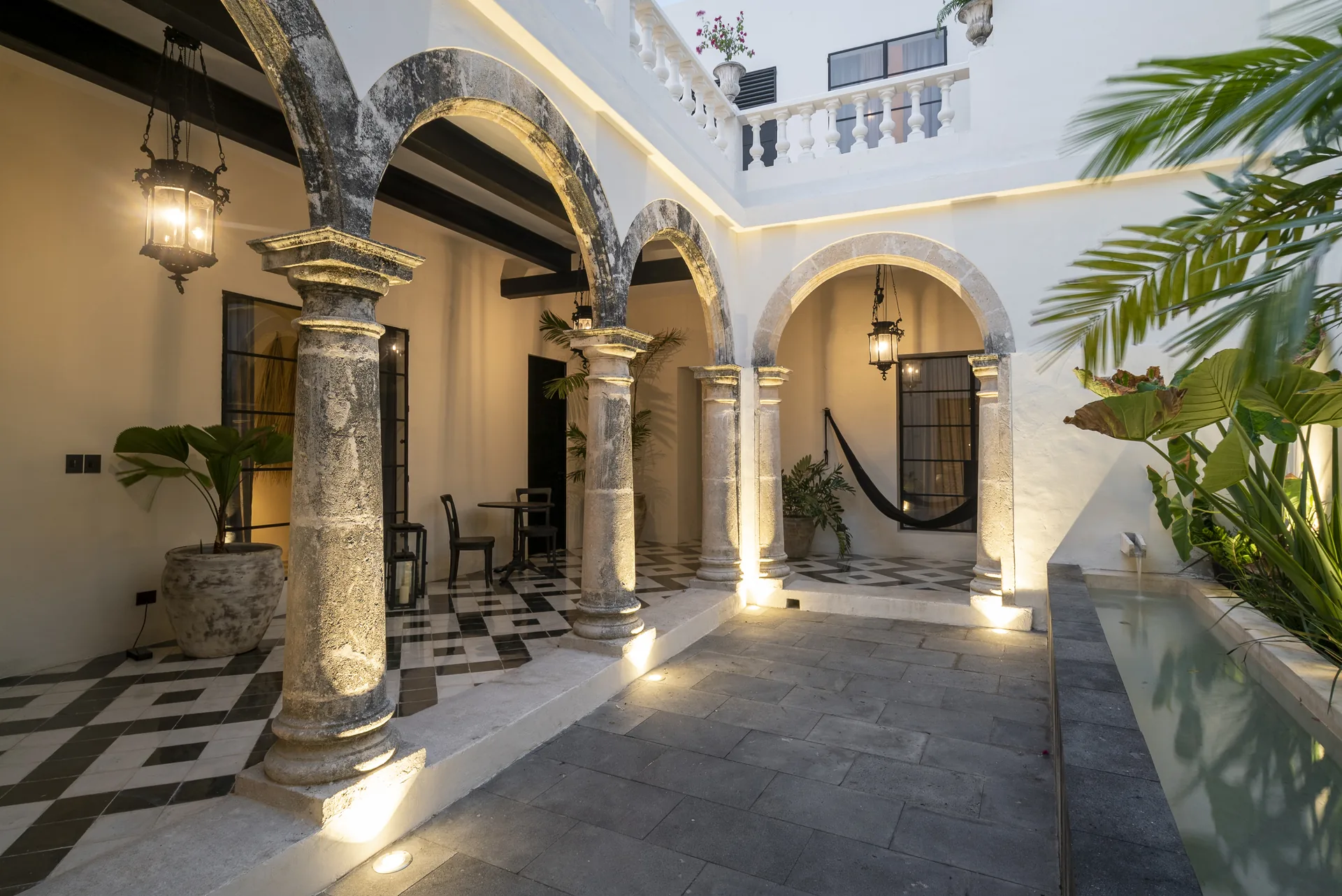
Our collection of restored houses inside the walled precinct, a house hotel, exists for that end of the journey: the whole city on foot and a house of your own waiting when you return.
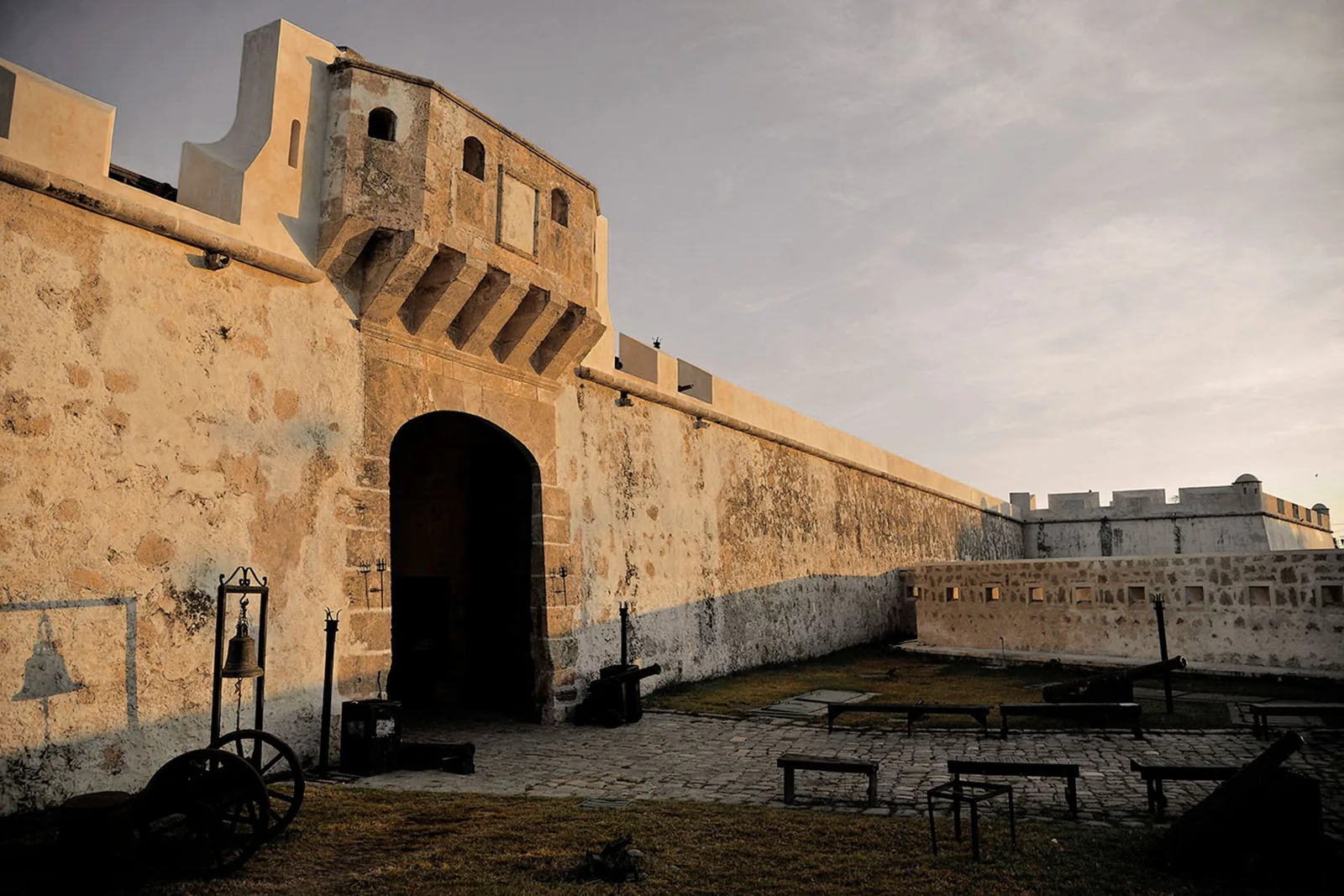
The route ends in a walled city. We will be waiting inside.
Write to us on WhatsApp → Check availability →Frequently asked questions
How many days do you need for this Yucatán Peninsula route?
Seven days and six nights allow two nights in Valladolid, two in Mérida and two in Campeche. The compact version needs five days and four nights; adding Edzná with another night in Campeche requires eight days and seven nights.
What is the best order for the route?
Cancún, Valladolid, Mérida and Campeche, or the same route in reverse. The order avoids reserving the final day for driving back to Cancún, but departure from Campeche must be resolved before buying flights or transport.
Is Campeche worth the detour?
Yes, when you have at least one night and want to combine Mérida with a historic fortified city on the Gulf. The full case is in our article on whether Campeche is worth visiting.
Can the route be done without a car?
Yes: first-class buses cover the main corridor and the Tren Maya connects Cancún, Mérida Teya and San Francisco de Campeche, subject to current timetables. The logistics are in our guide to the Tren Maya to Campeche.
How long is Mérida to Campeche?
On the direct Federal 180 corridor it is about 180 kilometres, between two hours and a quarter and two and a half. Uxmal is on another corridor and turns the transfer into a full day. The comparison between the two cities is in our article Mérida or Campeche.
Reviewed in September 2026 by the Casonas MX editorial team in Campeche. Edzná was verified at 55 kilometres from Campeche on INAH's official listing. The inscription of the Historic Fortified Town of Campeche (1999, criteria ii and iv, reference 895, 181 hectares) was checked against UNESCO. The rail connection between Cancún, Mérida Teya and San Francisco de Campeche was verified on the official Tren Maya timetables on 1 September 2026. The Government of Yucatán places Uxmal 80 kilometres from Mérida. The direct Mérida to Campeche transfer on Federal 180, about 180 kilometres and between two hours and a quarter and two and a half, is the reference adopted by this editorial team. We do not publish a distance or duration for the Uxmal to Campeche leg, nor the number of the Puuc and Chenes road, for lack of sufficient verification. Timetables, roads and transport change: confirm them with official sources before travelling.