Campeche is easy to underestimate precisely because it seems easy to cover. Inside the walled city, distances are short, and the main plaza, the gates, the bastions and the malecón all seem to confirm that a few hours are enough. In part, that is true. The interesting question is not how much can be ticked off a list in a day: it is what changes when Campeche stops being a stop and finds a place of its own inside the trip.
Yes, Campeche can be visited in a day
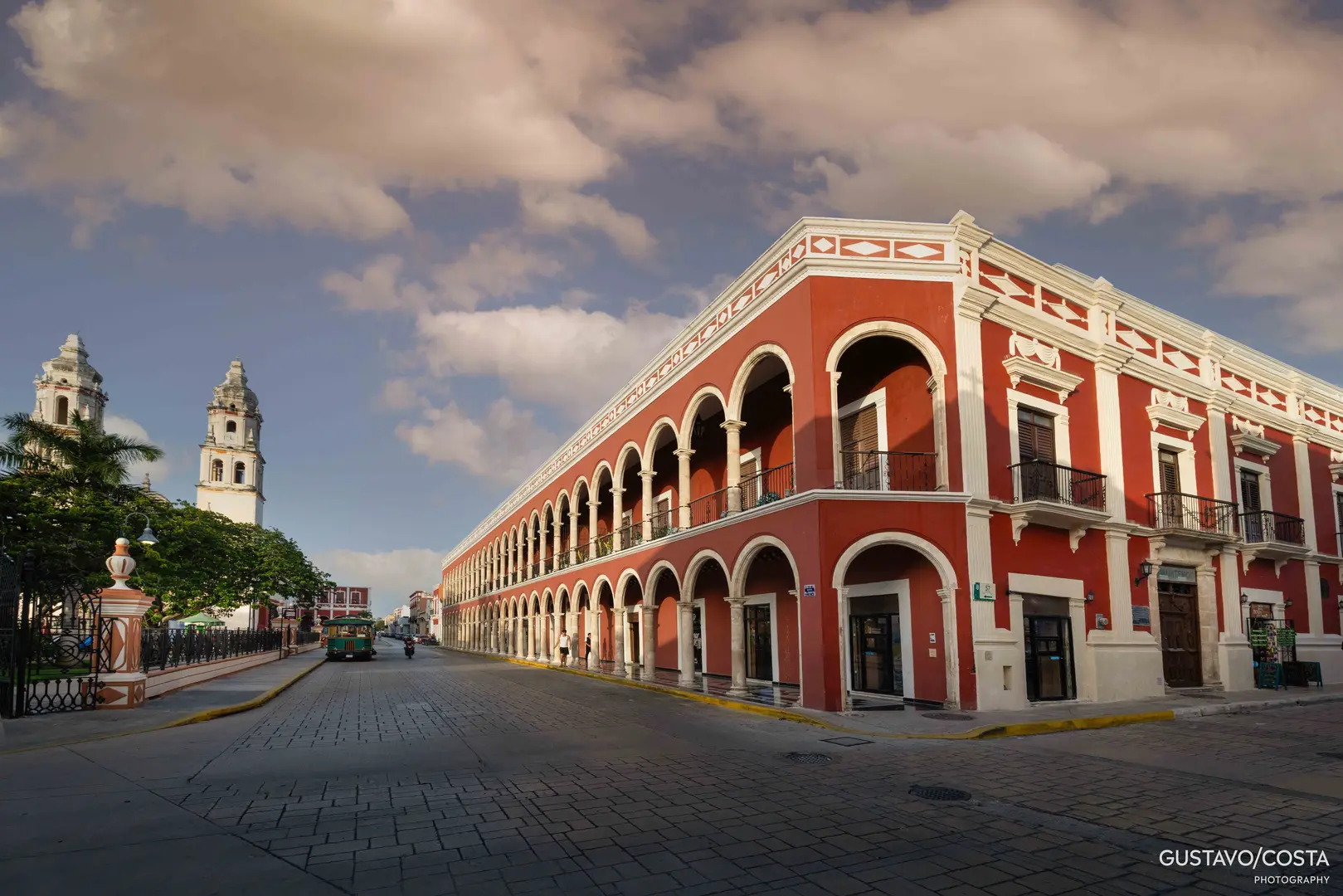
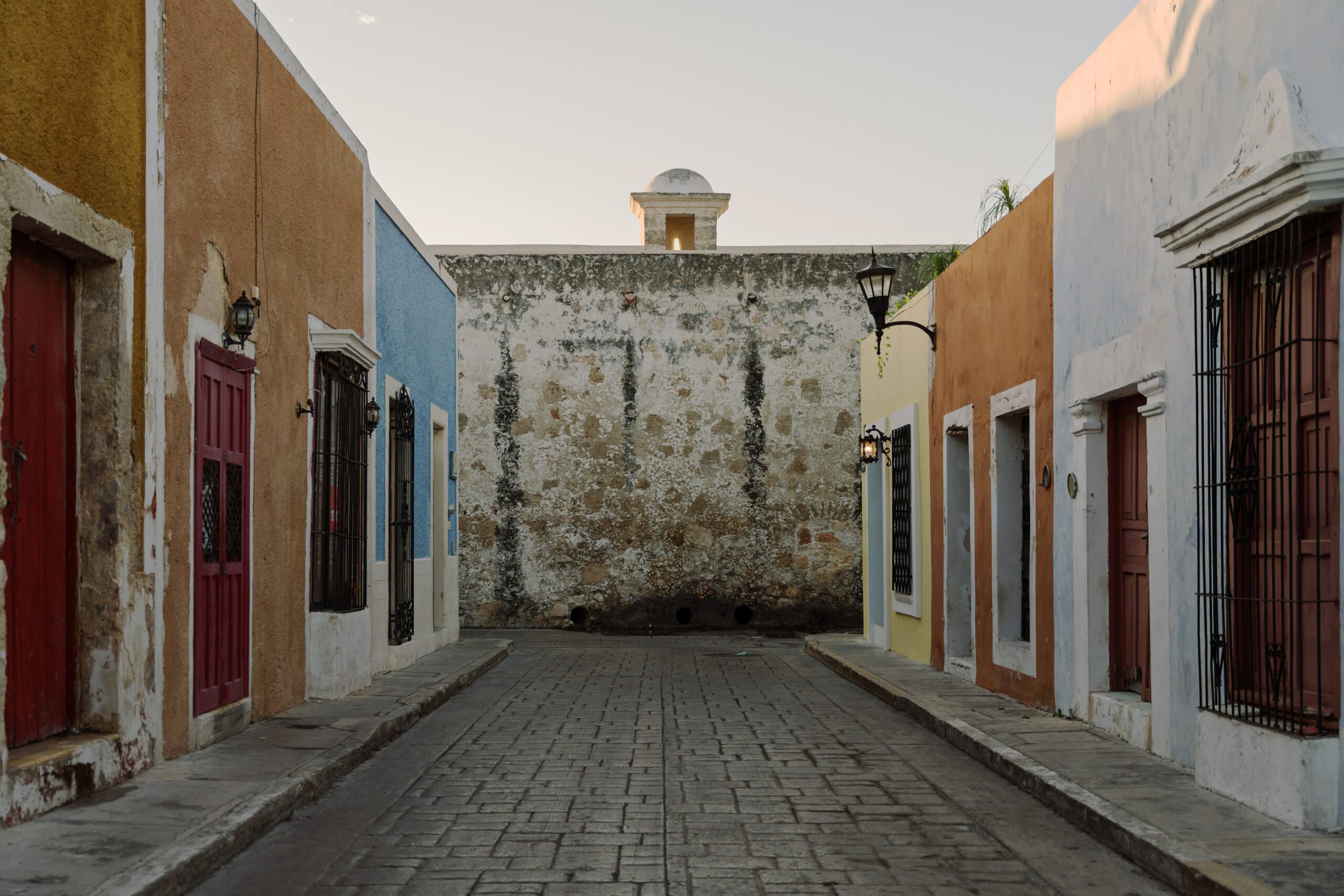
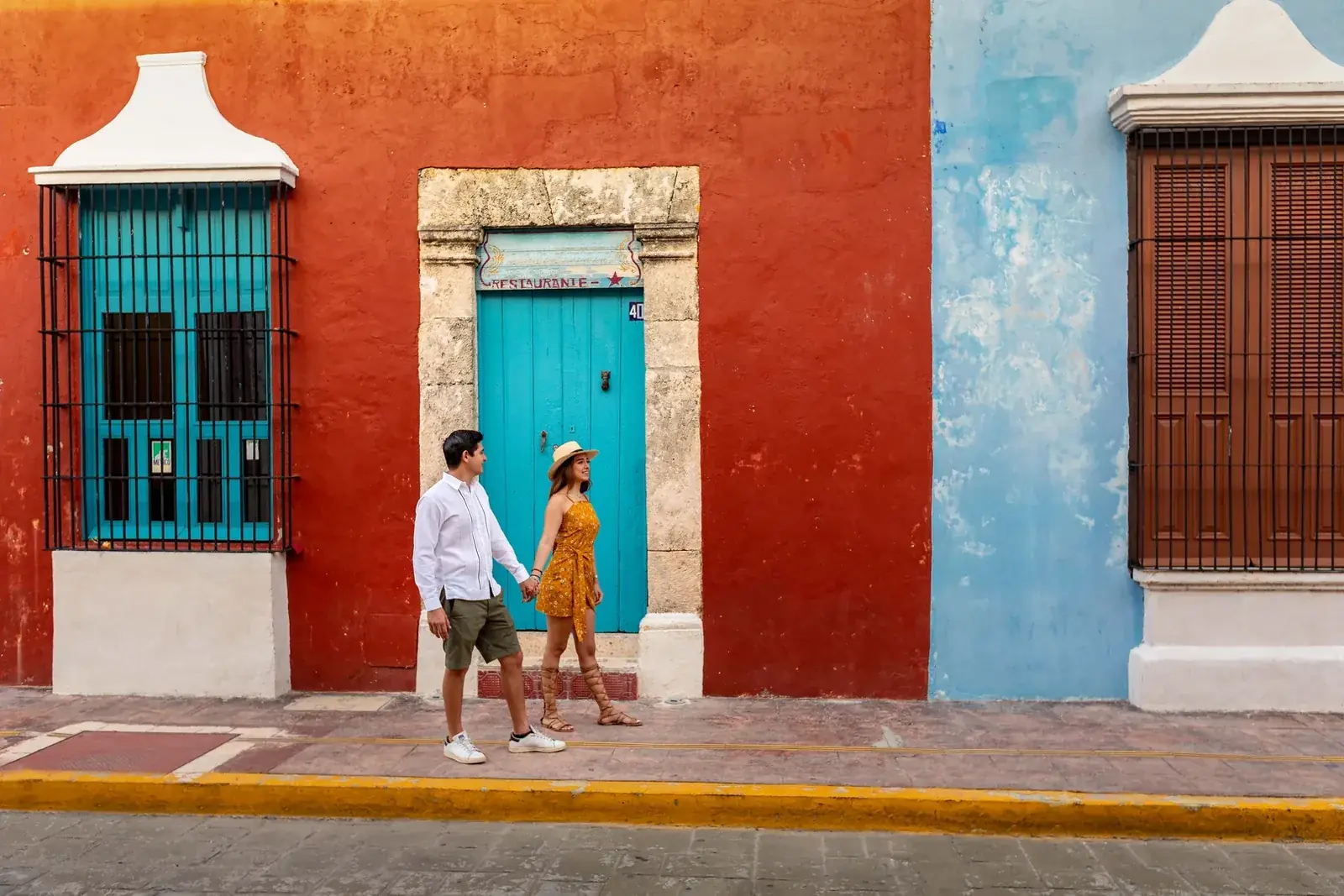
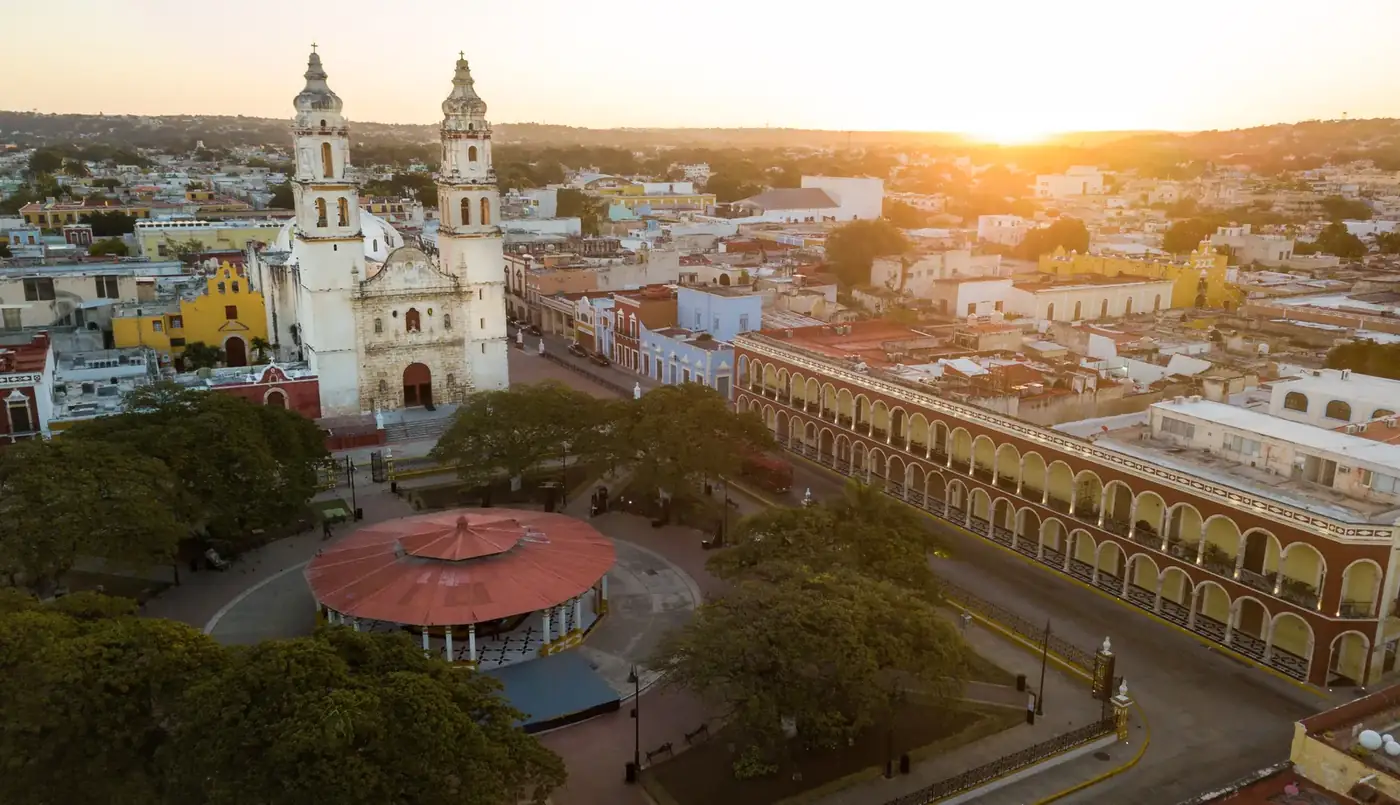
If one day is all you have, come. A well-organized day covers the walled city: the bastions, the Land and Sea gates, the main plaza and its cathedral, the streets of coloured facades and a walk along the malecón under the high sun. That is not little: few Mexican cities give so much in so few steps. Whoever takes that day trip cannot say they saw nothing. They saw an introduction. The difference begins with everything they had to leave for next time.
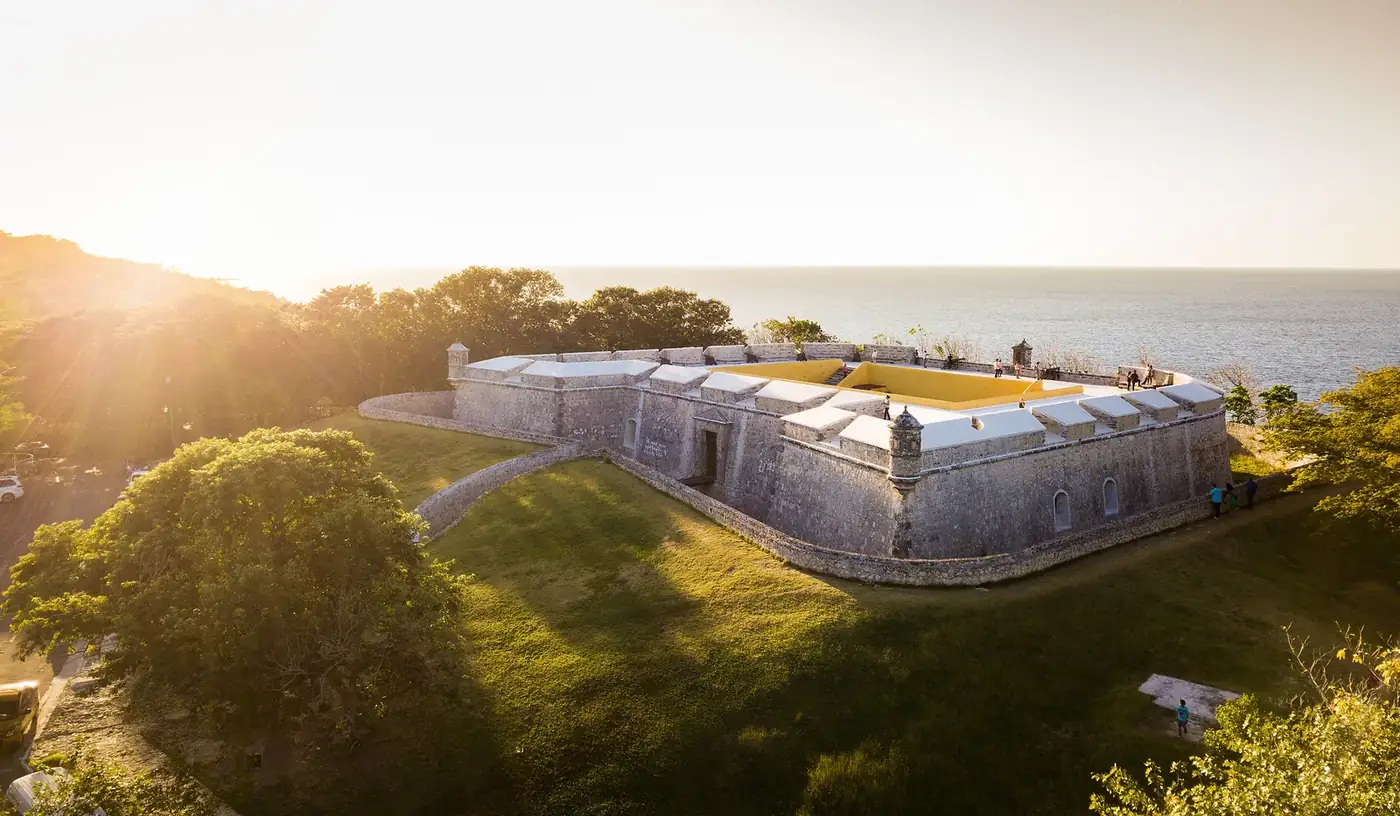
Context helps explain the scale: in 1999, UNESCO inscribed the Historic Fortified Town of Campeche on the World Heritage List under criteria (ii) and (iv), reference 895: 181 hectares of grid-plan streets, walls and bastions facing the Gulf of Mexico. Pocket-sized heritage, about 184 kilometres from Mérida, around two hours by road. That is why so many travellers first meet it as a day trip; our guide on how to get here gathers every route.
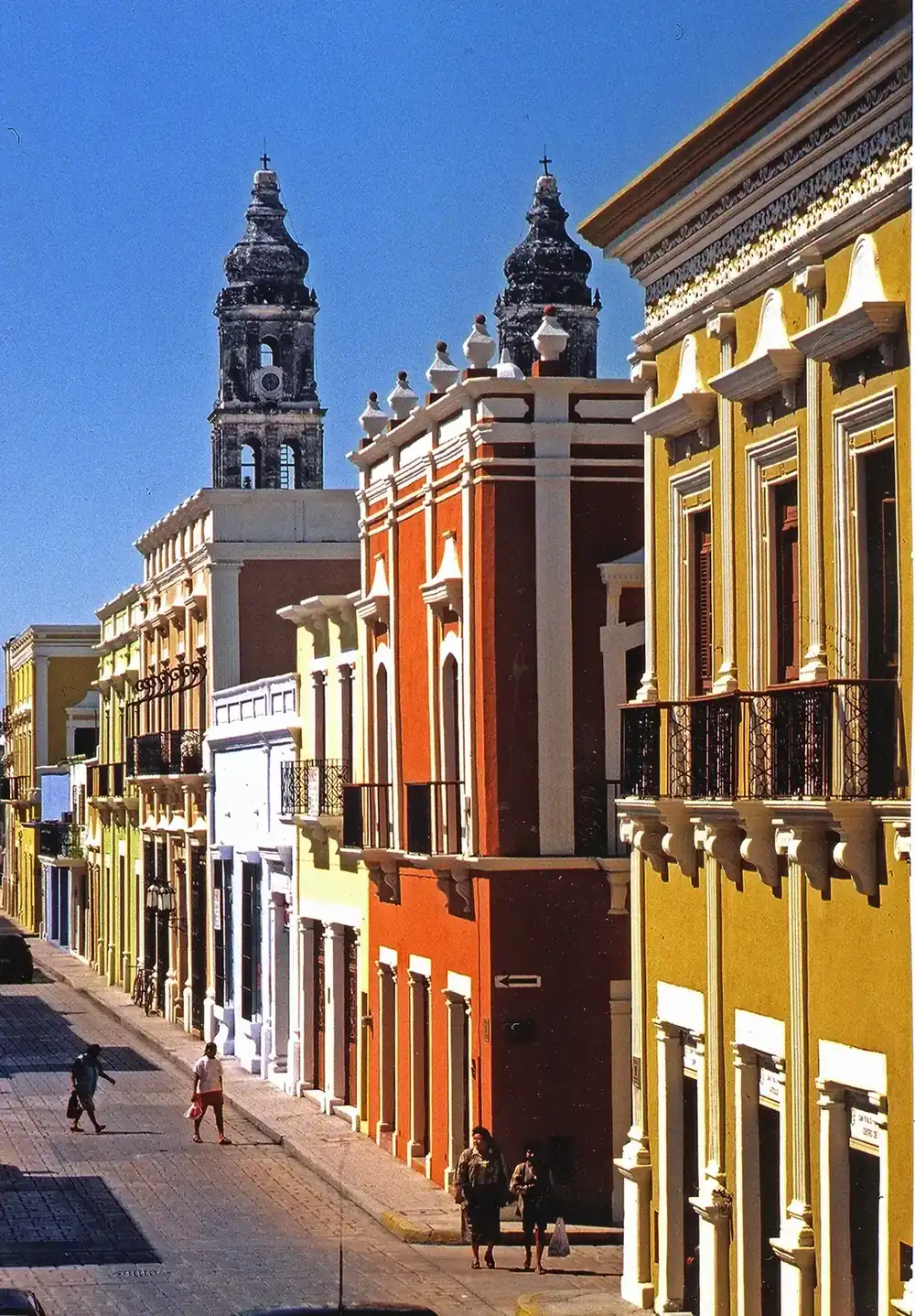
What a single day forces you to compress
A city inscribed as an ensemble is understood less as a list of monuments than as a weave: the streets, the gates, the bastions, the houses and their relationship with the sea explain one another. With a few hours available, every decision competes with the next: entering a museum means skipping another street, a longer lunch shortens the afternoon, and if the same day includes arrival and departure, everything has a deadline. Staying does not merely add things to the list. It adds something harder to count: it stops forcing you to decide, all the time, what to cut.
And there is an hour no day trip reaches. When the tours head back to Mérida, Campeche changes skin: the malecón fills with local life as the sun sets over the Gulf, the facades of the centre light up and the streets settle into that walkable silence walled cities have kept for centuries. The next morning the city wakes cool and entirely its own, hours before the first bus. It is not that there is more to see: there is another city, and it only appears for those who sleep here.
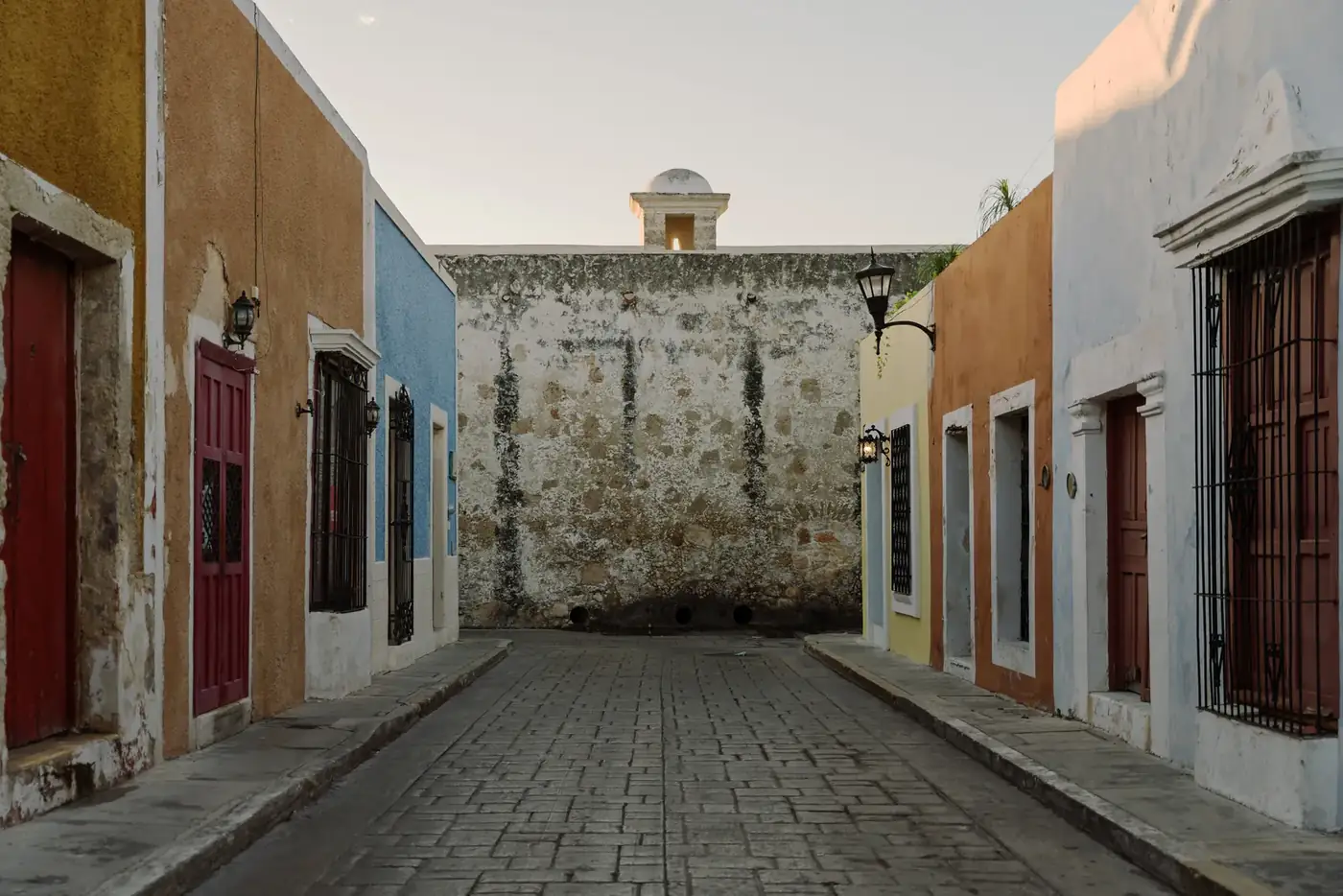
Three nights do not mean three full days
When planning the route, one frequent confusion is worth undoing: three nights do not demand three whole days devoted to Campeche. Inside a Peninsula journey, the stay organizes itself far more naturally:
| Arrival and first night | Enter the city without trying to see it all: sunset on the malecón and dinner in the lit-up centre |
| First full day | The walled city, museums, the barrios and campechana cooking, unhurried |
| Second full day | Edzná in the morning, or a nature outing, and back to the house |
| Departure morning | Breakfast, one last walk and the road to the next stop |
The first full day covers the walls and the museums, the barrios of San Román and Guadalupe beyond them, and the campechana table without a clock. Seen this way, three nights are an arrival afternoon, two full days and a departure morning: just enough room to live the city and its territory without compressing them into a single day. If the plan is the city alone, our weekend itinerary orders that version; for longer stays there is the four-to-five-day itinerary.
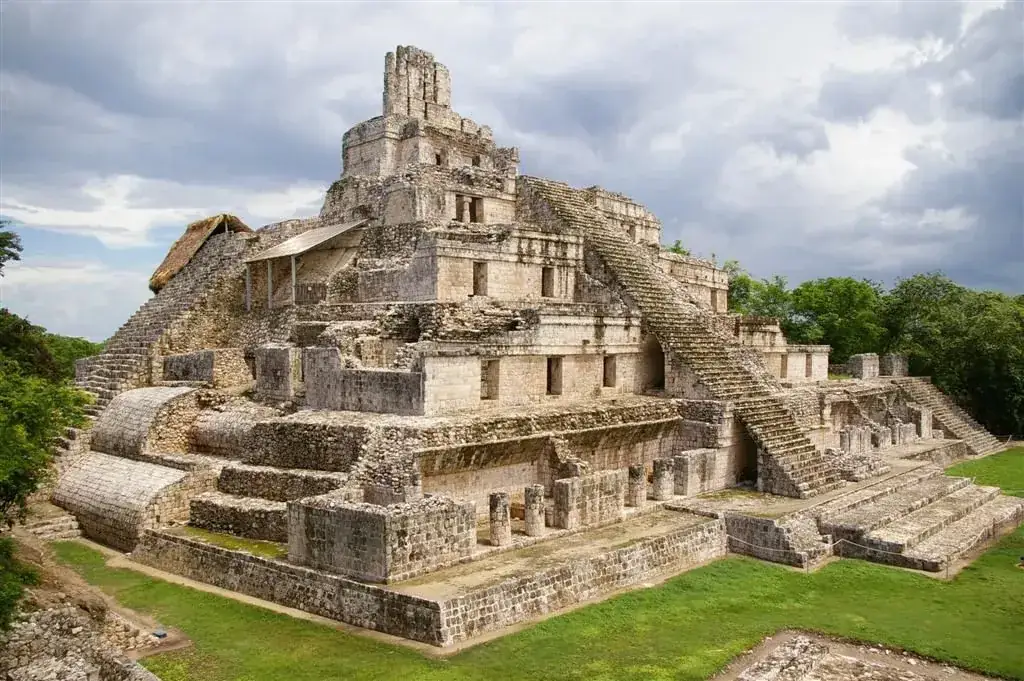
The second day opens the territory: Edzná (or the mangroves)
The Edzná archaeological zone lies 55 kilometres southeast of the city, per INAH's official figure: going early gives you the site nearly empty and returns you to Campeche in time for lunch. One morning earlier you were walking a fortified port city; now you stand before a Maya capital and its Five-Story Building. That closeness between historical layers is one of the strongest reasons to use Campeche as a base. Our Edzná guide tells the full excursion, with one precision: the Hacienda Uayamón on that route opens only for private events and is admired in passing.
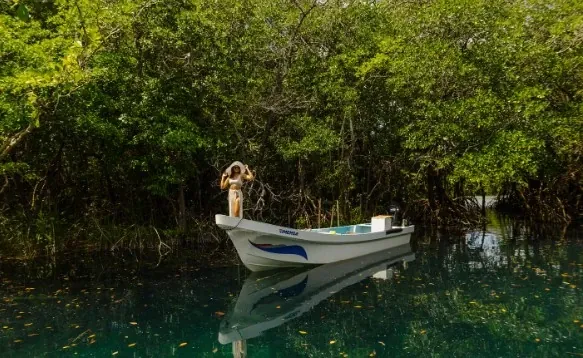
For nature travellers, the same day can look the other way: the mangroves and freshwater springs of Los Petenes, the coastal reserve neighbouring the city. The slow-travel rule is to choose one of the two outings, and accept that something will remain for next time.
So, how many nights?
| One day | Come: the historic centre as an introduction, and you will rightly want to return |
| One night | You gain the sunset, the night and a morning without a same-day round trip |
| Two nights | A good stay if the city itself is the whole priority |
| Three nights | Our recommendation: the full city plus a regional outing such as Edzná |
| Four or five | Room for Calakmul, more nature or simply rest |
The difference fits in one line: a day lets you see Campeche; three nights let you truly bring it into the trip. To pick your season, see our guide on when to visit.
Mérida and Campeche do not compete
This argument takes nothing from Mérida: it adds a second chapter to the trip. Two sister cities two hours apart, each with its own character, make a better route than either alone. If you are splitting your nights, our comparison of Mérida and Campeche goes deeper. And if the trip starts in Cancún, the full route is in our seven-day peninsula itinerary.
And then it matters where you sleep
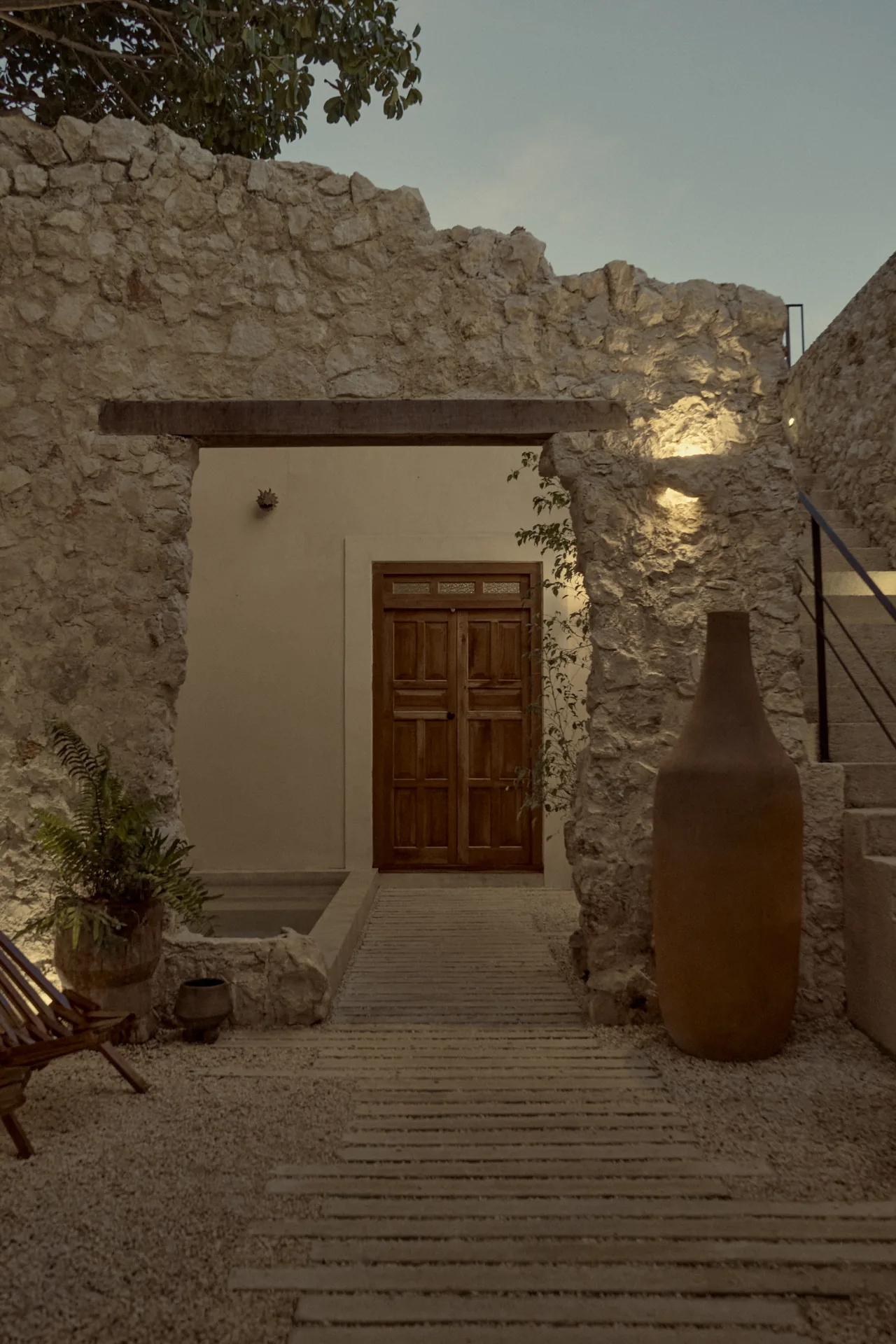
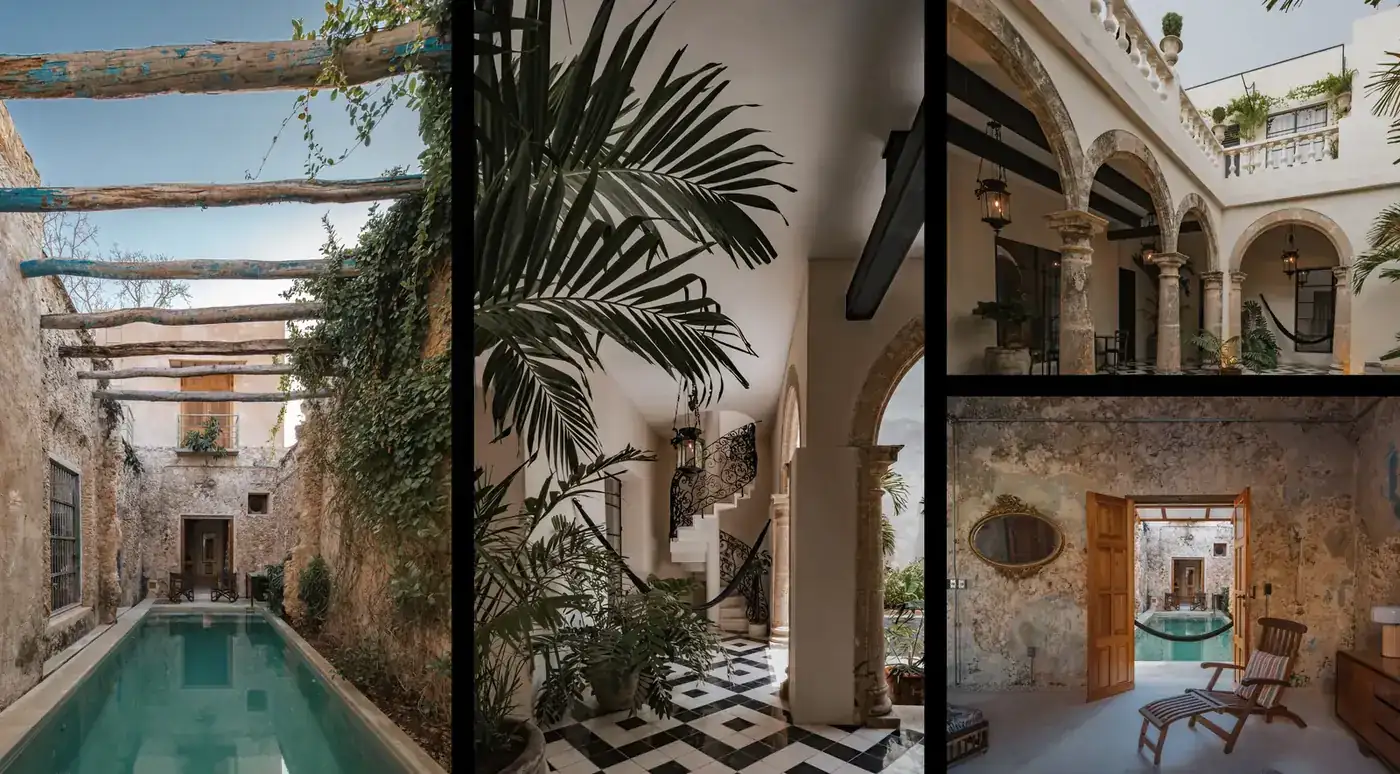
Once the decision stops being whether to pause for a few hours and becomes whether to stay, the lodging takes a different place in the experience. Much of Campeche's history lives in its domestic architecture: the houses, the courtyards, the proportions, the materials. Our collection gathers restored heritage houses and lofts inside the very fabric you will be walking: the stay happens inside the same city you are visiting, as we tell in how it feels to stay inside the walls and in the idea of a house hotel.
For these three nights: as a couple, Casa Muralla is the most intimate house in the collection, with its pool beside the city wall. As a family or group of friends, Casa Japa, the largest house and part of the MICHELIN Guide selection, puts the pool on the roof, with the Iglesia de Jesús as its view. And for the centre at your doorstep, the Narrativ lofts on Calle 59. All eleven houses can be compared at a glance in the comparison tool.
Three nights inside the walled city, in a house that belongs to it.
Write to us on WhatsApp → Check availability →Frequently asked questions
How many days do I need in Campeche?
Three nights is the measure we recommend: an arrival afternoon, one full day for the city, another for Edzná or nature, and a departure morning. Two nights work if the city is your only priority; a fourth makes room for Calakmul, the coast or simply rest.
Is Campeche worth staying overnight, or is a day trip from Mérida enough?
The day trip is worth it: the city is about 184 kilometres from Mérida, around two hours by road, and one day covers the walled centre. Sleeping here multiplies the trip: the malecón at sunset, the lit historic centre and the cool morning all happen after the tours have left.
What is there to do in Campeche at night?
Walk the malecón at sunset, wander the historic centre with its facades lit up, have a slow campechano dinner and stroll back through quiet, safe streets. The night is the strongest argument for staying.
Can you visit Campeche in one day?
Yes. One day covers the walls and their bastions, the historic centre and the malecón by day. What it leaves out is the city's other half: Edzná, the barrios, unhurried food and every hour after the last tour departs.
When is the best time to visit Campeche?
From November to April the weather is cooler and drier; summer, with its heat and occasional rain, gives you the city with fewer visitors. Any season works if you live at the local rhythm: streets early, house and pool at midday, malecón at sunset.
Reviewed and verified in August 2026 by the Casonas MX editorial team in Campeche. The inscription of the Historic Fortified Town of Campeche on the World Heritage List (1999, criteria ii and iv, reference 895, 181 hectares) was verified with the UNESCO World Heritage Centre. The Mérida-Campeche distance (184 km; around two hours by road, local knowledge; buses publish around two and a half hours) was checked against published services and the team's local knowledge in Campeche; the distance to Edzná (55 km southeast) is INAH's official figure. Site opening hours change and should be confirmed with official sources before travelling. House recommendations reflect the collection's operating inventory on the date of publication.