Start at the Puerta de Mar (Sea Gate), with the Gulf at your back, and walk inland. The same street ends at the Puerta de Tierra (Land Gate), the wall's other great entrance.
From one gate to the other, Calle 59 crosses the walled city from side to side. There is no more direct way to understand how Campeche arranged itself inside its defenses.
A street between two gates
The wall had only a few entrances, and Calle 59 links two of them. The Puerta de Mar received those who arrived by port. From the Puerta de Tierra, the roads led out to the Santa Ana neighborhood and inland.
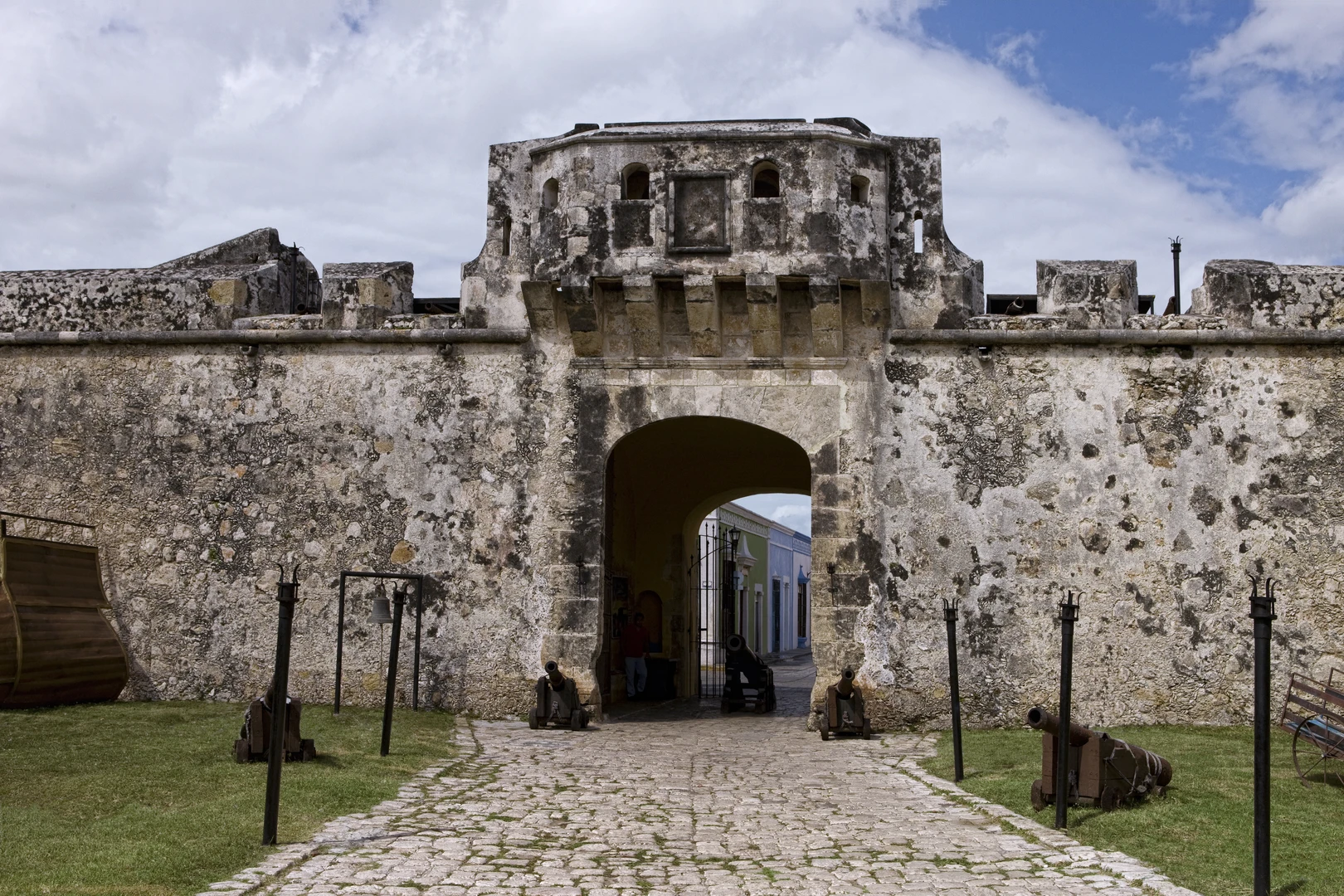
The Puerta de Tierra was completed in 1732, the year the governor could report to the king that work on the city's entrances was finished. In the late 19th century, the city set out to open itself up and tore down several stretches of wall. The Puerta de Tierra escaped the demolitions and still stands.
Our guide to the city walls and bastions tells the full story of the walled precinct, with its gates and the seven surviving bastions.
The pedestrian stretch
Between Calle 8 and Calle 16, Calle 59 is pedestrian; only a few cross streets stay open to cars. This is the part of the walk to take slowly, down the middle of the street, with facades on either side.
The mood shifts from block to block. The one between Calle 12 and Calle 14 is mostly residential, and the walk grows quieter. Past Calle 16, traffic returns and the street carries on to the Puerta de Tierra.
What you will see along the way
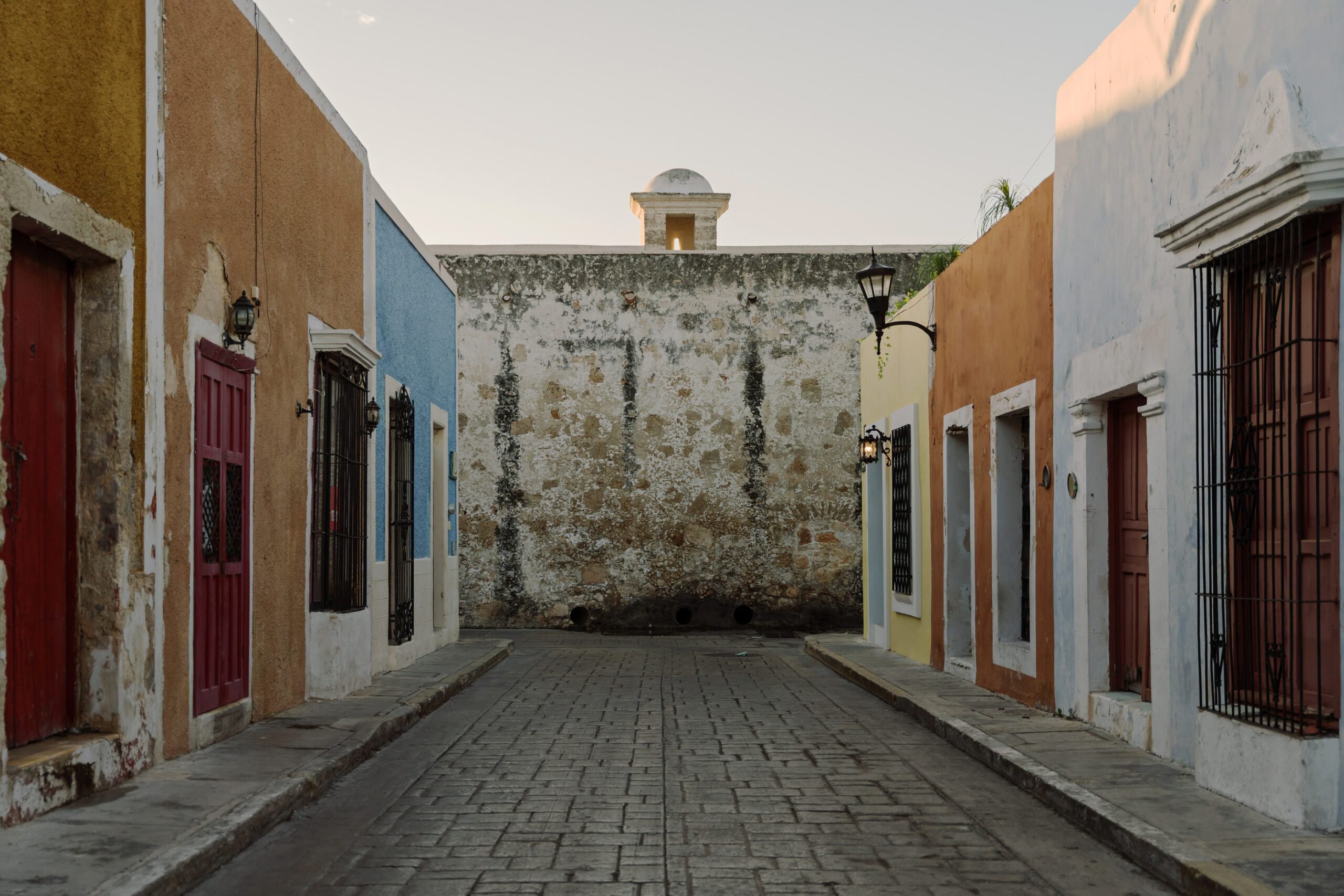
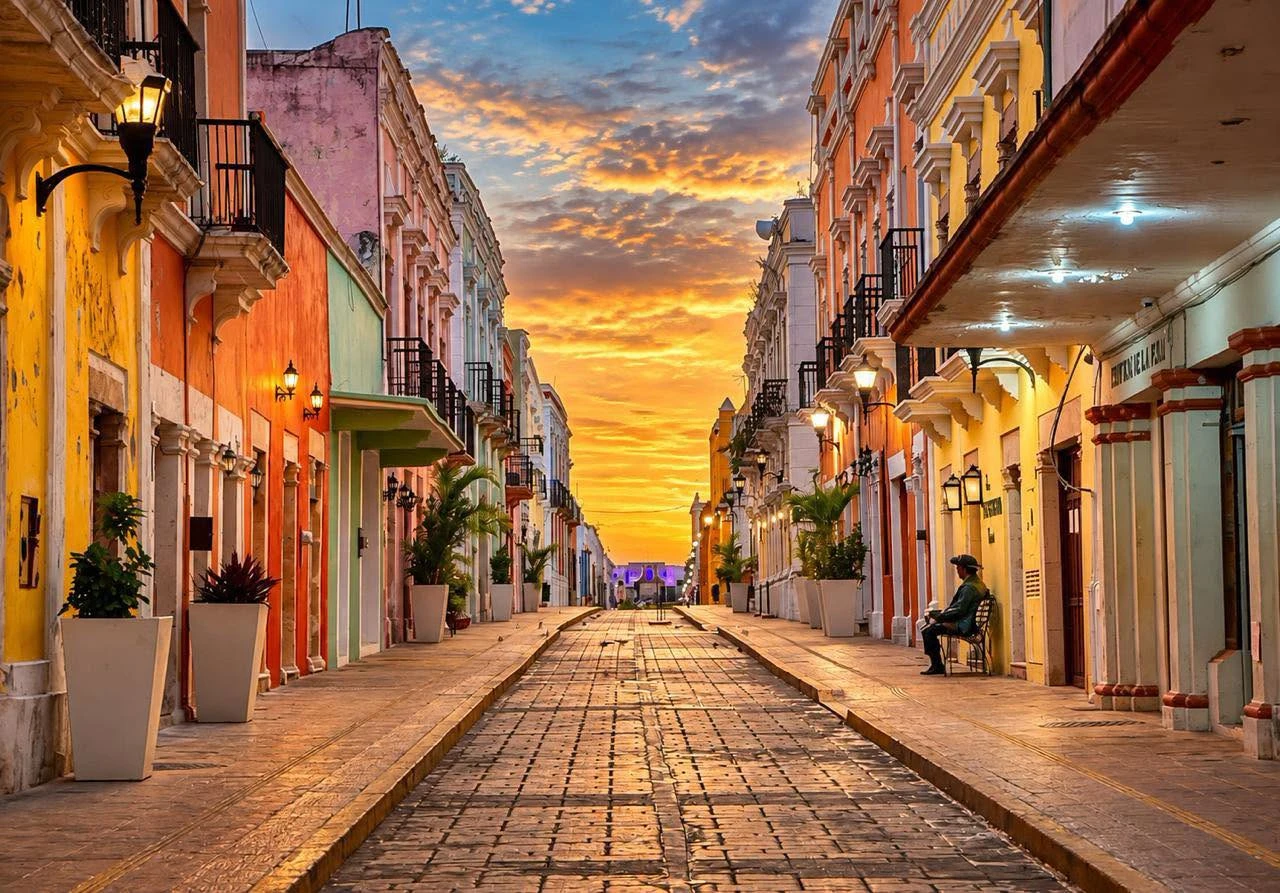
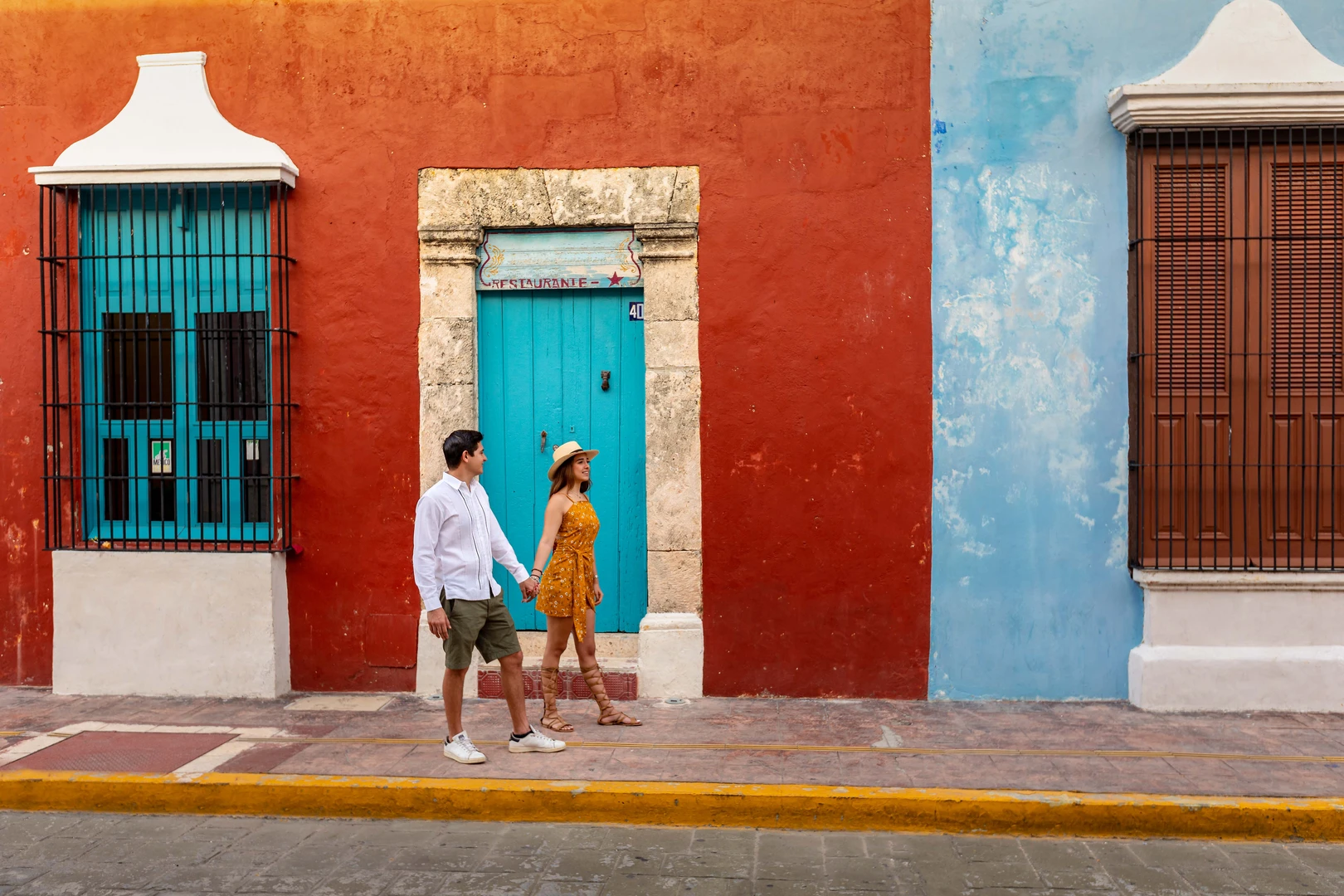
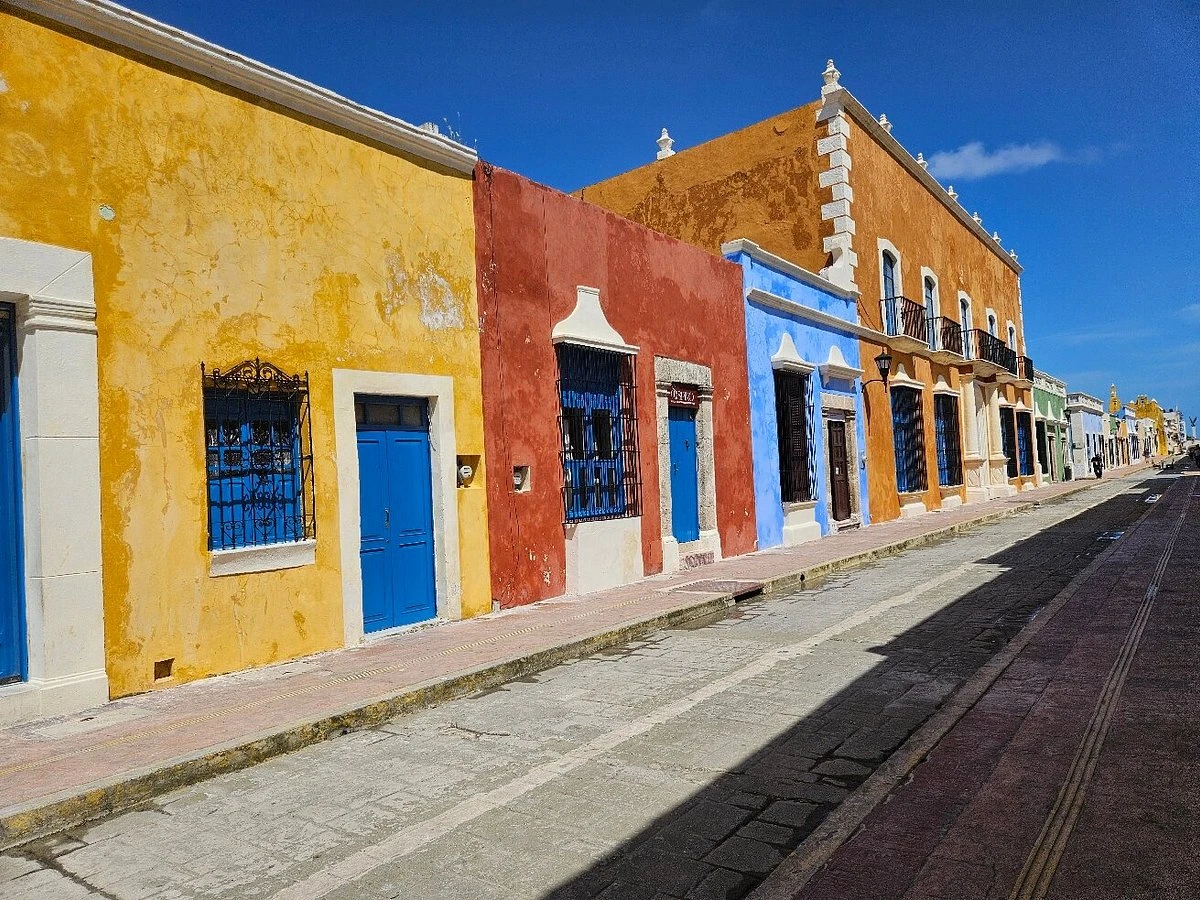
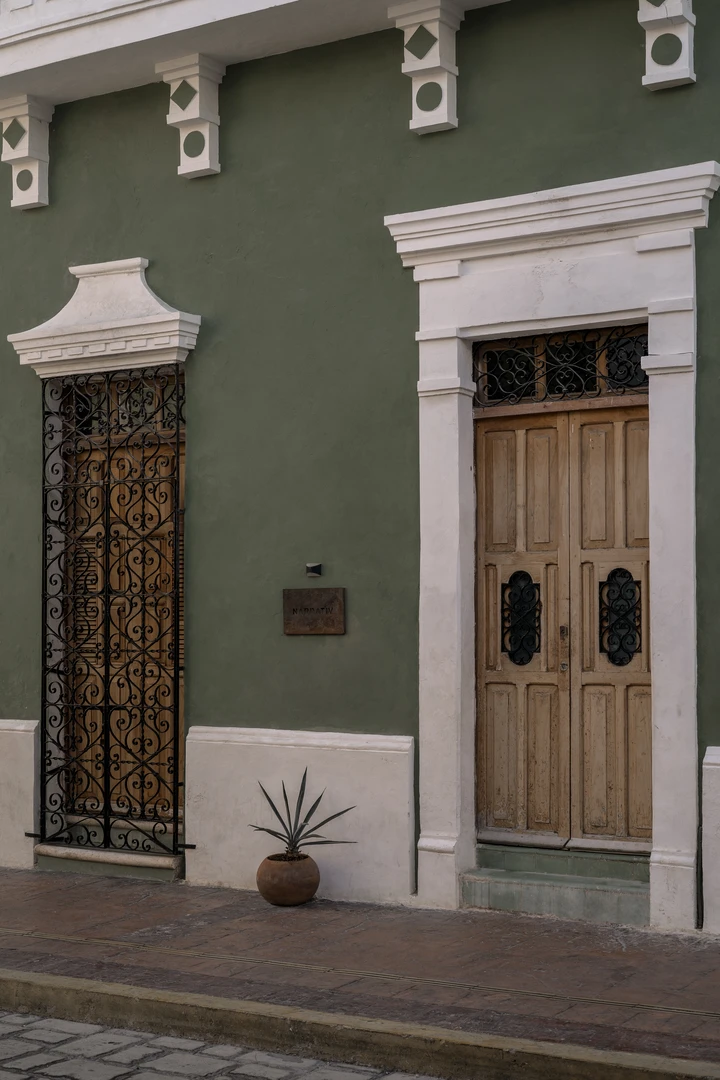
The first thing that holds your eye is the unbroken line of facades: one- and two-story houses painted in color, with iron-railed balconies, wooden doors and tall windows. When a door is left open, it reveals the inner courtyard, the heart of these houses. Our guide to Campeche's painted houses explains where the palette comes from.
Among them, stop at number 36. This is the former house of the King's Lieutenant, the Casa del Teniente de Rey, home since 1995 to the Centro INAH Campeche, the institution that studies and protects the state's heritage.
At the end of the walk rises the Puerta de Tierra. In season, on some evenings, it hosts a light-and-sound show on the history of the city; schedules change, so check at the ticket office.
The street by day and by night
In the morning, Calle 59 is quiet and the low light sharpens the facades. It is the best time to photograph them without crowds.
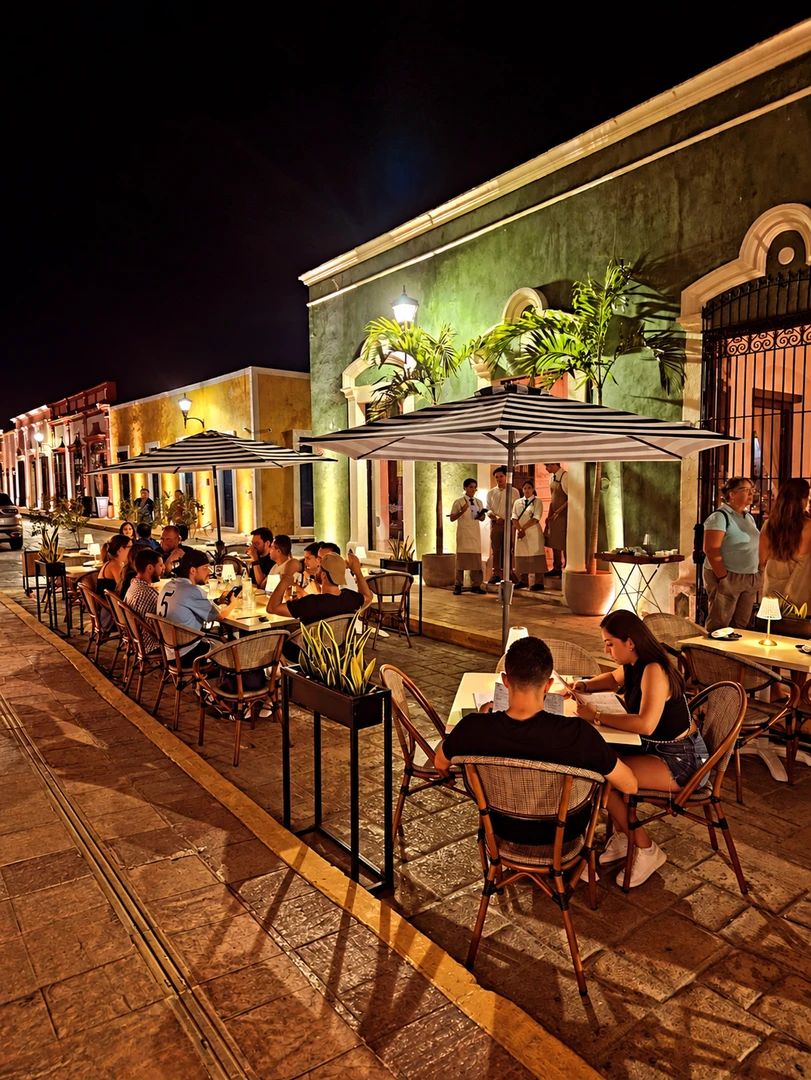
As evening falls, the street changes character. Tables move out onto the pavement, people come out to stroll, and Calle 59 becomes the place to have dinner and a drink before heading home.
That is what makes Calle 59 distinctive: within a few blocks, heritage facades, a stretch that is still mostly home to residents and terraces that bring the evening to life all share the same street. It is a street to visit and, at the same time, a street people live on.
Special dates
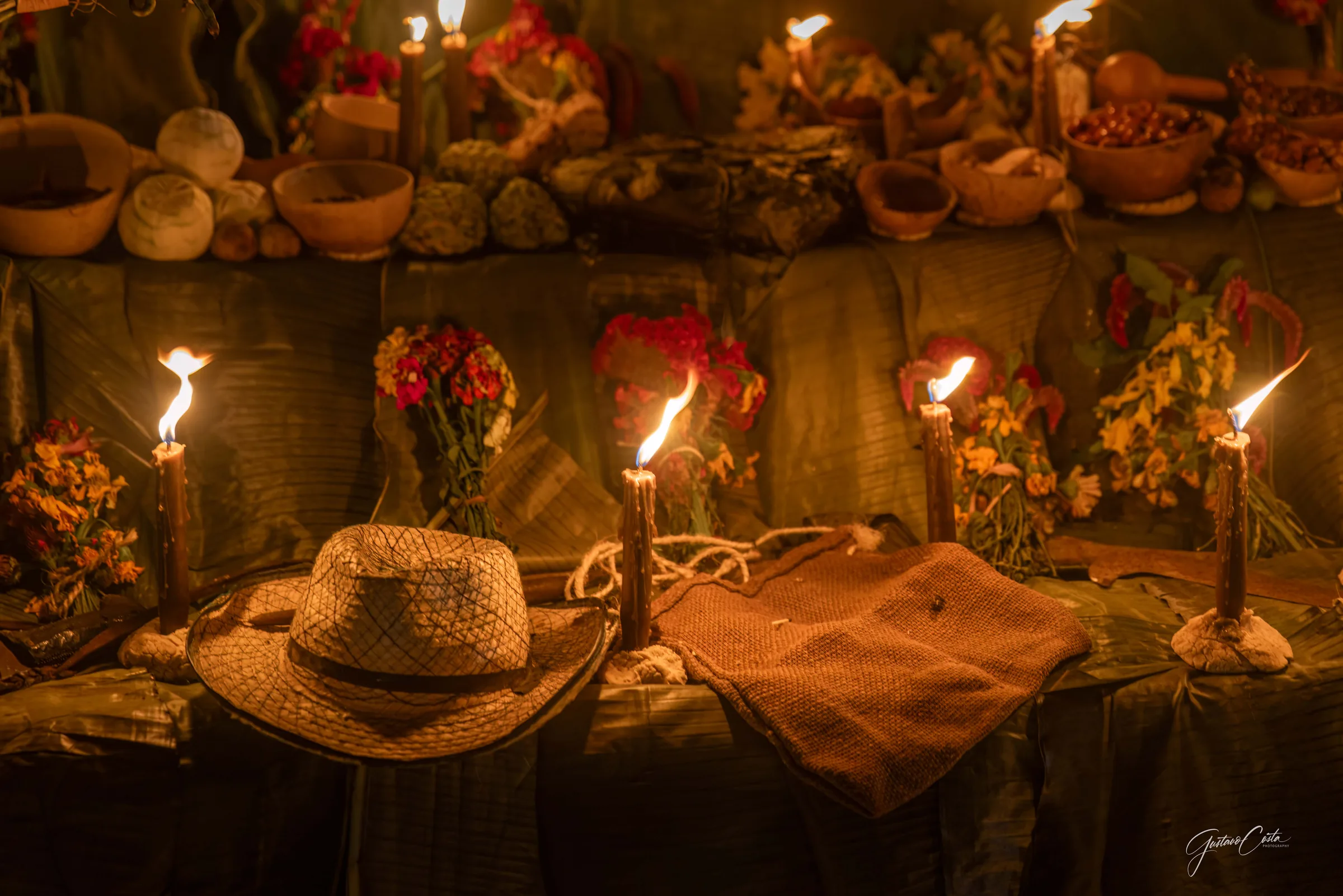
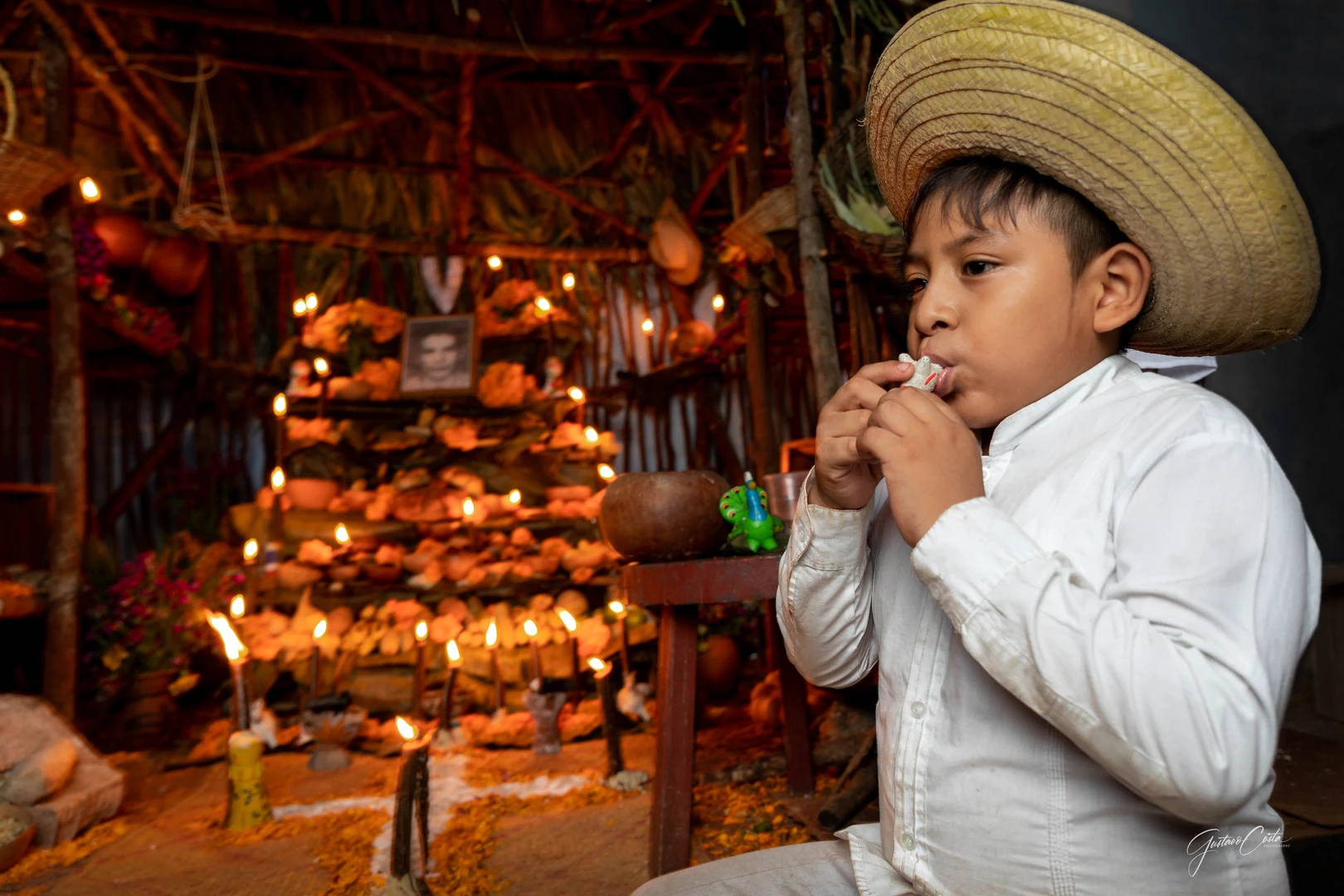
In late October and early November, during Hanal Pixán, family altars appear on downtown streets such as Calle 59. Read more in our article on Hanal Pixán in Campeche.
Connecting it with the rest of the city
Calle 59 is the backbone of any walk through the center. From the Puerta de Mar, the malecón, the seafront promenade, is a few steps away for sunset over the Gulf. From the Puerta de Tierra, you can follow the wall toward the bastions.
To go further, our walled city guide maps out the historic center street by street, and the walk through the houses of the collection starts right here.
Staying on the street itself
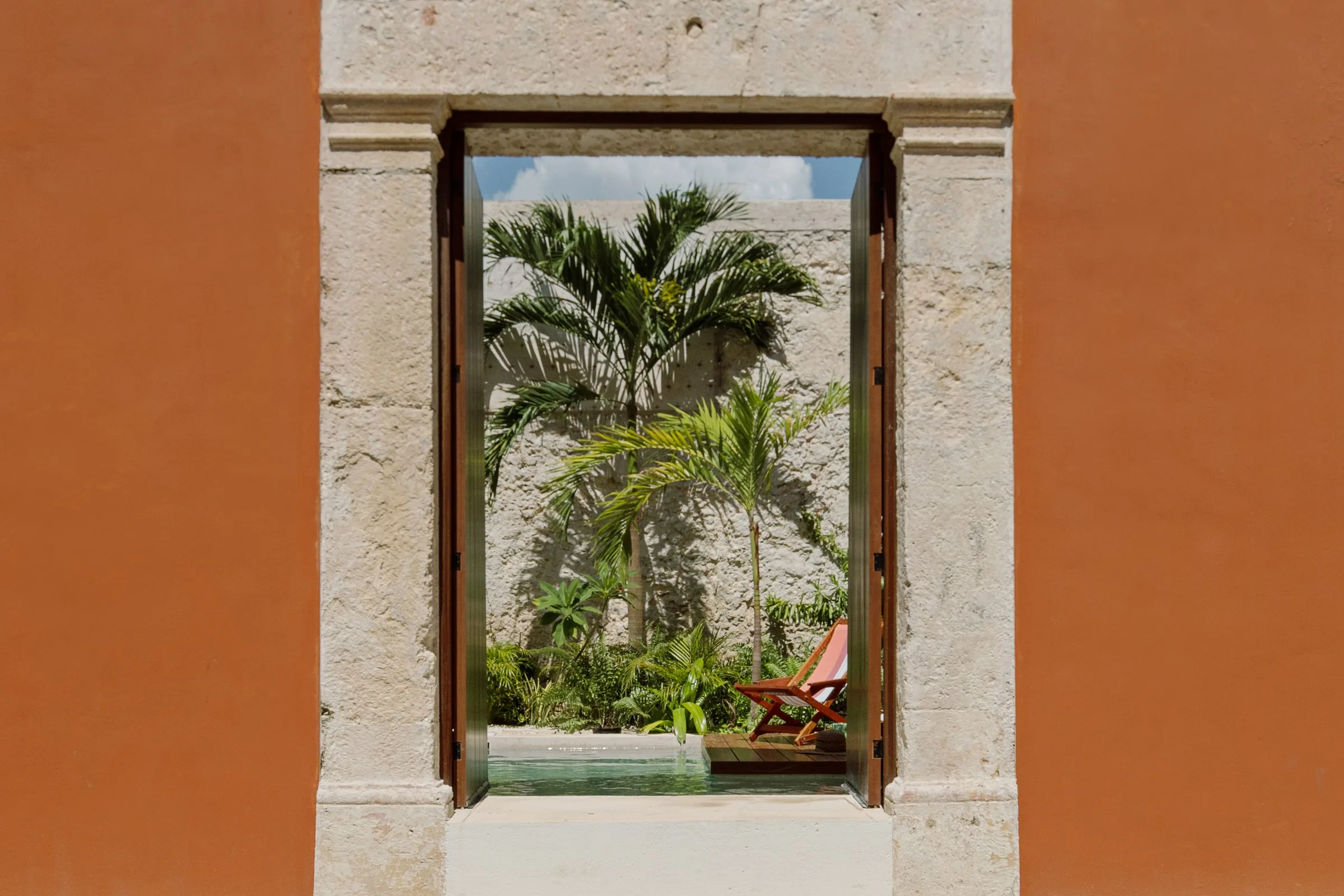
Two of Casonas MX's four contemporary lofts are on Calle 59: Lira and Numen. Each has one bedroom, sleeps up to four guests and sits about a five-minute walk from the malecón.
The Casonas MX reception and offices are on the same street, open Monday to Saturday from 8:00 to 20:00 and on Sundays from 10:00 to 14:00. The other two lofts, Serena and Solario, are very close by on Calle 12, and the collection's seven heritage houses are within the same walled city.

Frequently asked questions
Is Calle 59 pedestrian?
Between Calle 8 and Calle 16, yes, with a few cross streets open to cars.
Where does Calle 59 begin and end?
Within the walled city, it runs from the Puerta de Mar, on the Gulf side, to the Puerta de Tierra.
What is there to see on Calle 59?
The two gates of the city wall, the Casa del Teniente de Rey and the architecture of its houses.
When is the best time to walk it?
Early in the morning to photograph the facades; at nightfall for dinner and a stroll.
Can I stay on Calle 59?
Yes: Casonas MX's Lira and Numen lofts are on the street itself.