At the end of October, Campeche sets the table for those who are gone. Candles are lit, food is cooked underground and atole is served in gourd bowls. For a few days the souls come home, and the family receives them as it would any beloved guest: with their favorite food and no hurry.
Travelers who arrive on those dates come as guests too. It helps to know what is being celebrated, where and how, so you can look with the attention the occasion deserves.
What Hanal Pixán is
Hanal Pixán, also written Janal Pixán, means "food of the souls" in Maya. It is the peninsula's tradition of remembering the dead and offering them food, joined over the centuries to the Catholic calendar of All Saints and All Souls.
It is part of the indigenous festivity dedicated to the dead, inscribed by UNESCO in 2008 on the Representative List of the Intangible Cultural Heritage of Humanity.
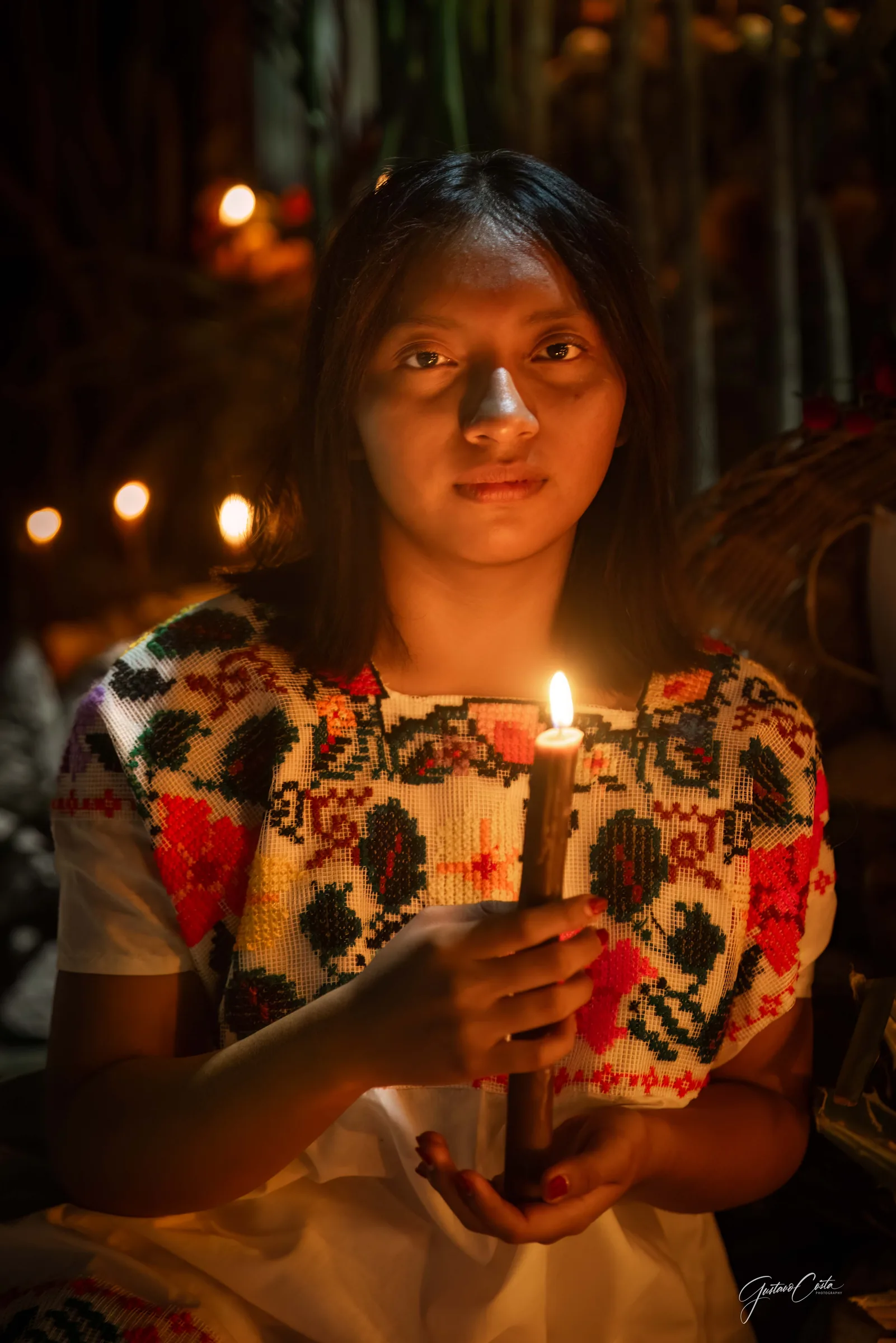
It shares its roots with the Day of the Dead in the rest of Mexico and has an accent of its own: food cooked underground, new atole and prayers for the souls.
The days of the souls
INAH places the central days from October 31 to November 2. Each one has its own guests:
October 31. The day of the children, u janal palal. The altar fills with sweets, toys and color.
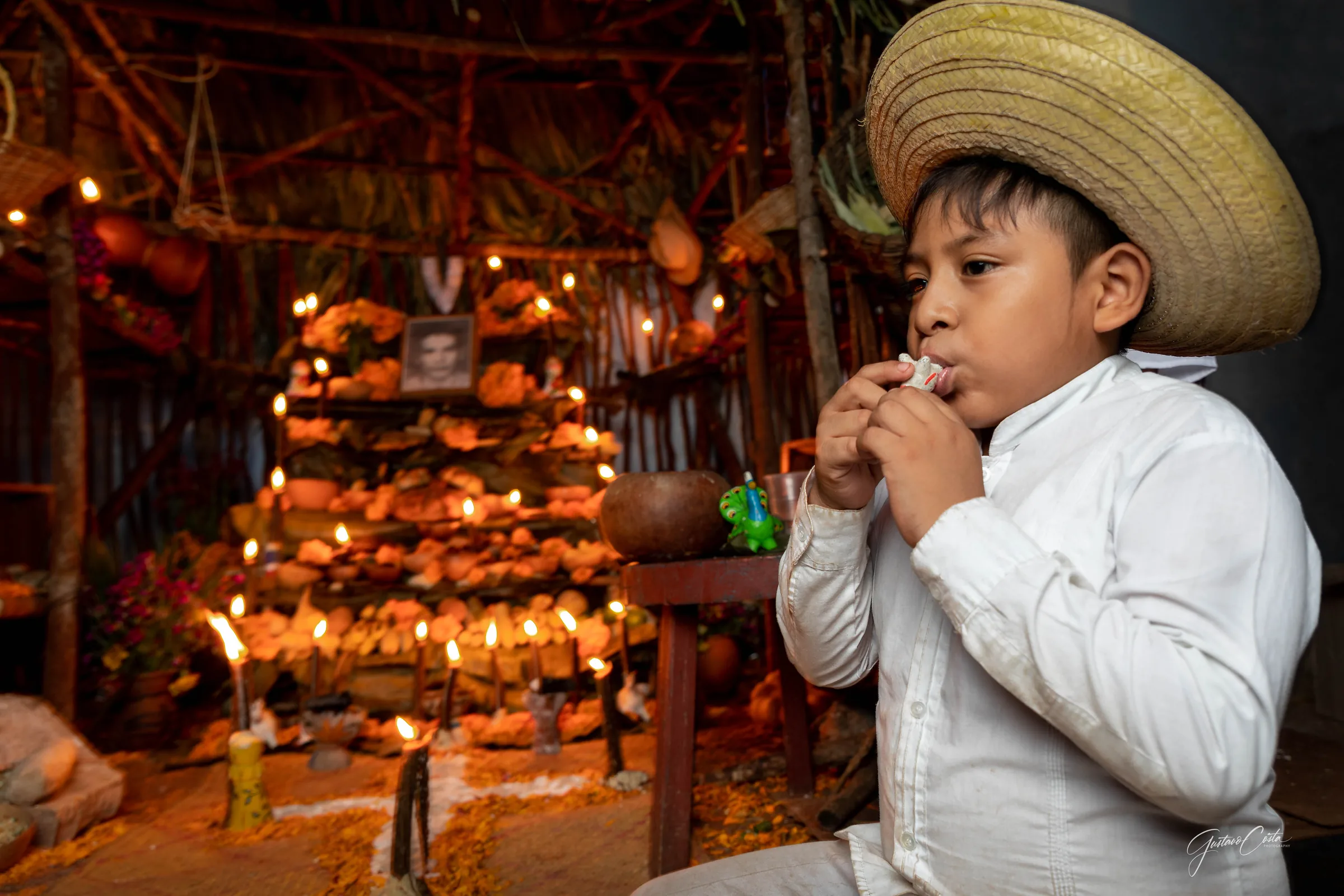
November 1. The day of the adults, u janal nucuch uinicoob, with the food and drink offered to them on the altar.
November 2. The day of all souls, with the misa pixán, a mass held in the cemeteries.
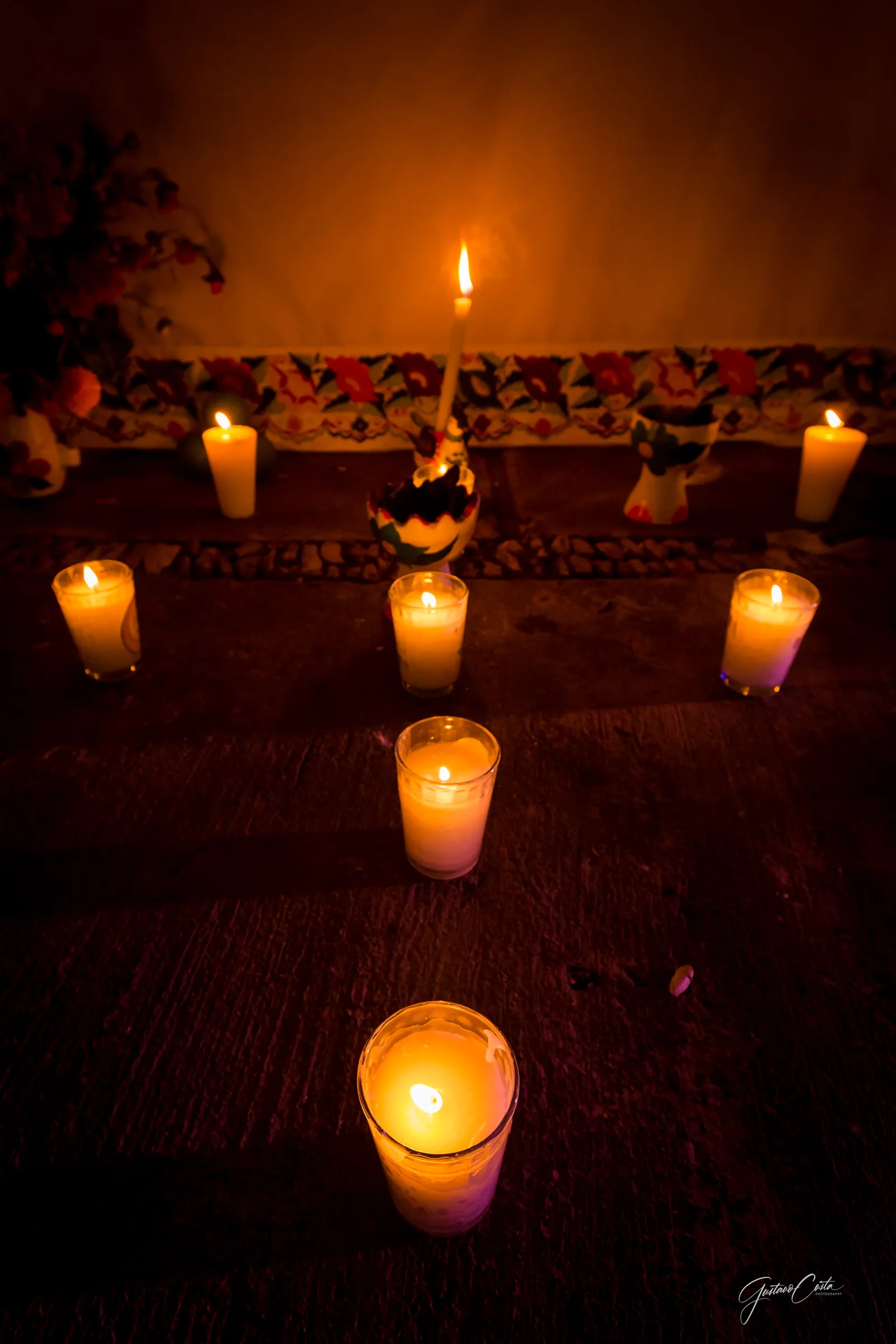
A week later comes the bix, the octave: a simpler farewell, with candles lit at doors and on stone walls to guide the souls on their way back. Dates vary by family and community, and in many Campeche homes the preparations begin days earlier. If you are choosing when to travel, our guide When to visit Campeche helps you see the whole year.
The table of the souls
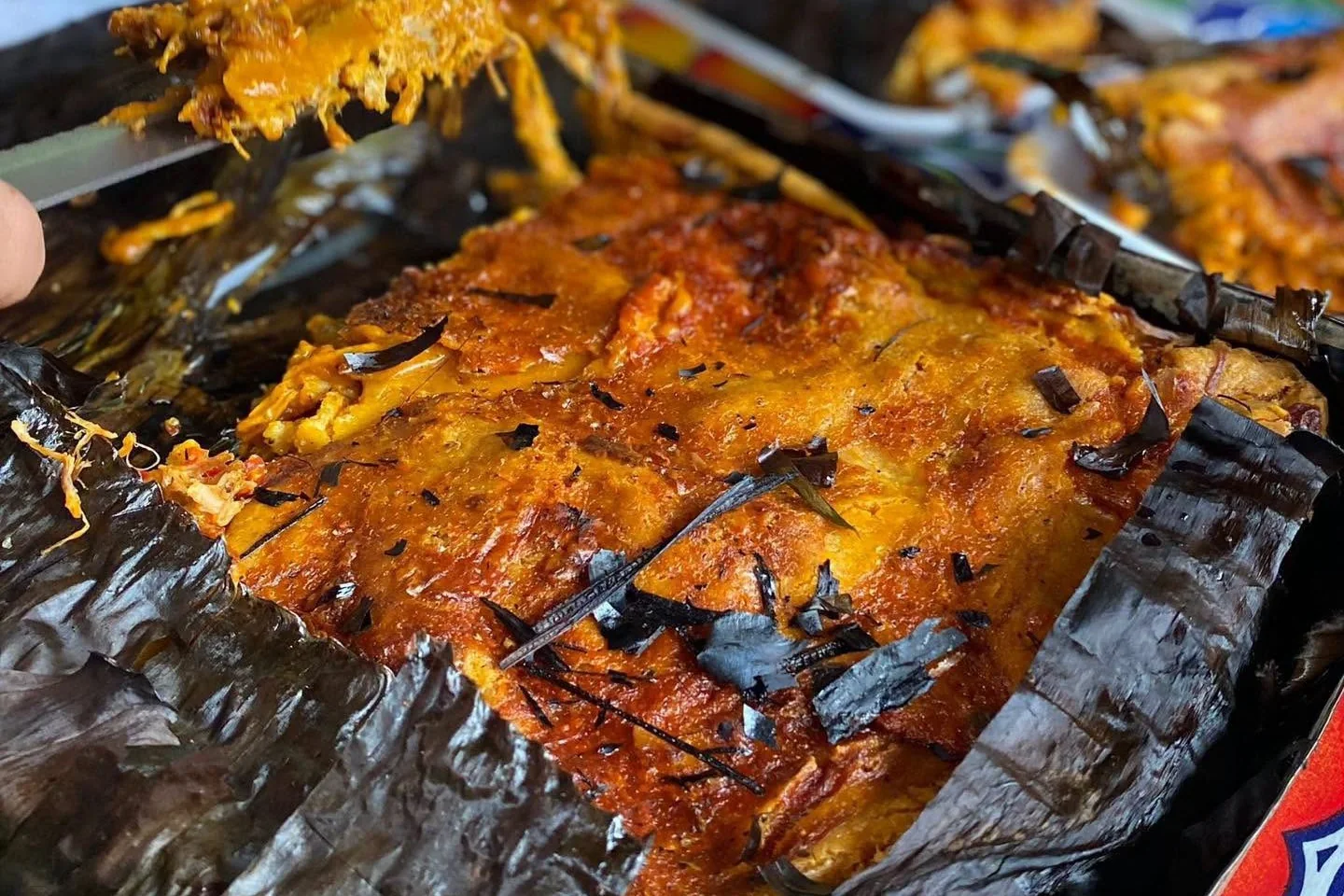
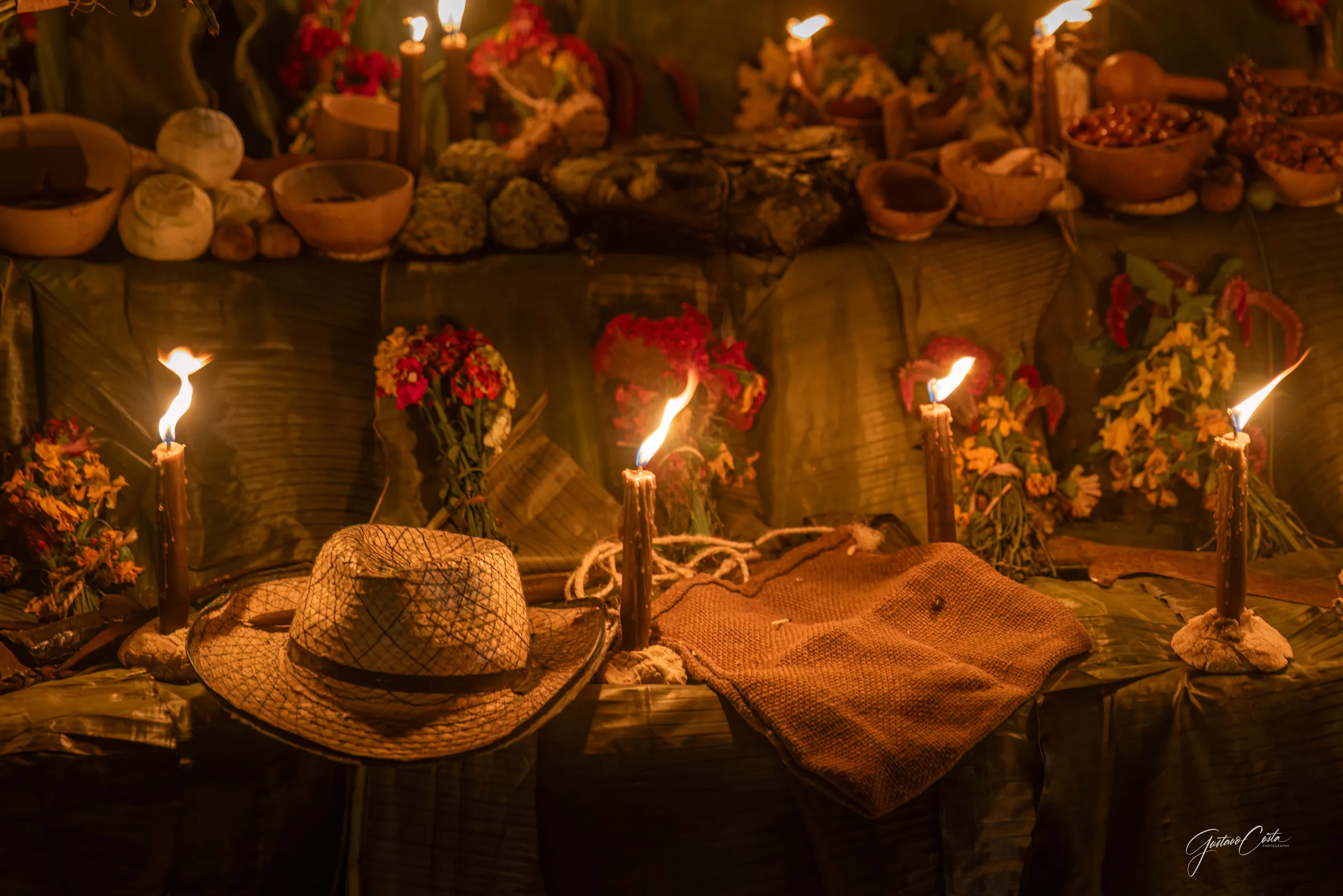
Food is at the heart of the altar. The dish of these days is mucbipollo, also called pibipollo: a large tamal of corn dough and lard, filled with chicken and pork, seasoned with tomato and chile, and cooked buried in the pib, the earth oven.
With it come new atole served in gourd bowls, wax candles, yellow xpujuc and red xtés flowers, and photographs of those being remembered.
During those days, pibipollo is made all over the city. Ask your House Manager where it is cooked near your house and try it the way it is eaten here: hot, fresh out of the ground.
The altars of the historic center
In the city of Campeche, the State Government organizes a Hanal Pixán altar competition and exhibition in the historic center every year. In 2024 and 2025 it was held on October 30, in the afternoon and evening, along Calle 8. The 2024 edition brought together more than 64 altars prepared by schools, museums and state institutions. For 2026, the program announced in October moves it to the Plaza de la Independencia, the main square, in the last days of the month. Confirm the date, time and place before you set out.
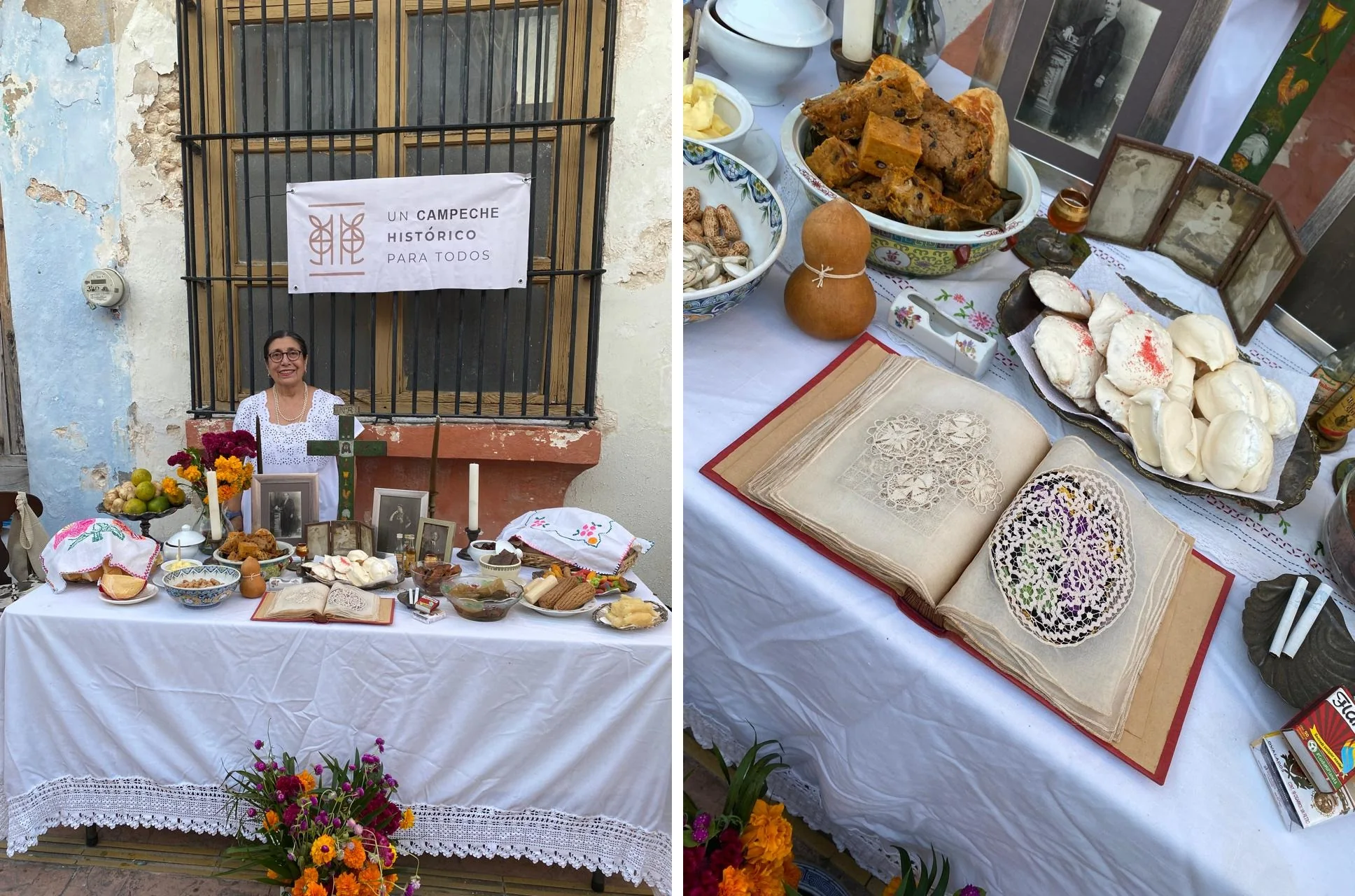
During those days, family altars also appear on streets of the historic center, such as Calle 59, with old portraits, bread, sweets and marigolds. In a single walk you see the range of altars from across the region, with music and Campeche cooking.
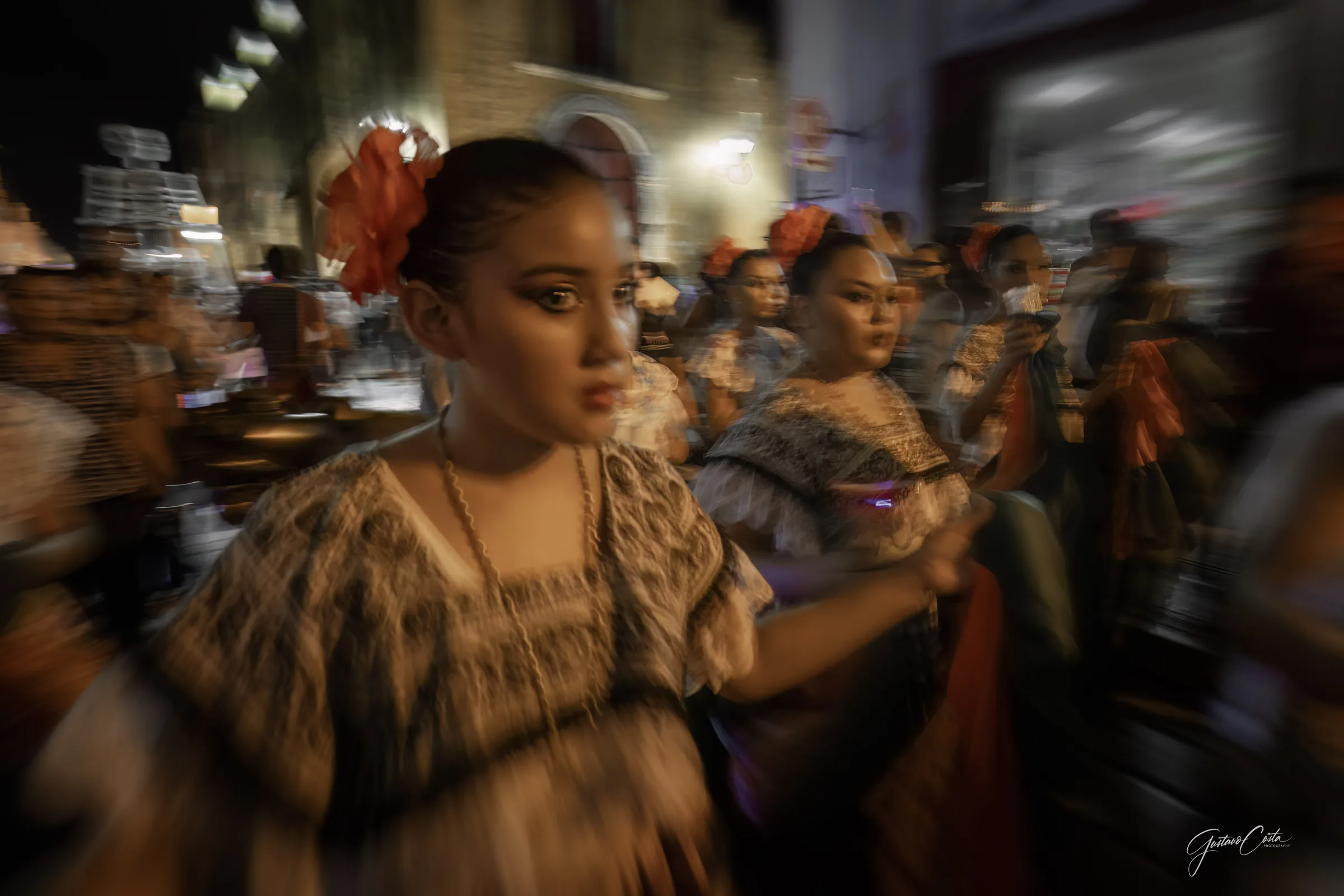
Afterward, the walled city returns to its calm. Walking home, with candles still burning in some doorways, is part of the night too.
Pomuch and the holy remains
Pomuch is a Maya community in the municipality of Hecelchakán, about 53 kilometers north of Campeche on Federal Highway 180, the road that continues to Mérida. It keeps the cleaning of the holy remains, the Choo Ba'ak, which has made the town known far beyond the peninsula.
At least three years after burial, families exhume the remains of their dead. From then on, every year before Hanal Pixán, they clean them with a brush, change the cloth embroidered with flowers and the person's name, and return them to their wooden box in the cemetery niches. Those who practice it describe it as a way of caring for their own and of talking with them again.
Parish records from 1836 already describe a sung mass during the cleaning, and the cleaning of the holy remains, the funeral ritual of the Maya community of Pomuch, has been declared cultural heritage of the State of Campeche. In 2025 the cleaning took place from October 24 to 30, and on the 31st the town held a festival with workshops, talks and a procession of the souls that left the cemetery at dusk. For 2026 a festival is again announced for October 31, with the Paseo de los Pixanes that night; confirm the program before you go.
How to approach Pomuch
In Pomuch you enter a family space: a cemetery where every niche has a name and every gesture has someone it is meant for. These guidelines will help you visit with the respect the place deserves.
Ask permission. Before approaching a niche or taking a photograph, ask the family. The answer may be yes or no, and both deserve the same respect.
Go slowly. Walk calmly through the cemetery's narrow aisles, dress simply and leave the remains and objects where they are.
Confirm the year's arrangements. The cleaning days, hours and cemetery access are set each year by the community and the municipality. Check them before you set out.
Arrange the transfer. It is about 46 minutes by car from Campeche, depending on traffic. With a private transfer you go and return at your own pace and sleep in the city that night. If you then want to continue north, the same road leads to Mérida; our route Visiting Campeche? Don't Forget Mérida links the two cities.
Your home for those nights
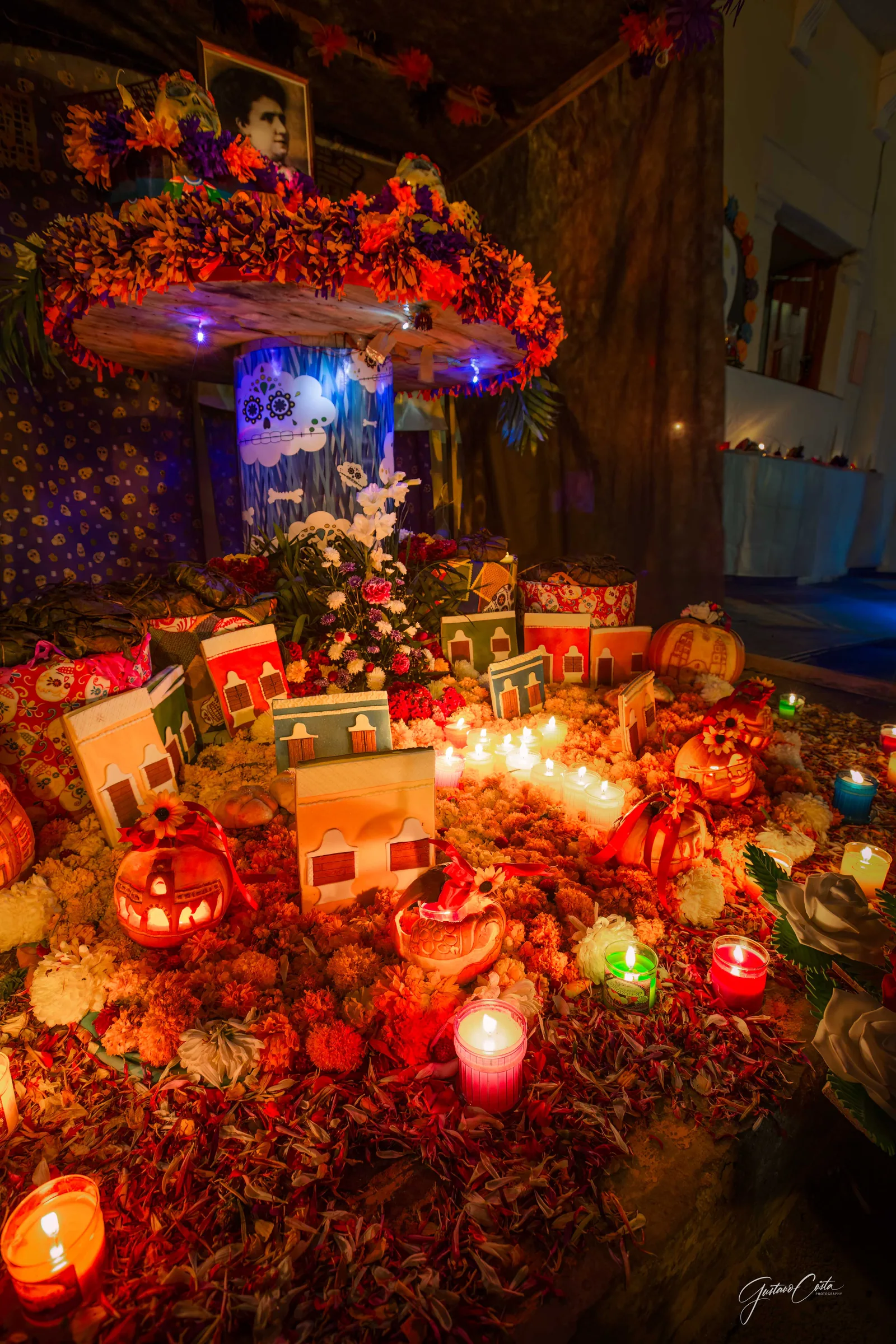
These days, the souls come home. You can have yours inside the walls too.
Casonas MX is a house hotel in Campeche, Mexico: a boutique collection of seven heritage homes and four contemporary lofts inside the historic walled city, a UNESCO World Heritage site. The main booking format is the complete home or loft, combining the privacy of a home with hotel services and one local hospitality team.
Explore the collection with your travel companions and the kind of stay you want in mind. Tell us your dates and the number of guests: our team will help you choose the right home for your stay in Campeche.
Frequently asked questions
What is Hanal Pixán?
It is the "food of the souls," the Maya tradition of the Yucatán Peninsula for remembering the dead with altars, candles and food. It is part of the indigenous festivity dedicated to the dead, inscribed by UNESCO in 2008.
When is Hanal Pixán celebrated in Campeche?
The central days run from October 31 to November 2: the children, the adults and all souls. A week later comes the bix, the farewell. Many families begin preparing earlier.
Where can you see Hanal Pixán altars in the city of Campeche?
At the altar competition and exhibition the State Government organizes in the historic center every year. In 2024 and 2025 it was held on October 30 along Calle 8; for 2026 it is announced at the Plaza de la Independencia. Family altars also appear on streets of the historic center, such as Calle 59. Confirm each year's date and place.
Can you visit Pomuch during the cleaning of the holy remains?
Pomuch receives visitors from Mexico and abroad every year. Go with respect, ask permission before approaching a niche or taking photographs, and confirm the year's days and access. It is about 46 minutes by car from Campeche, depending on traffic.
What is pibipollo?
It is mucbipollo: a large tamal of corn dough filled with chicken and pork and cooked underground. It is the dish of Hanal Pixán on the peninsula.
Casonas MX · October 15, 2026