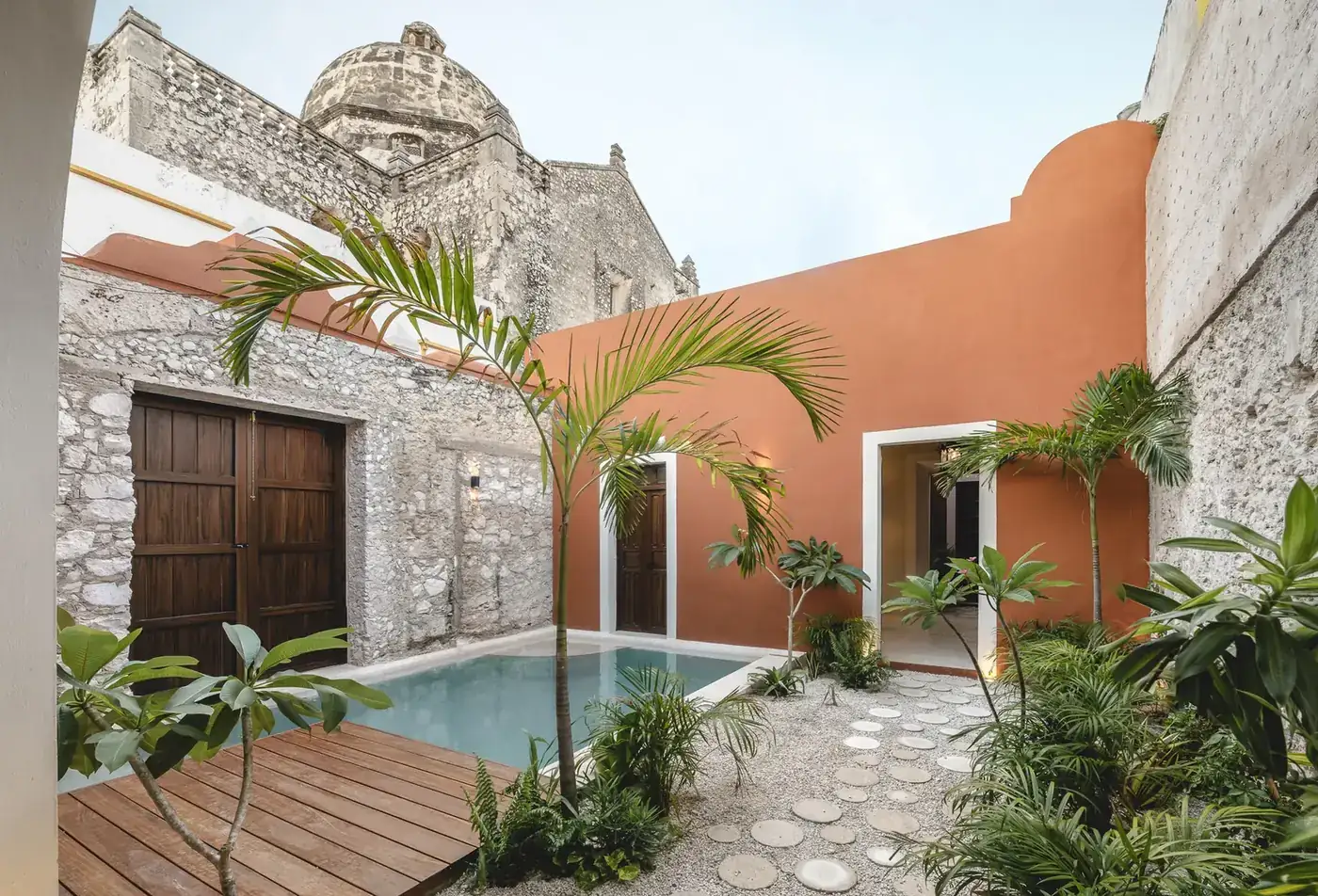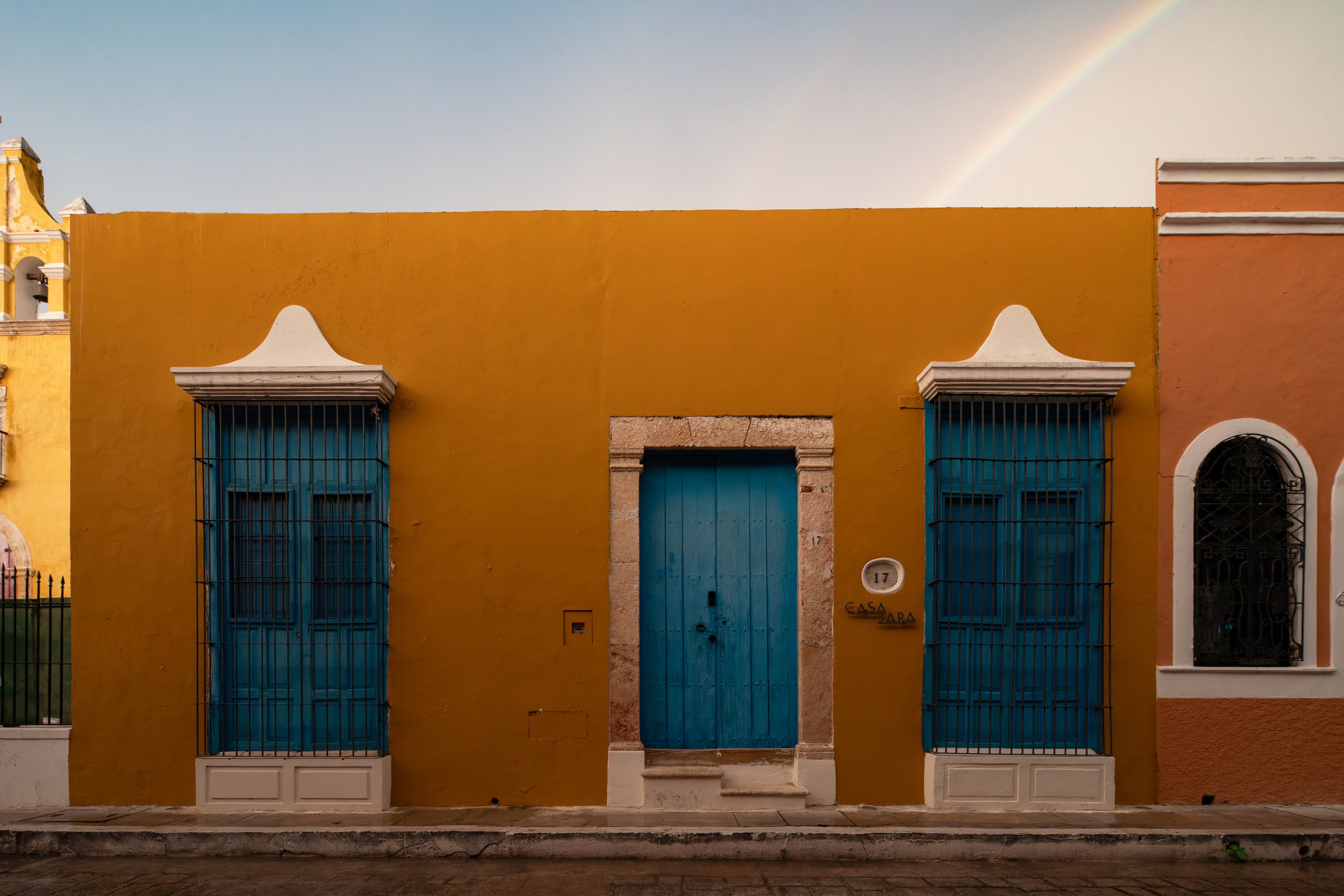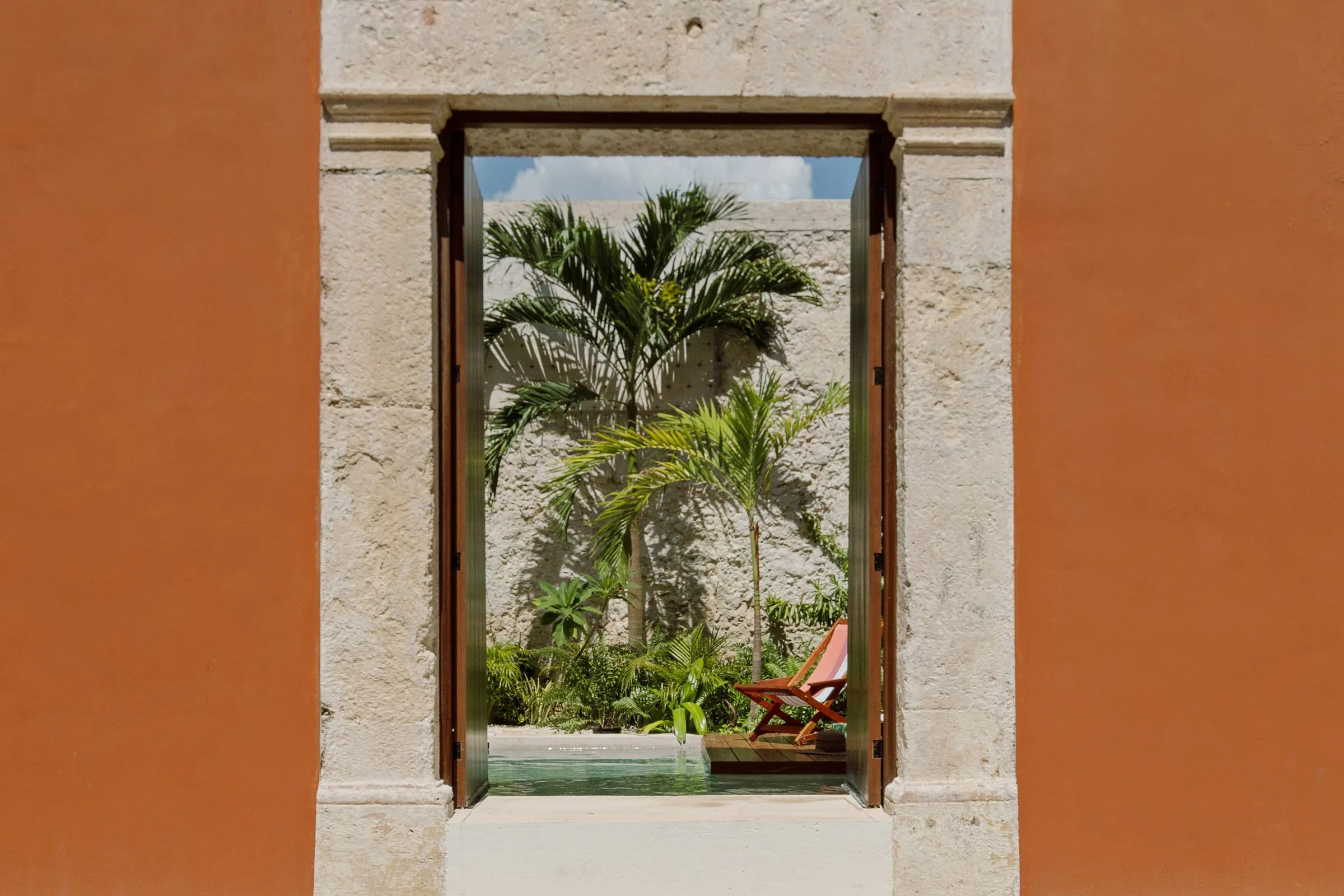
At Casonas MX, the way from one house to the next runs through the streets of Campeche's walled city: its facades, its squares, its bastions and the daily life of a historic centre that is still lived in.
Our nine historic houses sit inside the walled city, a few minutes' walk from one another. Some are almost door to door; others are a few blocks of coloured facades apart. Together they form one house hotel, with eleven stays, hotel services and one local team.
This walk visits them in order, from Calle 59 to Casa Ex Templo. At each stop, three things: the facade you see from the street, who restored or designed it and what appears once you cross the threshold.

Calle 59: where the walk begins
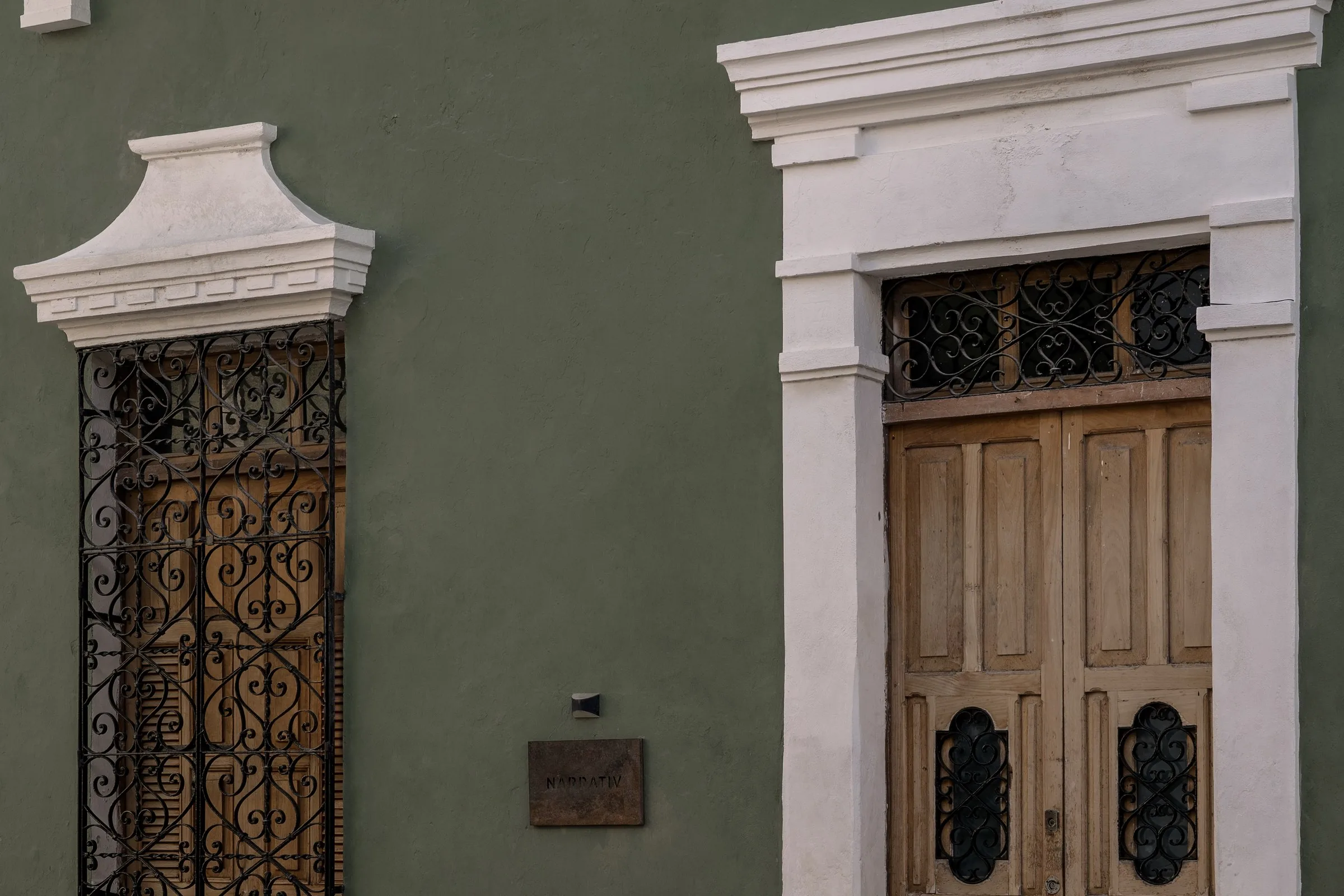
The walk begins on Calle 59, the pedestrian cultural corridor of the historic centre, closed to traffic from the Zócalo all the way to the Bastion of San Francisco.
Here, in the house that is now home to the lofts' reception, are Numen and Lira, two of the four Narrativ lofts, designed by Irma and Sébastien. Behind the door: boiserie walls, chukum plaster and a balcony over the cobblestones of the street.
Calle 12: a few steps on, another house
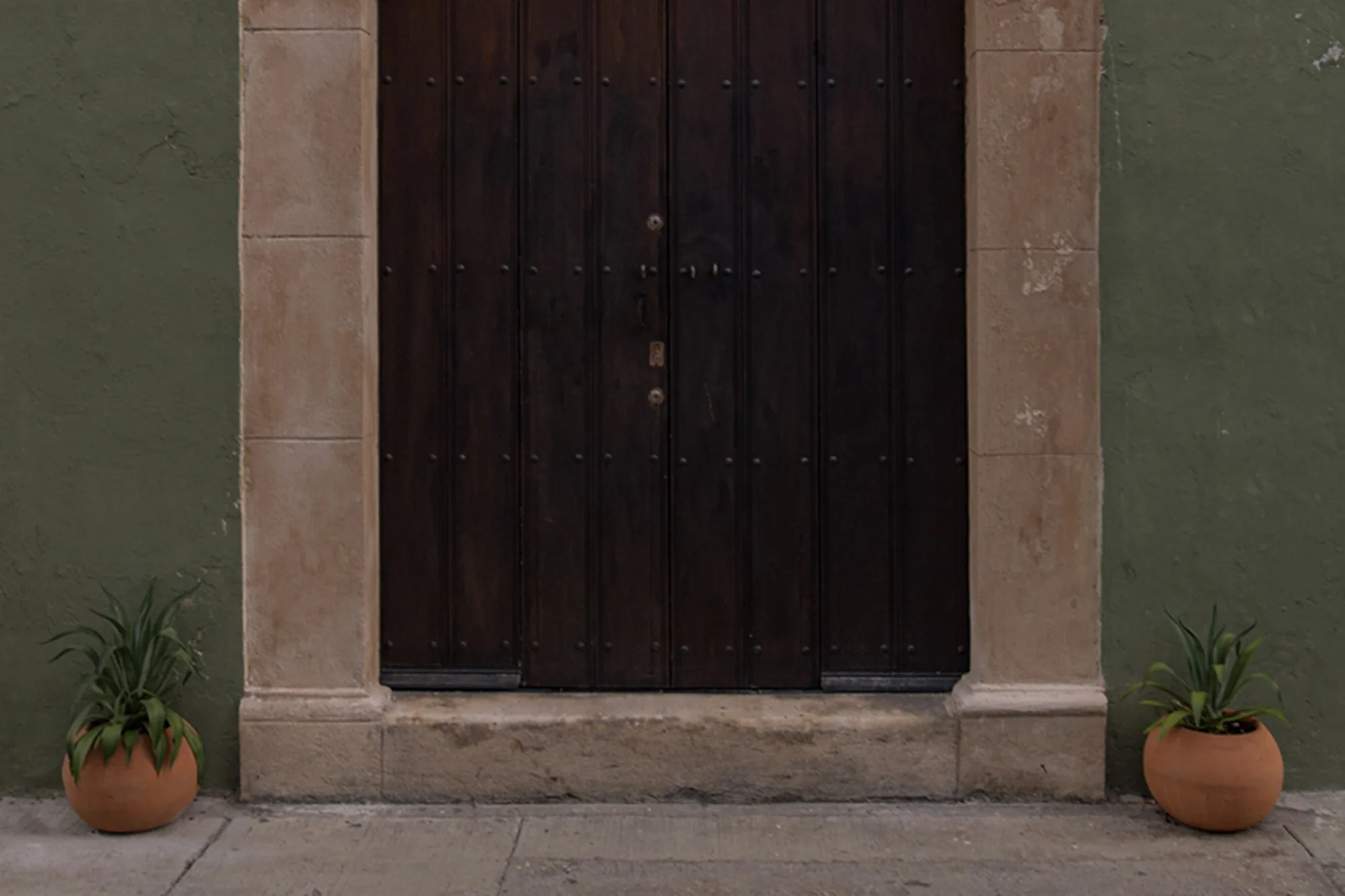
One minute away, on Calle 12, is the house where Narrativ began, in 2020. It holds the other two lofts, Serena and Solario. Inside, chukum covers floors and walls, and Solario has a terrace of agaves among succulents and climbing plants.
Two houses for one sub-collection, and from here you see something that repeats along the whole walk: every door is different, and all of them belong to the same collection.
Casa Japa, on Calle 55
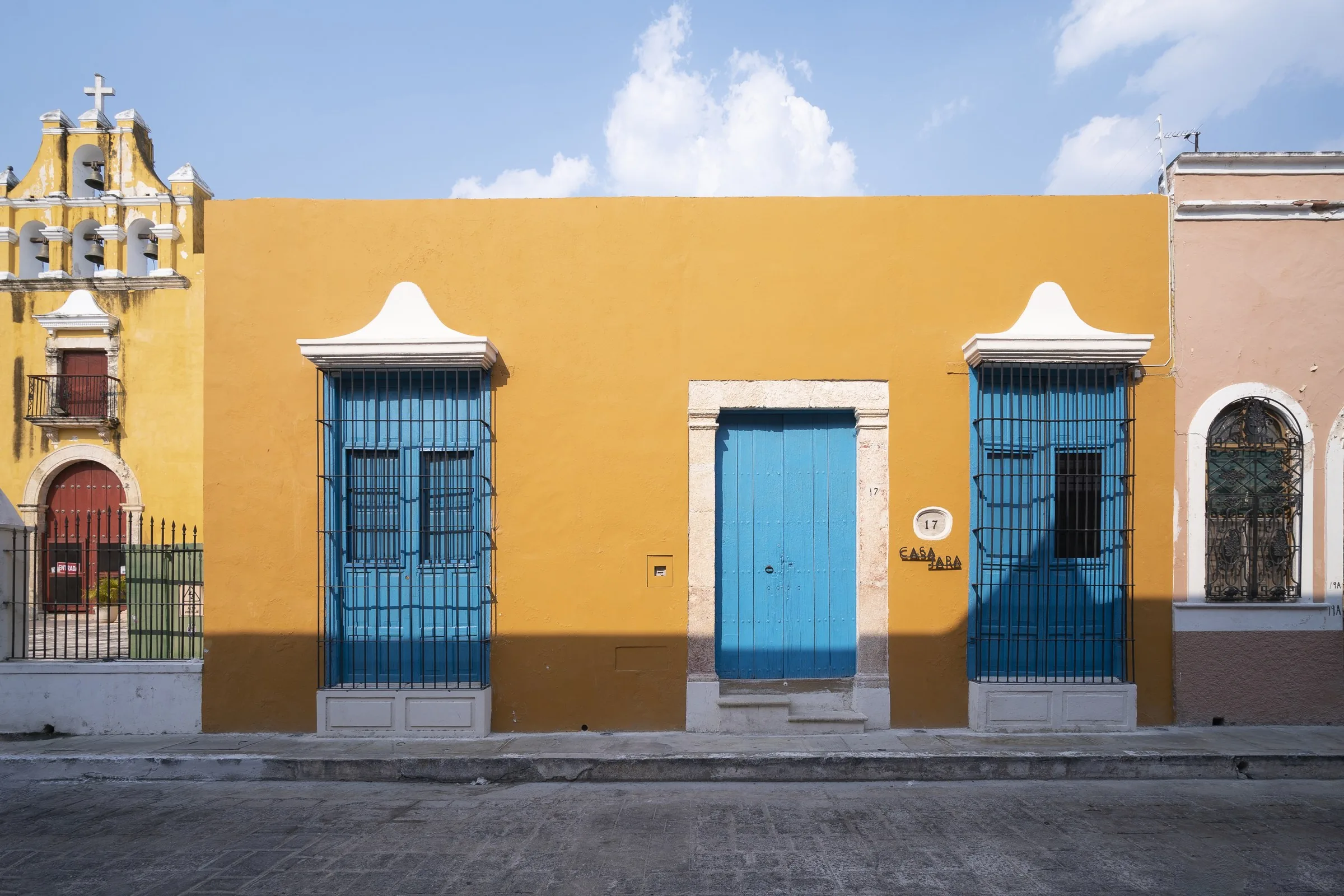
A few more minutes and the walk reaches Calle 55, which our walled city guide calls the diagonal of the great houses. Here is Casa Japa, an eighteenth-century residence and the largest house in the collection, restored to a design by architect José Manuel Martínez Márquez.
Behind its yellow facade, the house is organised around a central courtyard framed by stone arches and columns, and its terrace pool looks out over the church of Jesús. Casa Japa is part of the MICHELIN Guide selection; we tell that story in «Casa Japa in the MICHELIN Guide».
What appears behind the facade
In Campeche, the facade is the part of the house that belongs to the street. Within the monuments zone, facades, heights and colour palette follow INAH guidelines. Behind them, each house keeps its own world: courtyards, gardens, pools, terraces, old walls. That step from the street into the courtyard is the thread of this walk.
Casa Estrada, almost door to door
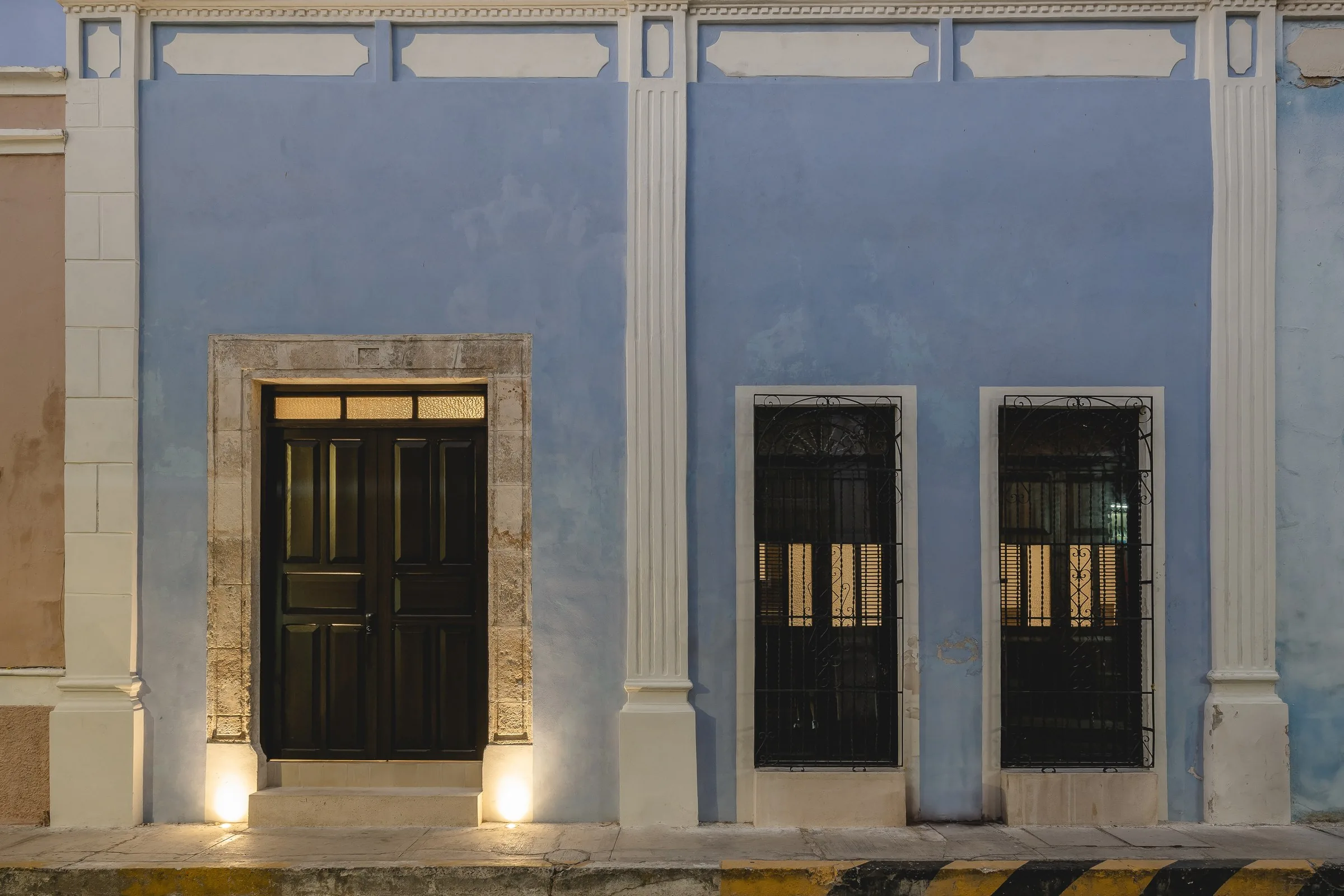
About twenty metres away, on the same Calle 55, is Casa Estrada. Behind its blue facade, a colonial house turned into an oasis of tropical greenery. It was restored by Workshop Diseño y Construcción, the same studio behind Casa Ex Templo, and the work received the Silver Medal at the 2026 Campeche Architecture Biennial.
La Casa Verde: the facade that gave it its name
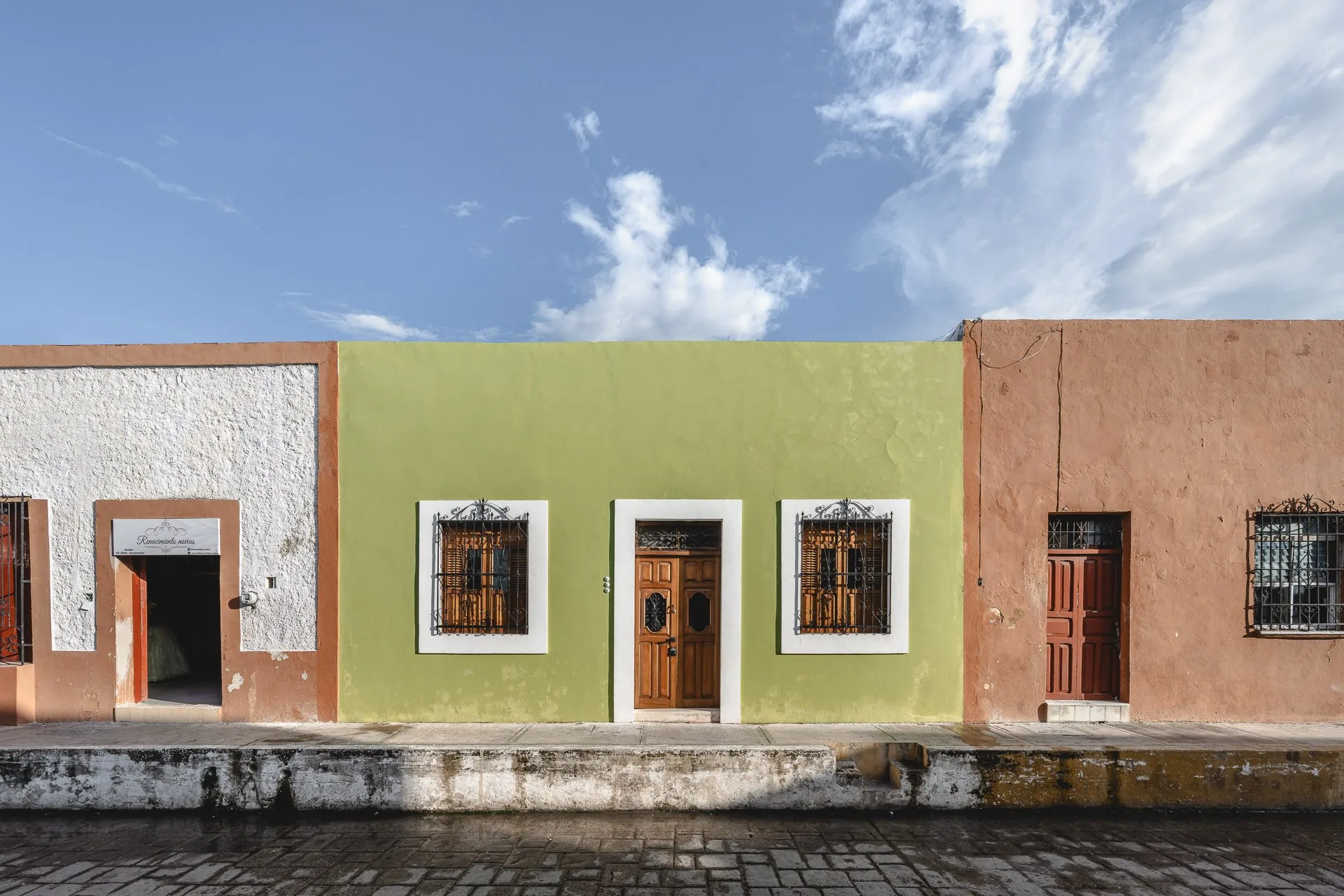
A few minutes later comes La Casa Verde, named after the original green of its facade, preserved within the palette authorised by INAH.
Its restoration, a Richaud Arquitectura project completed in 2023, uncovered original pasta tile floors and wooden beams that remain in place today. Inside, a living room with a bar opens onto the terrace and pool. The work won First Place in Restoration at the 7th AAI México Península Award; the full story is in «La Casa Verde: The Anatomy of a Heritage Restoration».
Casa Muralla: another door, another courtyard
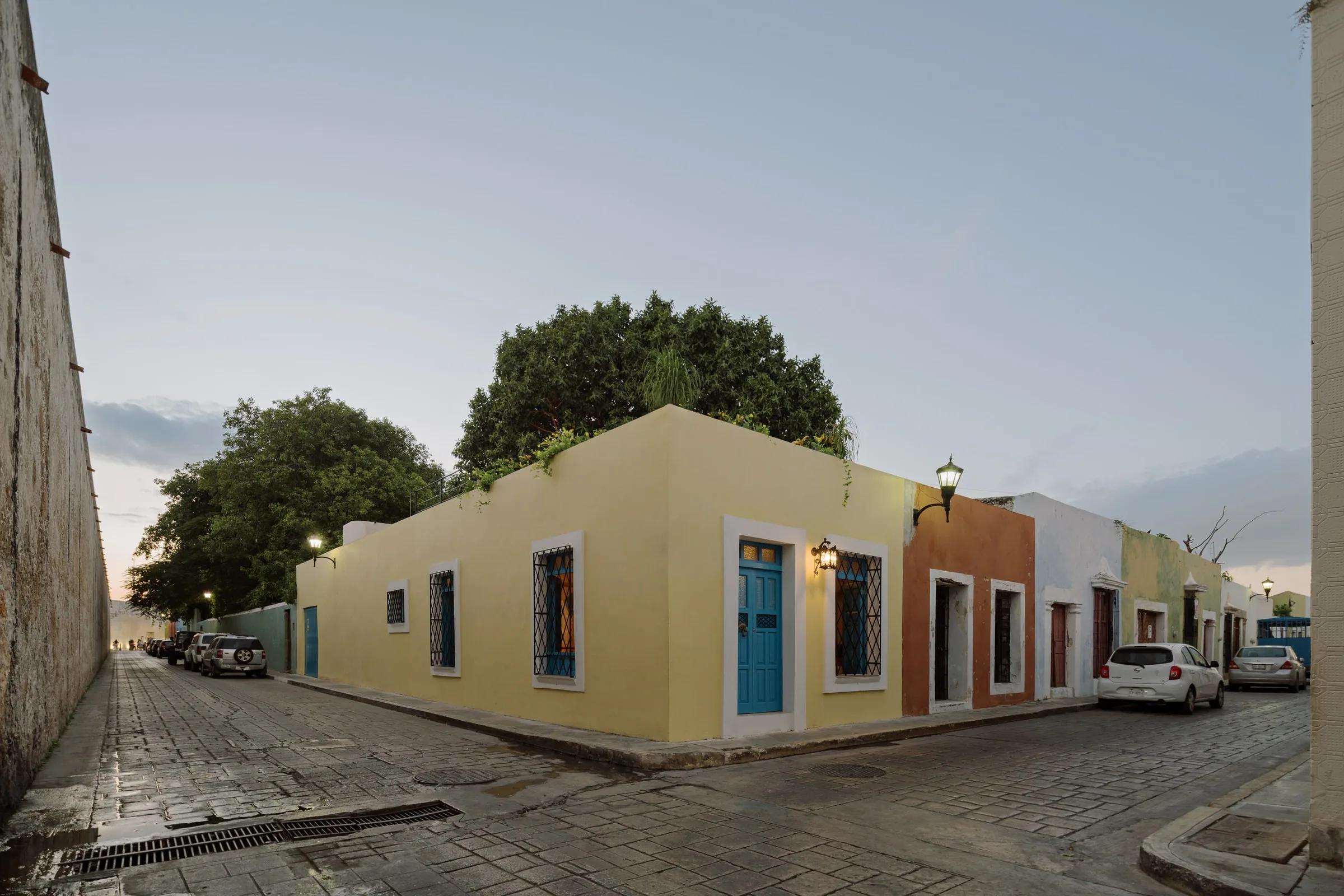
The longest stretch of the walk crosses the centre towards the Puerta de Tierra, the Land Gate. Here is Casa Muralla, named after the city wall that embraces it, restored by PSA Estudio, with Paolo Sarra, preserving its original proportions and building techniques.
Inside, a private pool within a walled garden and a terrace with views of Campeche's old city wall.
Casa Pistache: another facade, another way to restore
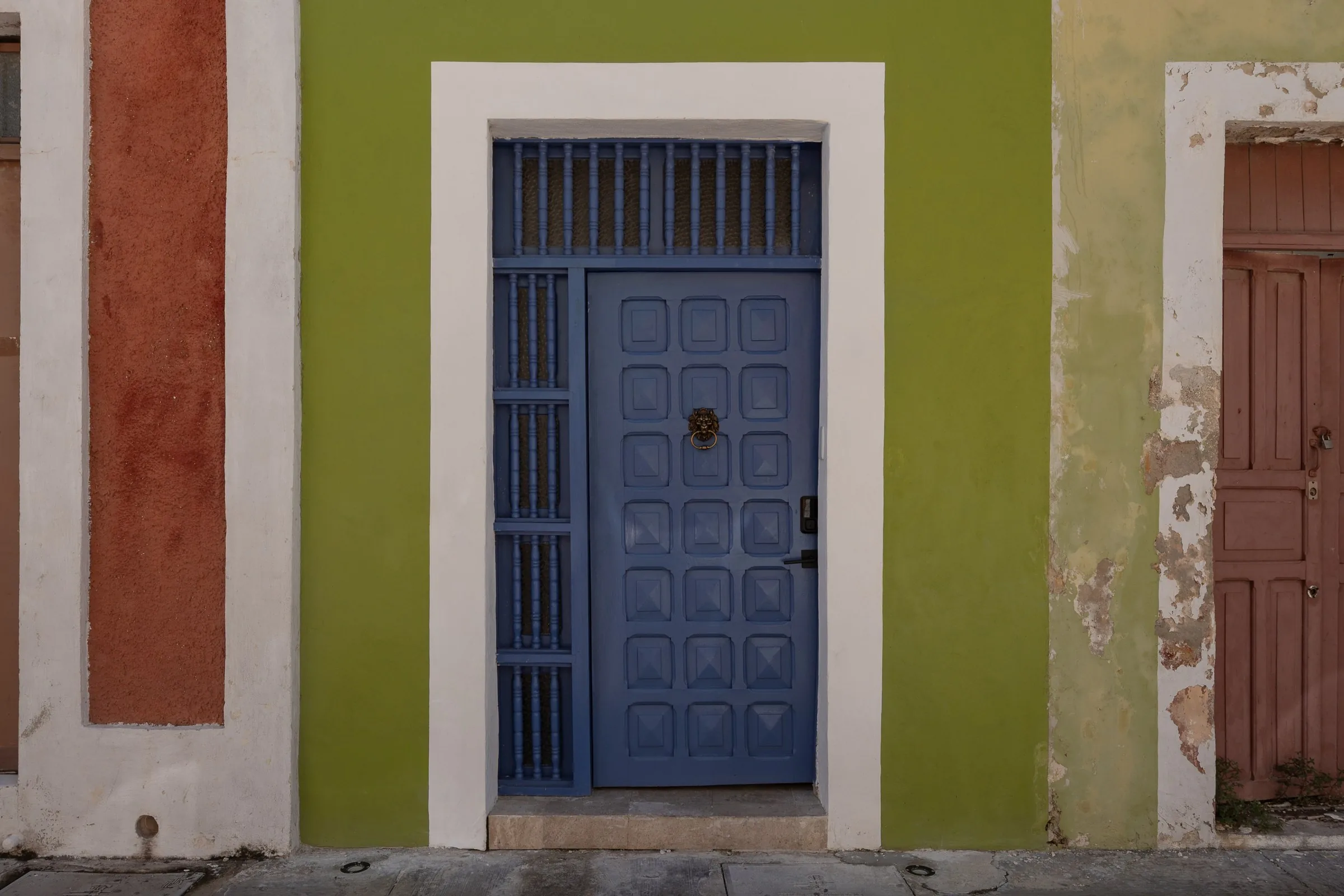
A few minutes on, Casa Pistache shows another way of working on a historic house: chukum walls and exposed limestone, in a restoration by Baqueiro Projects with architect Carlos Baqueiro.
Each house has its own story of restoration and design, and that variety is part of the method, as our restoration manifesto explains. What repeats from one house to the next is the team that looks after them.
Casa Zotz: a house for slowing down
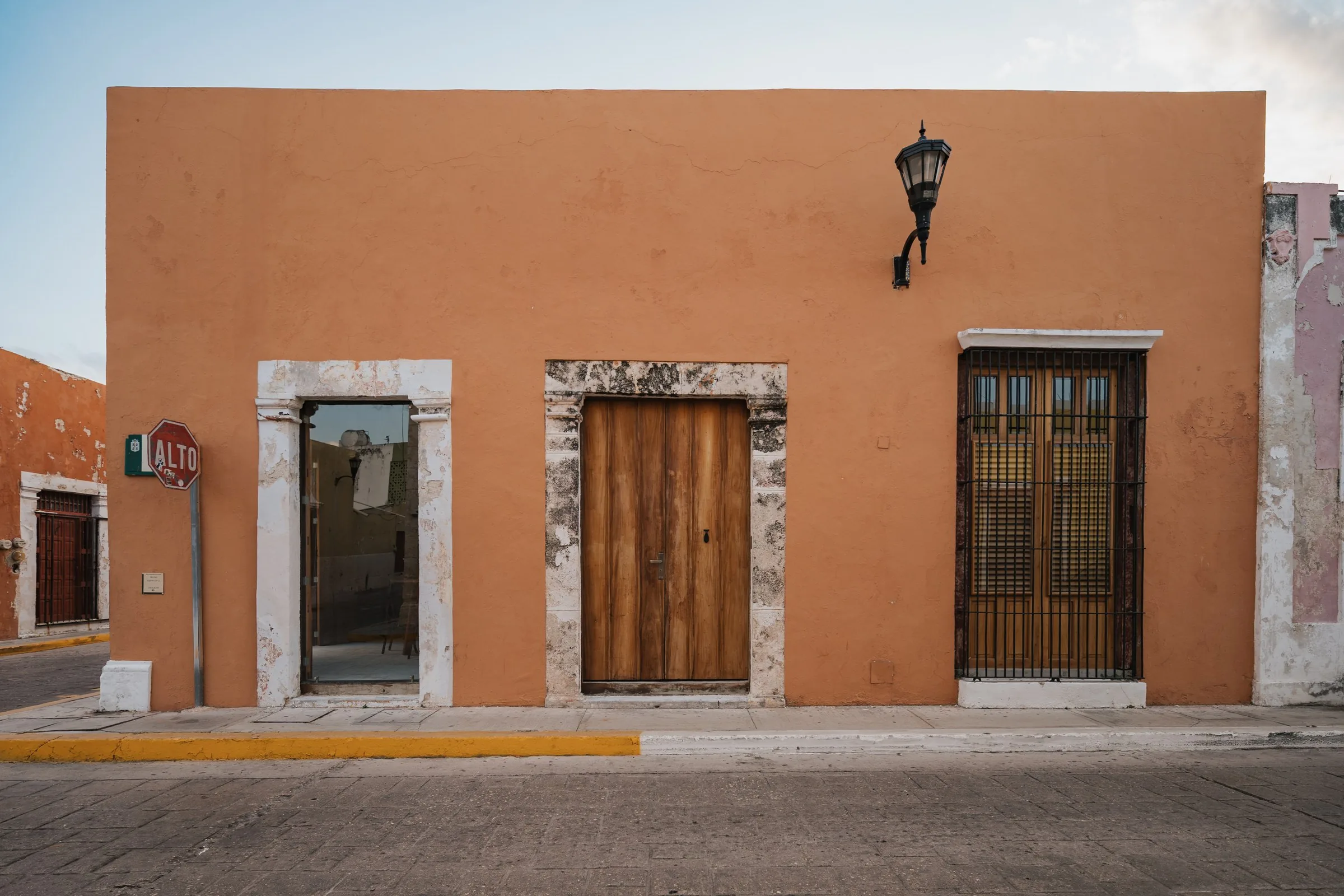
Close by is Casa Zotz: an eighteenth-century structure raised on stone walls that are older still, restored to a design by Marcela Ávila, with the works led by architect Julio Miguel Pérez González.
Behind the facade, a central courtyard beneath limestone walls softened by climbing plants, and a long lap pool. Zotz is a house for slowing down.
Casa Ex Templo: the last door
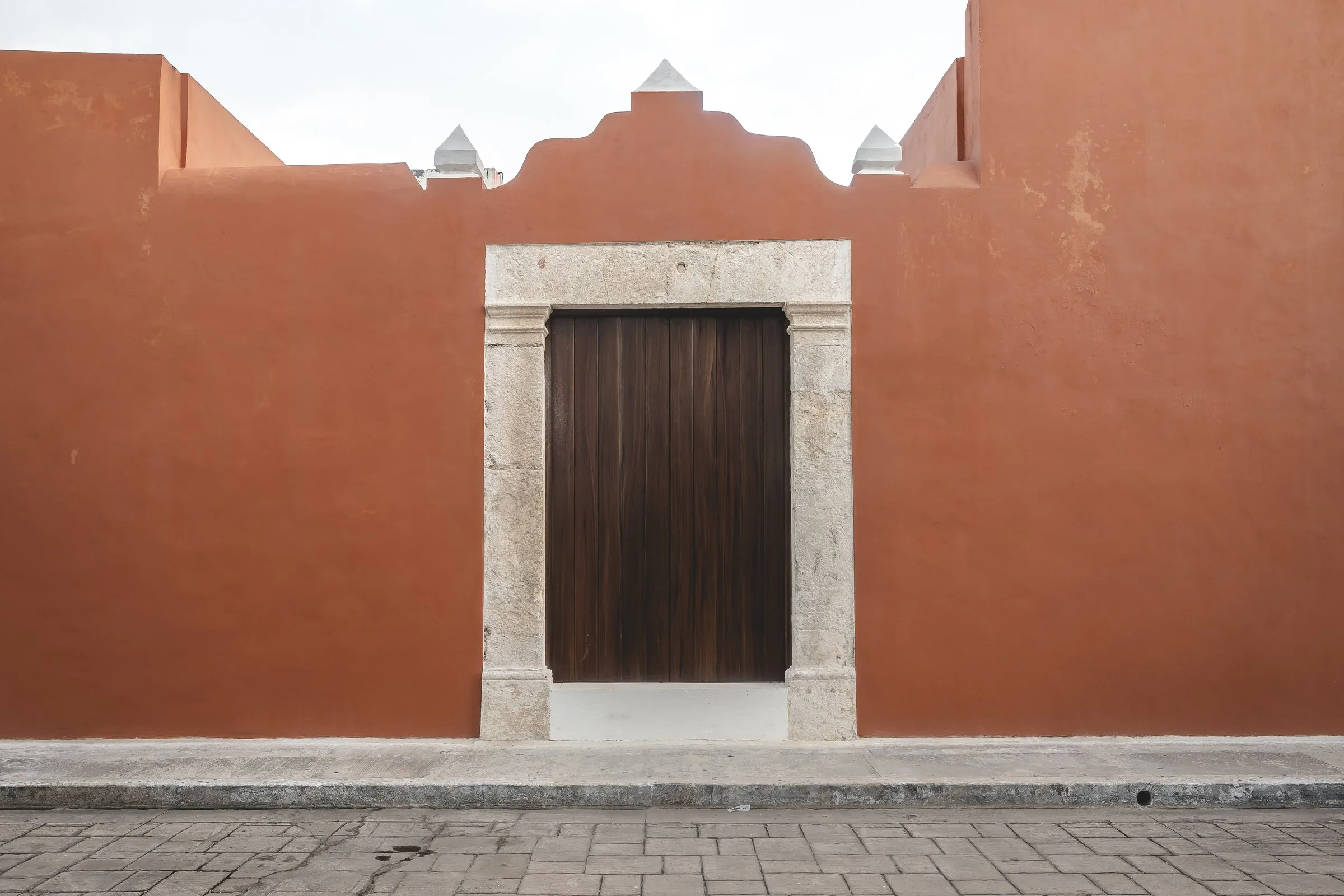
The walk ends on the corner where a hermitage of the caulkers and carpenters of San José first stood; around 1716 the Jesuits turned it into a church. Beside it is Casa Ex Templo, an eighteenth-century residence restored by Workshop Diseño y Construcción.
Through the archway lies a central courtyard of exposed stone walls, with a small chukum-finished pool and, beyond it, the dome of the former church of San José. The restoration received the Gold Medal at the 2026 Campeche Architecture Biennial; we tell the story in «Casa Ex Templo: the restoration beside Campeche's old carpenters' temple».
The streets that connect the houses
Between one door and the next lies Campeche: freshly painted facades, a square, a bastion, neighbours opening their doors in the morning. Walking Casonas MX also means walking this historic centre, which is still alive and lived in.
The map shows where the houses are and also the streets that connect them. For the rest of the city, our guide to the city walls and bastions; to understand the model, «The House Hotel: what it is and how it works».
Your house in the walled city
Nine historic houses. Eleven stays. One city that connects them.
Each house has its own architecture, scale and history, and all of them can be reached on foot inside Campeche's walled city. Save the map and choose your house.
Frequently asked questions
How close are the Casonas MX houses to one another?
Neighbouring houses are one to eight minutes apart on foot, according to the pedestrian route calculation used for our map. Casa Japa and Casa Estrada are almost door to door, on the same Calle 55. All of them are inside Campeche's walled city.
Do you need a car to go from one house to another?
The houses are explored on foot: all of them are inside the walled city, a few minutes from one another.
Where does the walk begin?
On pedestrian Calle 59, home to Numen, Lira and the Narrativ Lofts reception. This article follows the order of the map, and each stretch can be walked in either direction.
Can a group book several houses?
Yes. Families and groups travelling together can combine houses; the groups page explains how.
Casonas MX · September 27, 2026